Nina Out and About contains affiliate links and is a member of the Amazon Services LLC Associates Program. If you make a purchase using one of these Amazon links, I may receive compensation at no extra cost to you. See my Disclosure Policy for more information.
Why You Can’t Miss the Tamaki Maori Village Experience in Rotorua
Looking for a unique way to delve into the Maori culture in New Zealand? Look no further!
The Tamaki Maori Village in Rotorua is a Maori-run center for tourists to experience the traditional customs of New Zealand’s indigenous peoples.
I immersed myself in the cultural travel experience in 2018 while touring New Zealand.
After spending a day with locals who could tell us more about past and present Maori experiences in New Zealand, I had a profoundly different understanding of the country. It impacted how I viewed every activity afterwards – even skydiving over New Zealand.
Don’t miss this must do cultural experience in Rotorua. Get out of those hot springs for an evening to see a traditional haka, eat a delicious hangi buffet, and learn more about the people who shaped New Zealand.
To help prepare you for your visit, I’m sharing my experiences at the Tamaki Maori Village and how it changed my perspective.
🇳🇿 I recommend this Maori village experience
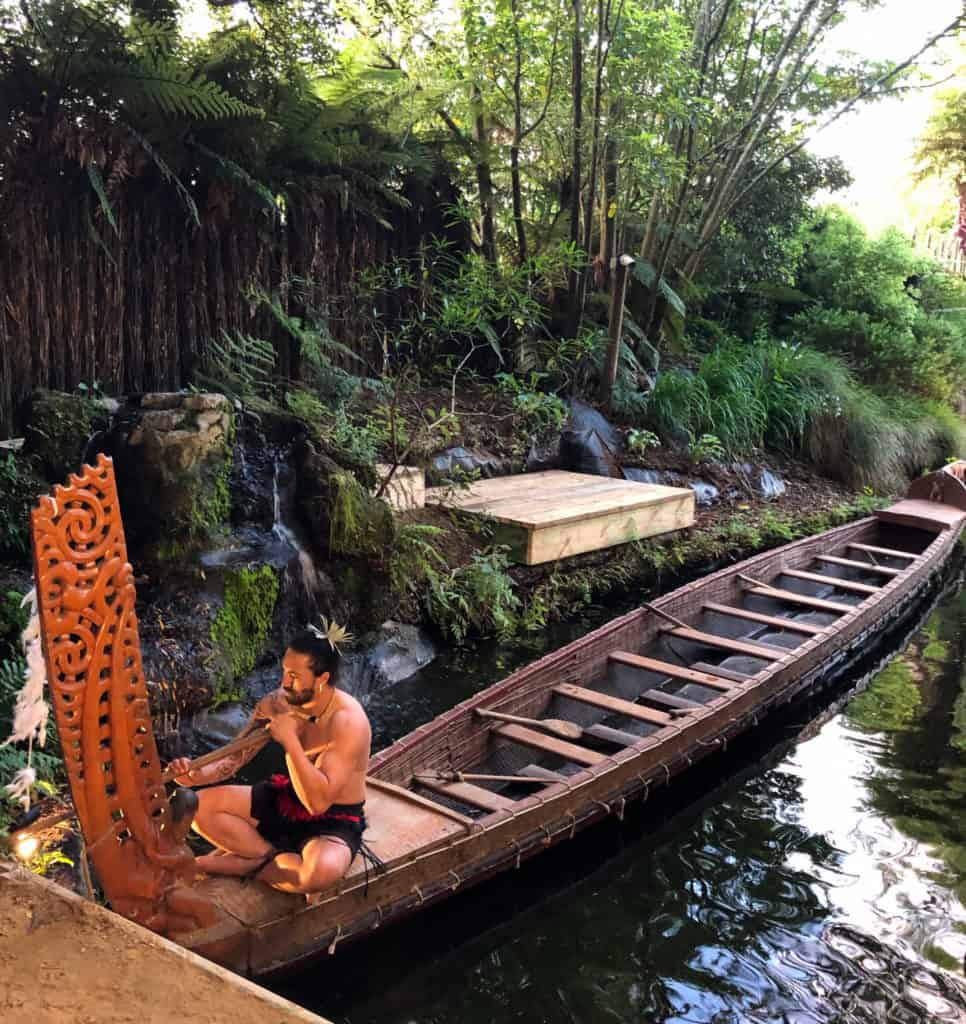
Who are the Maori people in New Zealand?
The Maori are the Indigenous peoples in New Zealand.
Australia has the Aboriginals. The USA has the Native Americans. Canada has Indigenous people. While, New Zealand has the Maori.
Maori people are unique from the Aboriginals in Australia. They actually came from the seafaring Polynesians, making them more closely related to native Hawaiians than the closer Aboriginal peoples, who are landfaring.
Unfortunately, like most indigenous cultures, when the Western world “discovered” the already populated nation of New Zealand, they decimated the Maori population.
New Zealand has been working to repair this damage in a more earnest way than I’ve seen anywhere else in the world, but there’s still a long way to go.
For example, Maori people are more likely to be homeless and uneducated than white Kiwis. While the country has recognized Maori as an official second language and is trying to produce more childrens’ books in Maori, there is a huge disparity in hiring practices for Maori people.
While the country is coming to accept the Maori culture, it feels like they still need to accept the Maori people that come with it.
Considering Moving Abroad? Find Out Which Country is Right for You!

Maori Village Rotorua
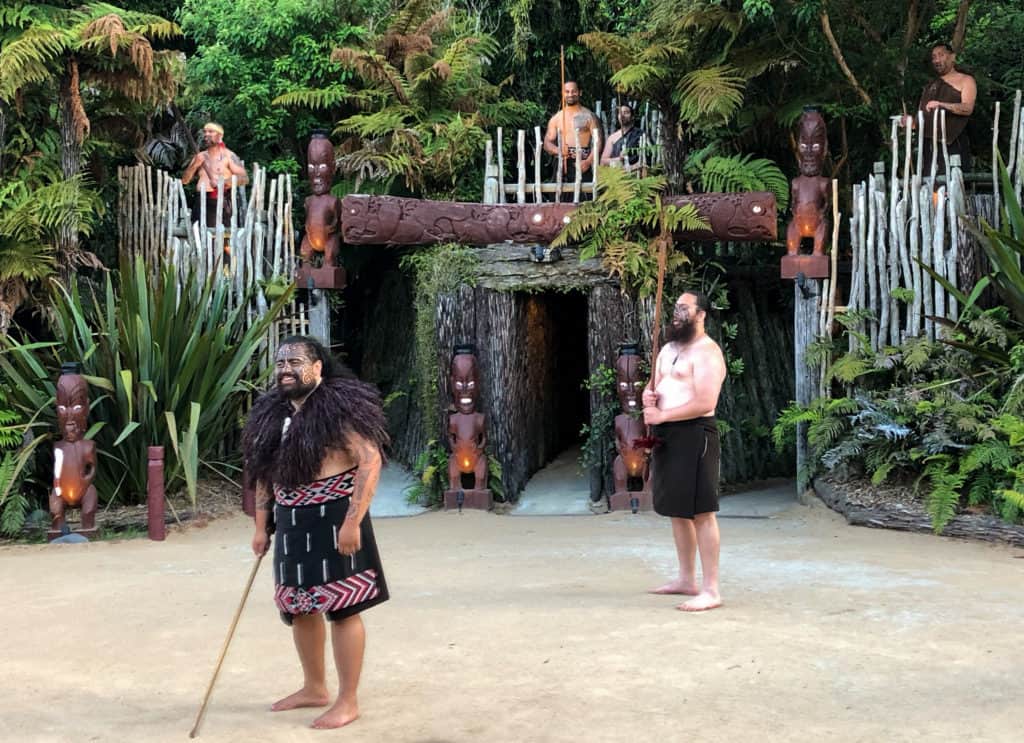
There are many Maori villages in New Zealand. Most aren’t open to the public, but are functioning communities of Maori peoples.
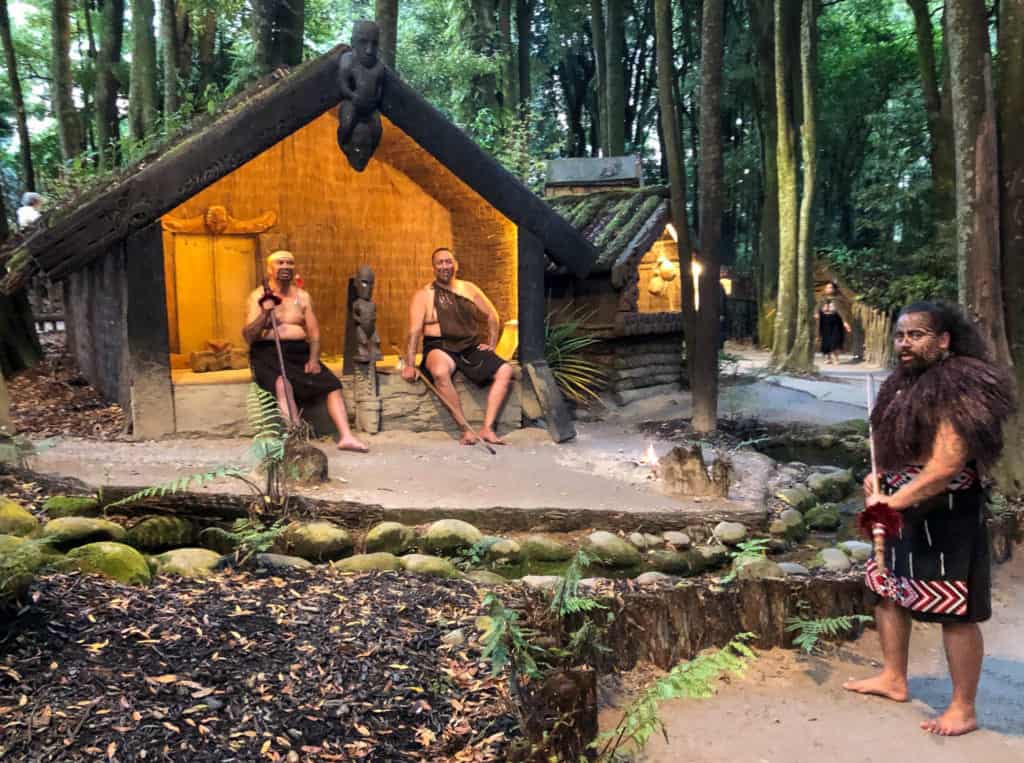
Maori village life still maintains some traditions. For example, haka welcome ceremonies must be done by men-only. They are composed of Marae, or gathering houses, and include symbolic tattoos relating to deities that are carved into their structures.
However, most Maori people now live outside of these traditional communities. They connect spiritually without the need for a physically bound community.
The Tamaki Maori Village in Rotorua is a tourist-friendly village that was constructed to demonstrate the Maori culture. It was created by the indigenous people to represent their heritage and help them increase their community’s income from tourism.
To this day, when you visit, you are giving back to the plentiful Maori community of Rotorua.
🇳🇿 I recommend this Maori village experience
What Can You Do at Tamaki Maori Village?
- Train like a Maori warrior
- Watch haka and poi dances
- Participate in an ancient welcoming ceremony
- View traditional art
- Hear stories of past cultural traditions
- Learn about Maori tattoos and other culturally significant symbols
- Eat a traditional hangi dinner
The Tamaki Village
The Tamaki Māori Village was one of New Zealand’s highest rated attractions in 2018. They have won numerous awards for being the best cultural activity in Australasia and are rated one of the top 10 cultural activities in the world.
The Tamaki Māori Village is a cultural experience located in the forests of Rotorua.
At the village you get to engage with traditional Māori activities, learn about their culture and embrace their mythology. Authenticity is held in high esteem to offer you the best snapshot of Māori traditional life possible. The Māori tribesmen and women who work there are mostly from the Rotorua area and have a wealth of knowledge to share.
You are brought into the culture on a personal level that makes it resonate even more.
The Tamaki Māori Village offers two choices for visitors: the Evening Experience and an Overnight Stay.
🇳🇿 I recommend this Maori village experience
The Evening Experience
The Evening Experience greets guests to the village with a traditional welcoming ceremony. Following the welcome, guests partake in short workshops that explain Māori mythology and cultural practises. This includes a chance for men to partake in the traditional haka (war dance) and for women to spin the poi (a traditional toy).
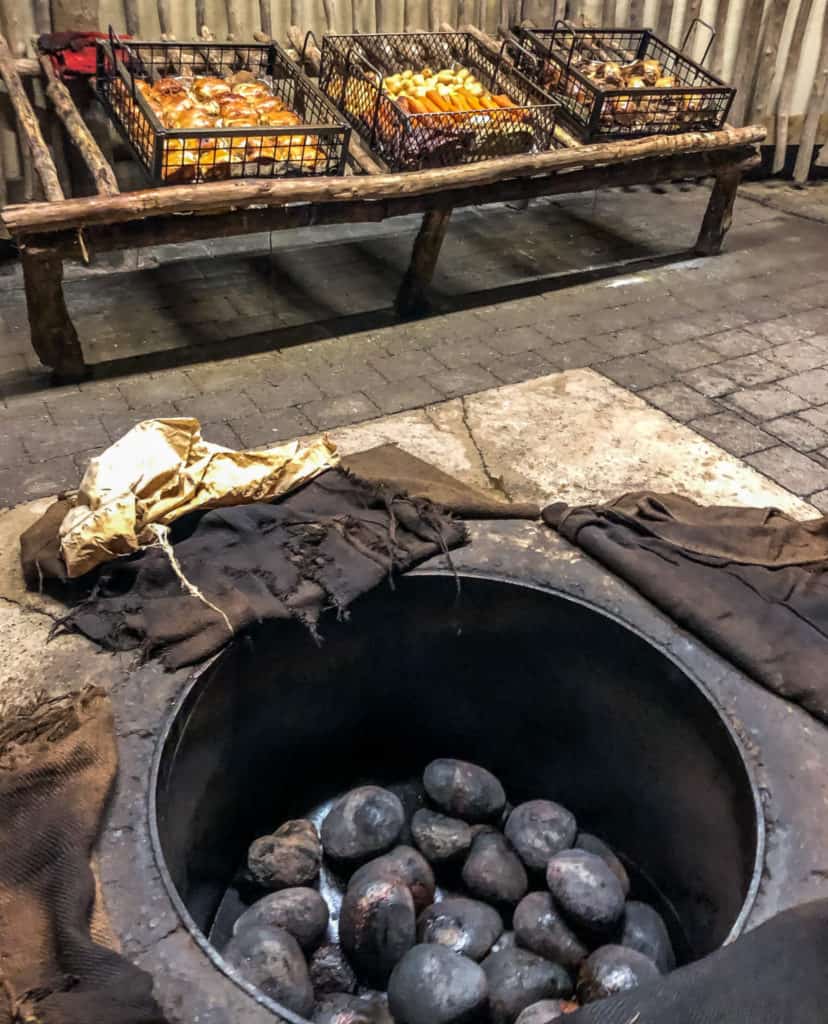
Watch your hāngi dinner be taken out of the pit before enjoying a traditional song and dance display by the Māori.
Finally, enjoy your buffet hāngi meal with dessert in the dining hall.
🇳🇿 I recommend this Maori village experience
The Overnight Stay Experience
The Overnight Stay includes the Evening Experience plus additional activities. Arrive in the afternoon to tea, with paraoa parai (Māori fried scones).
Settle into your Whare Moe (sleeping house) and learn about Māori mythology.
Your hosts will teach you a Māori stick game and how to sing the Māori alphabet.
After dinner, sit around a bonfire and learn more about Māori history.
End the night with a soak in a hot tub before going to sleep. In the morning, you will be given a continental breakfast before being driven back into Rotorua.
This is the experience that I opted to enjoy for a complete immersion in Maori village life.
My Tamaki Maori Village Experience in Rotorua
Arriving at the Village
Before arriving at the Tamaki Māori Village, you must elect a chief for your group. The chief must be a man to adhere to Māori sacred customs (even Queen Elizabeth II isn’t allowed to participate).
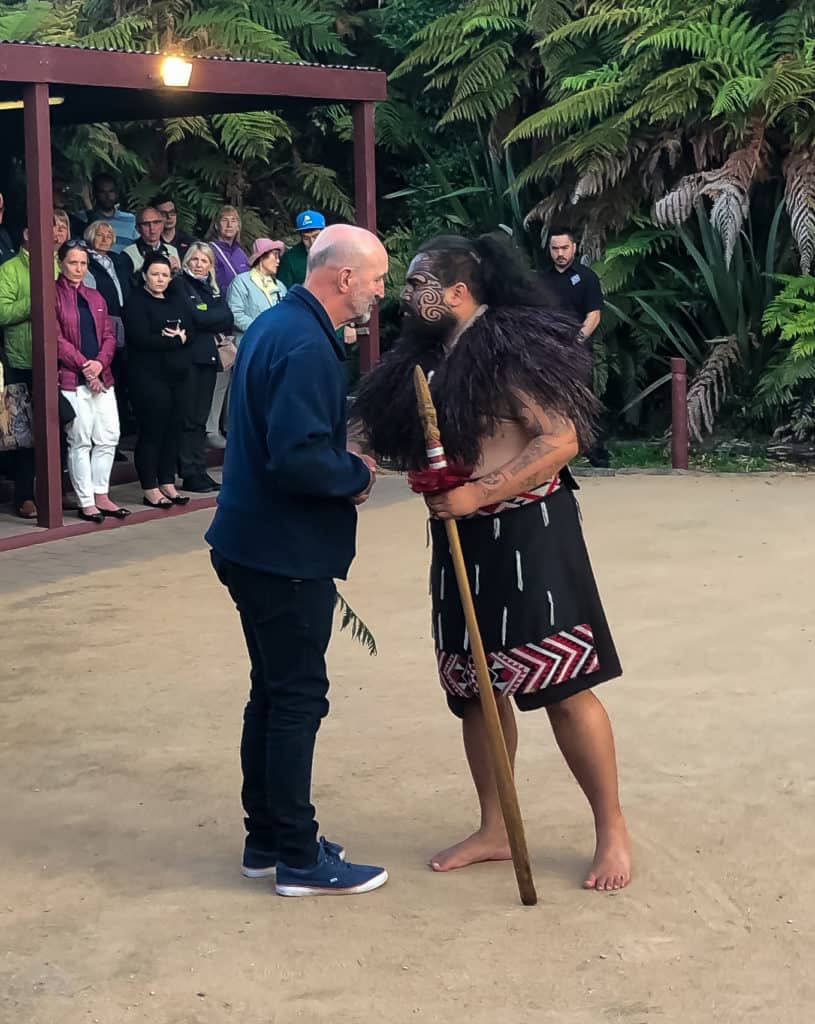
We were greeted at the village with a Māori speech and song of welcome. In response, we sang an unintelligible version of “We Are Family” – the only song we could think of.
Unfortunately, our family didn’t know the words to the song.
Luckily, your performance doesn’t determine whether they let you in. Otherwise, we would have been sleeping on the street!
At afternoon tea we stuffed ourselves with hot tea or coffee, cakes, cookies and paraoa parai. These Māori fried scones are a greasy, but delicious treat to smother in jam and clotted cream.
Learning the Mythology
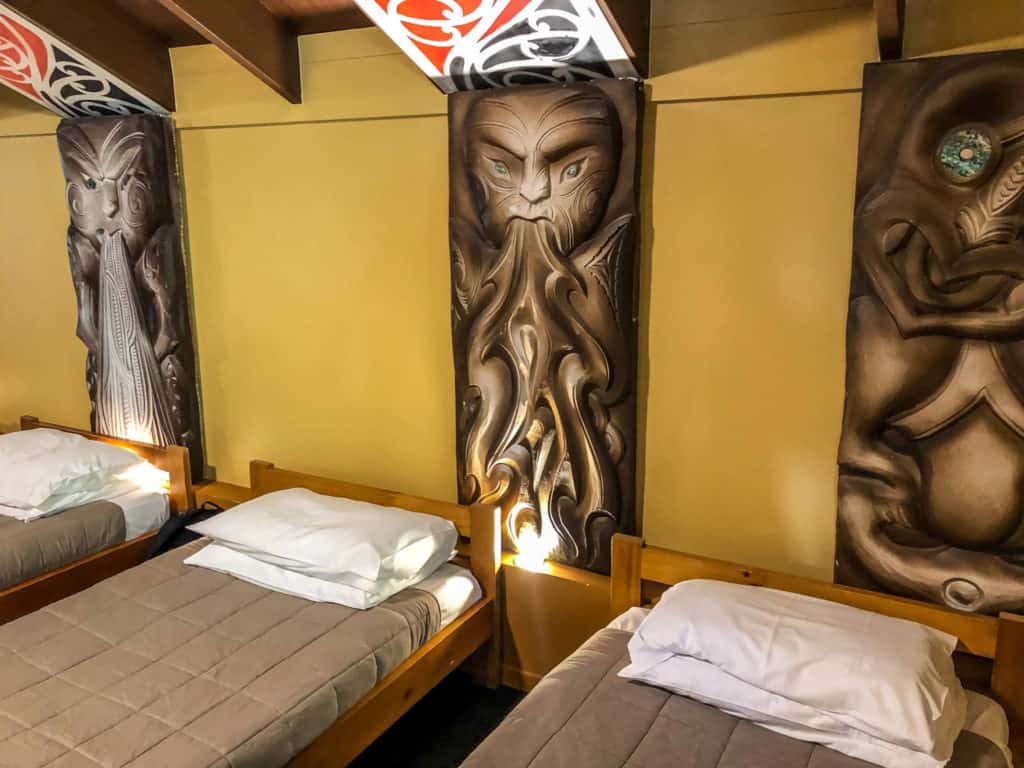
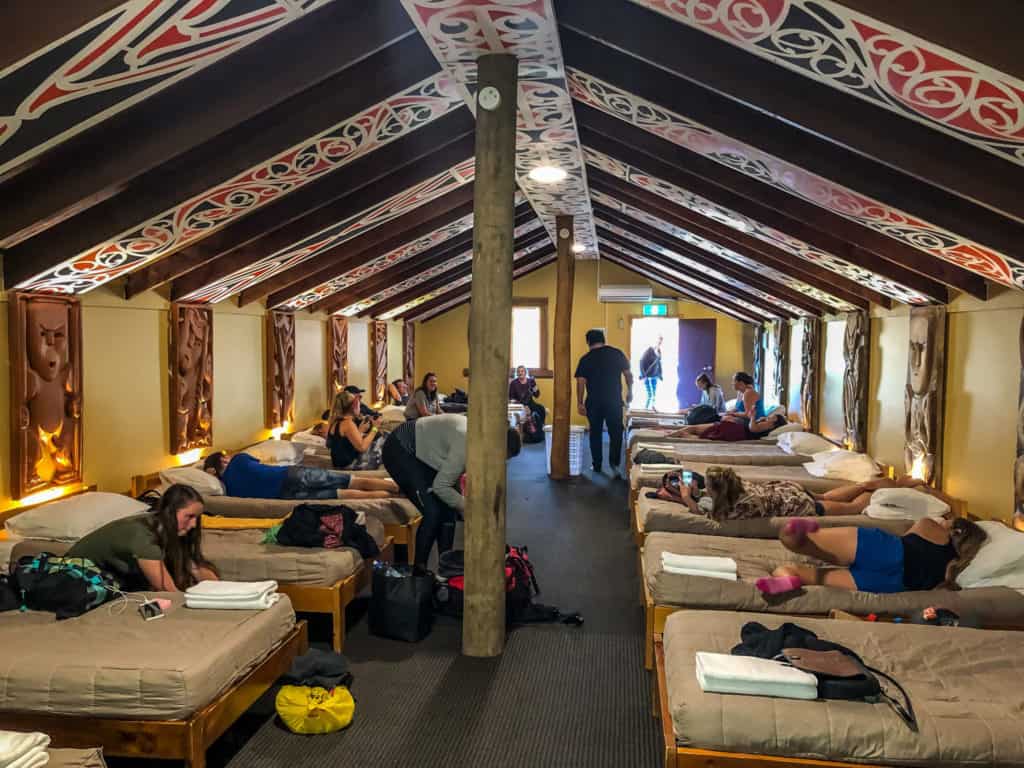
The Whare Moe are long sleeping quarters with single beds lining the walls. The bed was just as comfortable as advertised. I was so comfortable that I could barely sit up for the mythology discussion.
The walls are decorated with carvings of Māori ancestors or gods. The red, white and black beams on the ceiling support the building like ribs. A single column in the middle of the room represents the building’s heart.
Every detail of the Whare Moe has meaning in the Māori culture. The red, white and black represent the Sky Father (black), Earth Mother (white) and the blood from their separation to create the earth.
I put my hand up at least five times to pry more information from the brothers guiding us.
Traditional Maori Games
Woody and Harry, our guides, split us into two groups to share traditional Māori activities with us.
Half of the group learned a stick game while the other learned to sing the Māori alphabet. After twenty minutes, we switched groups.
The stick game involved stamping and throwing poles around a circle. It looked simple when Woody did it, but it took us the full twenty minutes just to complete one round successfully.
The alphabet song was easier to master. We learned the unique sounds of the Māori alphabet with their matching gestures.
Pro tip: “wh” in Maori is pronounced as “f”.
It felt like being at a cultural summer camp. (I would definitely go to that camp!)
The Welcoming Ceremony
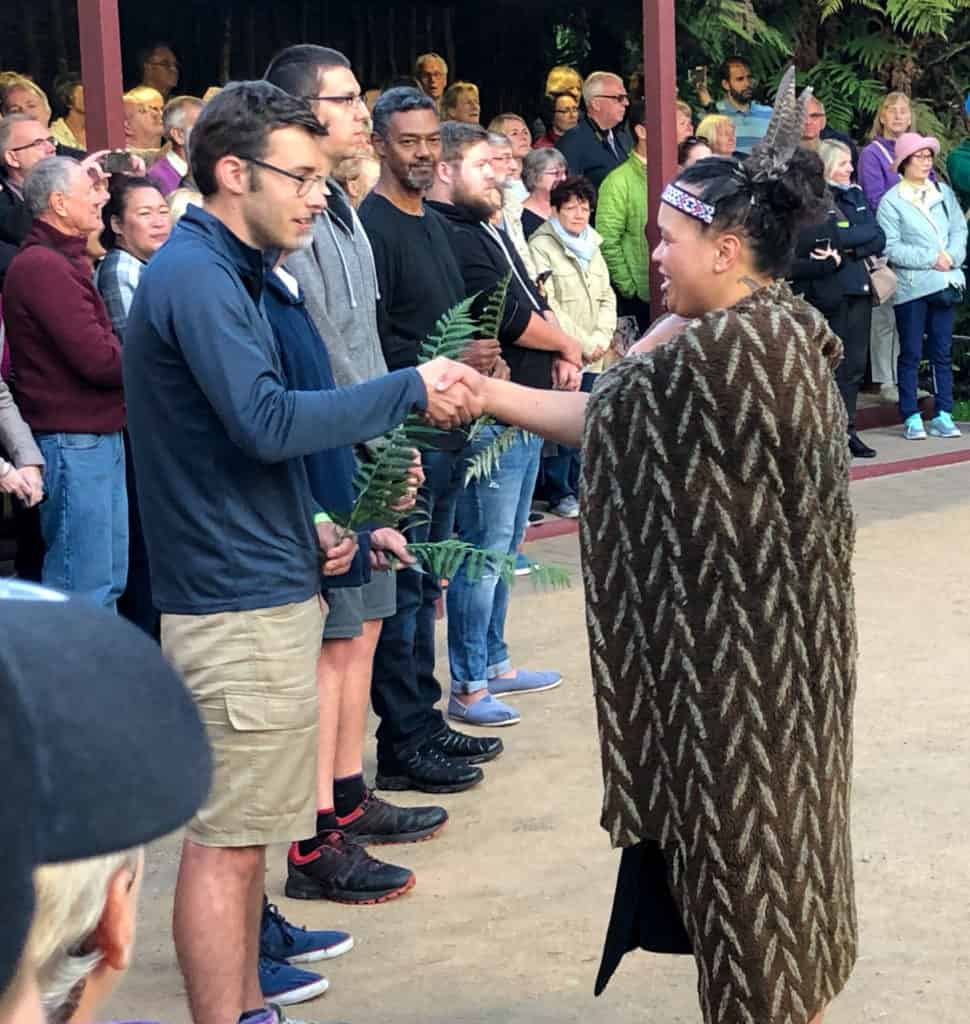
The pōwhiri or welcoming ceremony is used to welcome guests to a marae (sacred place), such as the iwi’s (tribe’s) land. The ceremony began with the Māori chief giving a speech about his iwi and his culture. Three Māori warriors joined him and presented an aggressive challenge known as the wero. They held weapons, called out battle cries and exuded a sense of violence. This demonstrates their strength and tests the visitor’s courage.
I would definitely have been scared to face the Māori after seeing this!
Finally, the warriors lay down silver ferns at the feet of the tourists’ chiefs as a symbol of peace.
The ceremony ends with the hongi, the native and visiting chiefs pressing their noses (and sometimes foreheads) together.
To welcome the guests inside the marae, a female Māori greet the group.
Cultural Workshops
To show hundreds of tourists their culture in just a few hours, the Tamaki Māori Village have developed small workshops.
In an hour, we attended six workshops that highlighted different elements of the Māori culture. The men participated in a haka (war dance) and the women spun a poi (a traditional toy used in dances). There were two more stick games. Woven into the games were lessons and mythology.
Did you know the word “tattoo” originated from a Westerner misunderstanding the name for the Māori process of tattooing?
The best part of the cultural lessons was the traditional song and dance done by the Māori staff.
Cameras didn’t stop flashing throughout their performance.
The women flew their poi like birds and the men stuck their tongues out in the haka. Knowing the cultural significance of the moves made them that much more breathtaking.
Hangi Dinner
The Tamaki Māori Village dinner is advertised as an “all you can eat” meal. That is not necessarily true, as they didn’t leave the food out for long and they ran out of dessert.
However, we got to try hāngi! Our dinner had chicken, fish, lamb, roast vegetables and salad. Vegetarians got samosas instead of meat.
If you wanted to have an alcoholic drink with your meal, you had to line up in a queue that seemed a mile long.
I stuck with water and the free tea/coffee station.
Dessert was bread pudding and pavlova. Unfortunately, they ran out before everyone could get some.
After dinner, the Evening Experience guests are driven back to Rotorua.
🇳🇿 I recommend this Maori village experience
Overnight Stay
The Tamaki Māori Village website talks about a bonfire with mythology and storytelling for the Overnight Stay guests, but that didn’t happen for us.
Instead, the Māori staff took the time to chat with us individually about their culture and beliefs. I think that personal connection was more meaningful, but a bonfire would have been wonderful.
The Māori at the village were the best part of my stay. They all have a strong connection with their roots and took the time to interact with all of us. Every question I asked was answered, even the ones that I tried to make difficult.
Most of all, they were fun!
I’m terrible with names, but I still remember Woody and Harry who shared their culture with us.
I stayed up until 2 a.m. laughing in the hot tub and pestering Woody with questions. That was the one down side of the experience: I barely slept in the amazing bed!
Breakfast was a simple continental spread of tea, toast, cereal and fruit. I was just happy to have a provided breakfast for once instead of rushing to make peanut butter toast in a hostel kitchen.
It was hard to leave the Tamaki Māori Village. Though it was only one night, we had done so much that it felt like we had been there for a week. I still wanted to learn so much more.
Since the village, I’ve sought out all of the Māori historical and cultural information I could find throughout my travels. I explored Cape Reinga, visited museum exhibits and travelled to the Te Matatini Kapa Haka Festival to see more of the dancing I loved so much.
Tamaki Maori Village Price
The Evening Experience costs $130 NZD per adult for the 3.5 hour experience. This price includes transport to your hotel in Rotorua.
The Overnight Stay costs $250 NZD per adult.
🇳🇿 I recommend this Maori village experience
Best Maori Tours in New Zealand
- Tour the buried Maori village of Te Wairoa
- Explore the spiritual world at Cape Reinga
- Discover ancient Maori rock carvings on a sailing cruise
- Get a guided tour of New Zealand’s best Maori museum
- Do the Hell’s Gate Geothermal Walk and relax in a Polynesian spa
- Half-day cultural tour in Auckland with Maori peoples
- Guided tour of a geothermal Maori village
- Stargazing and Maori cultural trip
- West coast day tour with a Maori guide from Auckland
Closing Thoughts
Visiting the Tamaki Māori Village is the best cultural experience I have ever attended. It is obvious why they have won so many awards. I wish other indigenous cultures had such immersive and interactive opportunities available for guests to learn more about them. It’s so important to learn about the first people to exist in a country.
While it may not be as photographically glamorous as Hobbiton or swimming with dolphins, the Tamaki Māori Village is a New Zealand must do.
You’ll have a newfound appreciation for the country you’re visiting.
Not only did doing the Tamaki Maori Village Overnight Stay help me to understand Maori myths, but it also taught me about the current issues facing Maori people living in New Zealand.
When you’re in New Zealand, I highly recommend adding the Tamaki Maori Village to your itinerary.
🇳🇿 I recommend this Maori village experience
Read More About Visiting New Zealand:
- Epic Experience Black Water Rafting in the Waitomo Glowworm Caves
- Visiting the Stunning Hobbiton Movie Set in New Zealand
- How to Hike the Tongariro Alpine Crossing and Why You’d Want To
- Why You Can’t Miss the Tamaki Maori Village Experience in Rotorua
- Skydiving in Taupo, New Zealand: 15,000 ft of Fun
- 18 Best Hotels in Christchurch, New Zealand
- Are there crocodiles in New Zealand? & Dangerous Animals
- How to Move Your Dog to New Zealand
- 17 Best Day Trips from Auckland, New Zealand
- 20 Best Things to Do in Wellington, New Zealand
- When is winter in New Zealand? (& Should You Visit?)
- New Zealand’s Little Blue Penguins in Dunedin Evening Tour
- Best Place to Swim with Wild Dolphins in New Zealand
- What is the Best Time of Year to Visit New Zealand?
- Tipping in New Zealand: Do You Tip in New Zealand?
- 57 New Zealand Travel Tips
- 7 Best Things to Do at Cape Reinga, New Zealand
- How to Get From Australia to New Zealand: 3 Best Ways
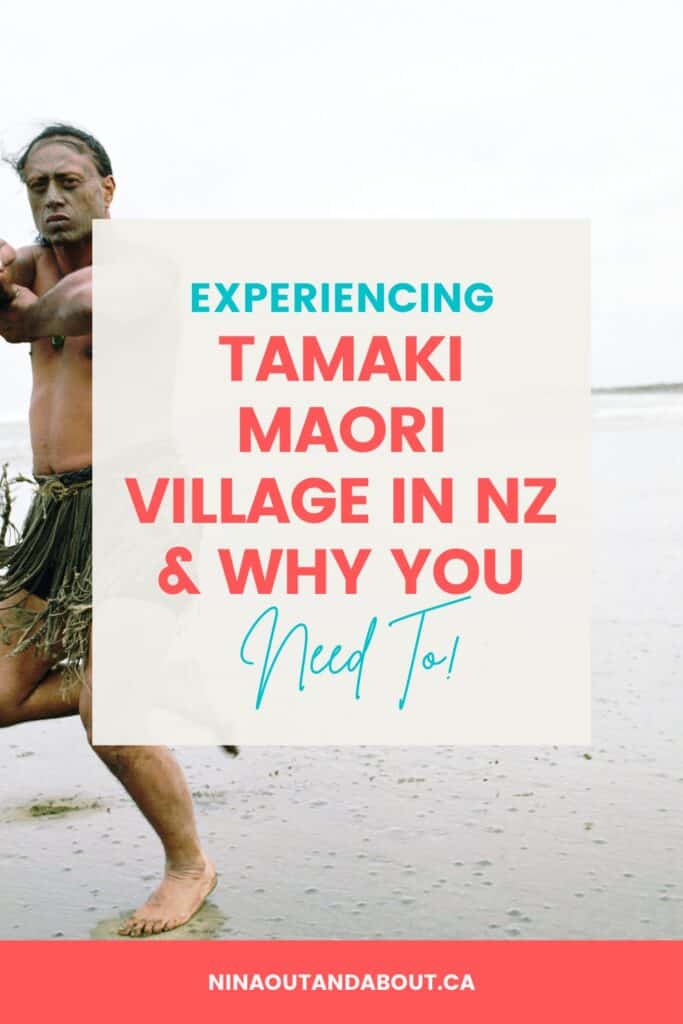
Pin this for later!
Living Abroad Travel Planning Guide
🚑 Should I buy expat travel insurance?
100% YES! — With basic coverage averaging just $5-10 USD per day, enjoy peace of mind with a plan from Safety Wing!
🌎 What is the best country to live in as an expat?
It depends – the best country to live in as an expat will depend on your unique needs. I developed this free quiz to help you figure out where is right for you!
📍 How do I pick a country to live abroad?
It depends – picking a country to live in is hard. That’s why I developed this $7 course to share all of the steps I’ve taken when deciding to move to 20+ different countries, and how I handle homesickness when I get there.
Ultimately, making the choice of where to move is going to be hard. But the hardest thing is deciding to move abroad at all!
💼 How do I get a job as an expat?
You can find work abroad via local job boards or temp agencies. My favourite way to work is remotely, so I always look for jobs on FlexJobs.com when I live abroad. They hire for 100% remote roles only.
If you’re looking to teach English abroad, Premier TEFL has the best online course to get you great work!
💰 How do I open a bank account abroad?
Wise.com offers free global accounts, and the cheapest money transfers. Since it can be a headache to open bank accounts in different countries (it took me 2 months in the UK!), Wise.com is a great solution.
I actually use it as my primary bank now worldwide due to the multi-currency debit card. (Read more)
👯♀️ How do you make friends abroad?
Meetup.com – Meet likeminded people who share a similar hobby with Meetup! It’s free to join, but some activities may cost money, like if you go to a cafe and get a coffee.
🙀 I don’t speak the language. Can I still live abroad?
Learn languages in no time with iTalki! Moving abroad is an opportunity to learn the language. You don’t need to know it before you leave home.
💻 Do I need a VPN?
Yes! – VPNs allow you to access more of the internet. From US Netflix in the UK to social media sites banned in Asia. It’s a really helpful and cheap thing to ensure your online activities aren’t restricted.
🧳 What’s the best luggage for living abroad?
This is my favourite luggage set for long term travel. You can read more about my review of types of suitcases for travel here.
🏡 How do I tell my friends and family I want to live abroad?
Take this $7 course and learn the exact script I used to tell my family I was moving abroad … and then when I did it again. I even include tips for prepping your family, and for how to handle family who aren’t supportive.
✈️ What’s the best site to buy cheap flights?
To find cheap flights, I recommend Skyscanner. (Read more)
🏨 What’s the best site to find cheap hotels?
To find cheap hotels, I recommend Booking.com. (Read more)
Or stay for free with Trusted Housesitters!
🚗 What’s the best site to rent cars abroad?
To find cheap rental cars, I recommend Discover Cars.
🚗 What’s the best site to find tours?
To find epic tours, I recommend Viator.