Nina Out and About contains affiliate links and is a member of the Amazon Services LLC Associates Program. If you make a purchase using one of these Amazon links, I may receive compensation at no extra cost to you. See my Disclosure Policy for more information.
135 New Zealand Slang: From Sweet As to Swear Words
New Zealand has the best slang on the planet. It’s a magical mix of so many cultures that blend into a rich dialect that you’ll never hear anywhere else…
Which also means you’ll be confused AF until you read this guide and figure out what the heck they’re saying!
I spent my first few months constantly baffled when I moved to New Zealand in 2018. They’d say things like “saussies” and “jandals” and I’d just stare back vacantly.
Thankfully, some of my Kiwi friends took me under their wing, and even years after I left New Zealand, I’m still using half their sayings around the world.
I’m gonna break down New Zealand’s slang for greetings, food, clothes, and even some fun swear words.
Let’s launch right into the guide so you can be speaking like a kiwi in no time. It’s easy as, bro!
Heading to New Zealand? Save more in booking your flights and accommodations by using this platform!

1. Kia Ora – “Hello/Goodbye/Thank You”
Kia ora is a Maori phrase for greeting people. It can also be used to express appreciation. You can use it to greet people, say “thanks”, say goodbye, or to show support.
2. G’Day – “Hello”
A traditional greeting in Australia and New Zealand.
3. Ta – “Thanks/Goodbye”
This classic way of saying thank you/bye comes from New Zealand’s British roots. You’ll see a lot of the British in New Zealand’s slang words.
4. How you going? – “How are you?”
I was so confused the first time someone asked me this, because I thought they were asking me where I was going, but I was already at work. It’s actually just the New Zealand dialect for asking someone how they are or what’s up.
5. Chur – “Thank You”
Typically paired with “bro”, this is a casual way of saying thanks in New Zealand.
6. Cheers – “Thanks”
Say cheers whenever you want to give a friendly thank you. I always sign off my emails with “cheers” after everyone in my office did it in New Zealand.
7. No Worries – “You’re Welcome/No Problem”
No one says you’re welcome or no problem in New Zealand. They say “no worries”. It became so ingrained in me that I say no worries literally all the time! Make sure you remember to switch over to no worries when you visit. It’ll help you embody the relaxed spirit of the islands.
8. Yeah Nah – “Maybe/No”
We dealt with this in my Guide to Canadian Slang as well. In Canada, this means yes. In New Zealand, it tends to mean maybe. When someone is hedging their bets they’ll stick with “yeah nah”. Other times, it can mean a gentle no.
9. My Shout – “My Treat”
If you’re buying a round for your mates, you’ll be shouting. Saying “my shout” is basically the same as saying “I’ll pay”.
10. Eh? – “Right?/Don’t You Agree?”
Kiwi slang has a bit of Canadian slang in it here. They also say “eh” at the end of sentences. It’s often a way of looking for confirmation from others.

11. Kiwi – “A New Zealand person”
The most common New Zealand nickname is “kiwi”. Most people from other continents think of the brown-skinned fruit with green insides when they think of a kiwi; not a whole land of people.
New Zealand’s local population uses “kiwi” to refer to people who are from the country. It’s a non-offensive term for any New Zealander.
“I met a kiwi today.” “Kiwis often say X.” “Do kiwis eat kiwifruit?”
All of these sentences would be perfectly fine in New Zealand.
12. Kiwibirds – “The ‘Kiwi’ Bird”
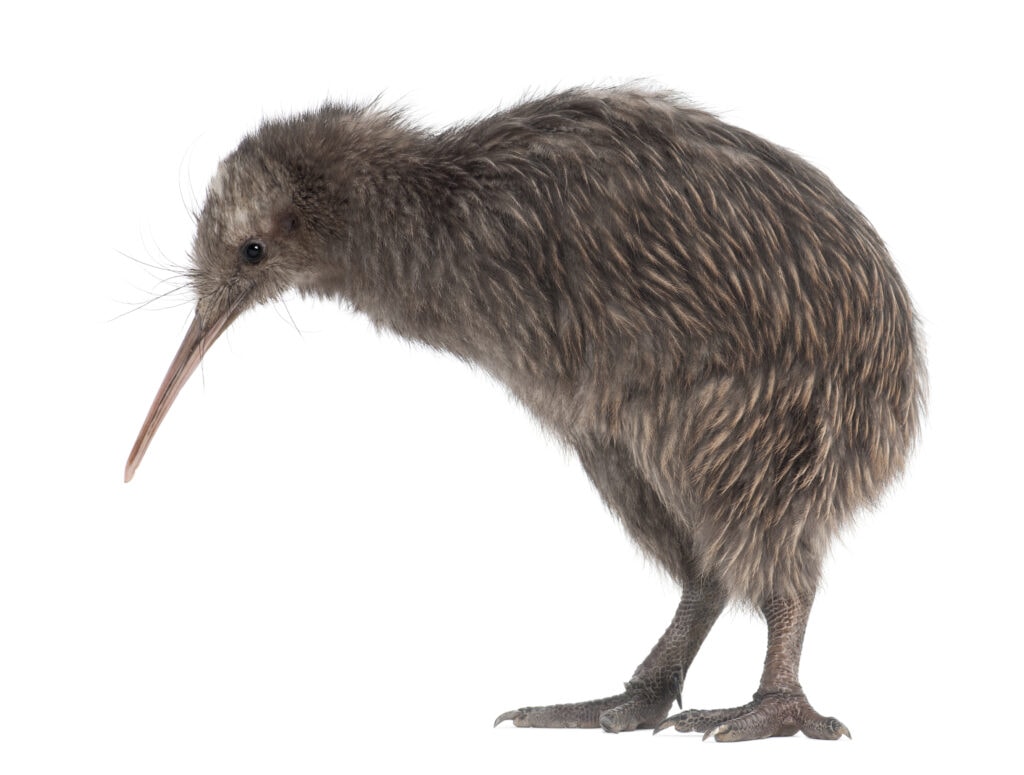
It actually isn’t because of the fruit. It’s because of the native kiwibirds in New Zealand.
Kiwibirds have been native to the islands since the first discovery by the Maori. They used the birds’ feathers to make cloaks for their chiefs.
The kiwibirds’ ties to New Zealand continued throughout the centuries. They became a symbol of the nation, along with the silver fern and the moa (an extinct bird related to emus).
They came to represent the people of New Zealand during World War I, when the kiwi soldiers had a kiwibird on their military badges.
It caught on and nowadays, kiwi is the national term for New Zealand’s citizens.
Considering Moving Abroad? Find Out Which Country is Right for You!
13. Sweet As – “This dolphin watching tour is sweet as!”
“Sweet as” is the most common expression in New Zealand. Everything that is cool or great or awesome is “sweet as!”
14. Choice As – “That jacket is choice as!”
Choice means awesome, so “choice as” means the same. It can be used in most of the same scenarios of “sweet as”.
15. Mean As – “That concert was mean as! I loved it so much.”
Oddly, “mean as” has nothing to do with being mean. It actually means “awesome”, just like “choice as”. I guess it’s a bit like us using “sick” to describe something “cool” in North America. Logically it doesn’t make sense, but we’re so used to it that it feels natural.

16. Beached As – “I’m too tired to get up. I’m beached as!”
Beached is a term for a water animal stuck on land, typically on a beach. Since New Zealand is made up of three islands, they’re pretty familiar with things being beached. Being “beached as” means you’re stuck or can’t move. It’s not used if you’re actually stuck. It’s more a term for when you’re too full or too tired to move.

17. Aroha – “I gave her a gift of aroha”
Aroha means love in Maori. You can use it when saying “love” at the end of a letter, as a sign of affection, or as a stand-in for the word ”love”.
18. Tu meke – “Here’s a gift.” “Tu meke!”
Literally translated to “too much”, tu meke is an appreciative acknowledgement when someone has made a kind gesture towards you. It’s sometimes used as a way of thanking the person.
19. Whanau – “We’re going to the bach with my whanau”
Your family is your whanau.
20. Pakeha – “I’m not Maori; I’m Pakeha”
Pakeha is a term literally meaning fair-skinned. However, it’s often used to describe anyone of non-Maori origin in New Zealand.
21. Ka Kite Ano – “Bye, John. Ka kite ano!”
A way of saying “see you later”.
22. Pakaru – “Damn! My laptop is pakaru.”
If something has been broken or damaged beyond repair, it’s pakaru. This Maori slang word is used across New Zealand.
23. Haka – “The footie team did a haka to scare the other team.”
Haka is sacred in New Zealand. It’s a form of traditional Maori dance that is done to intimidate foes. Nowadays the All Blacks rugby team is famous for opening matches with a haka. You can view a traditional haka in my Maori Overnight Village Stay post.
24. Hangi – “Have you have eaten a hangi?”
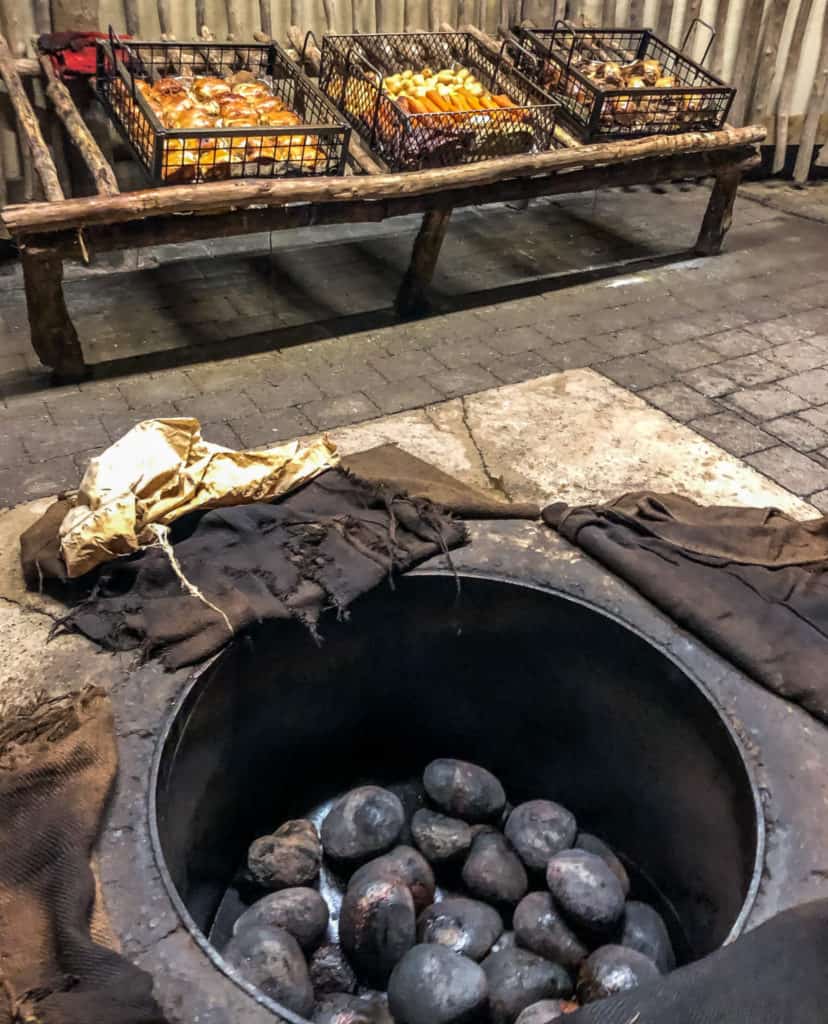
A hangi is a traditional way of cooking food using hot volcanic rocks underground. The Maori dig a pit for the food, place a layer of hot rocks, cover it with food, then cover the pit with a sealed lid. The steam of the rocks cooks incredibly tender vegetables and meat.
25. Iwi – “My family are part of my iwi.”
A Maori’s iwi are their tribe.
26. Hapu – “Not all people from one iwi are of the same hapu.”
Iwi are broken up into different hapus or clans.
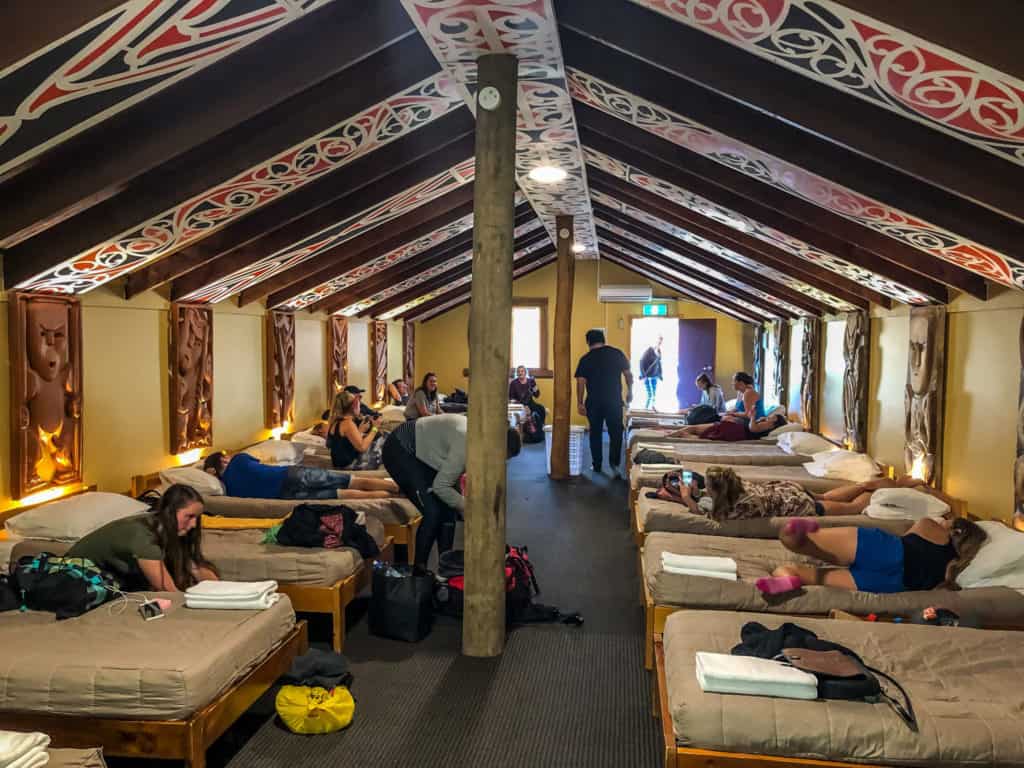
27. Marae – “Please take your shoes off before entering the marae”
The Marae is a traditional Maori meeting house. They’re formal areas that are even used by the New Zealand government during meetings. You aren’t allowed to wear shoes inside of them. Having a meeting in a marae requires a blessing to be said at the beginning and end of your visit.
28. Pounamu – “Wearing pounamu helps ward off evil spirits.”
Pounamu is the famous jade stone of New Zealand. It is said to have healing properties. You can get gorgeous jewelry made of the stone during your visit.

29. Kiwifruit – “Brown Fuzzy Exterior Fruit / Kiwi”
A kiwifruit is what most of the world would refer to as a “kiwi”. In New Zealand, you have to make the difference clear. If you say you’re going to eat a kiwi, people will give you some looks until they realize what you mean (I say definitely never having done this in front of my boss during my first week on the job).
30. Hokey Pokey – “Honeycomb”
Hokey pokey can be found in chocolate, in ice cream (it’s delicious), and on it’s own. It’s one of the must try foods in New Zealand.
31. Tim Tam Slam – A Special Way of Eating New Zealand’s Traditional Cookie
Tim Tams are a national cookie down under. They’re a sandwich of biscuits around a chocolate creme that’s then covered in a layer of chocolate. You can now get them in a bunch of flavours.
A tim tam slam is when you bit off the short ends of the biscuit. There’s a small hole down the piped creme in the centre. Grab a hot chocolate or tea and use the cookie as a straw to suck up the beverage. It’ll start to get soft and crumbly. When it does, shove that cookie in your mouth before it disintegrates into your cuppa.
32. Saussies – “Sausages”
In New Zealand they don’t throw shrimp on the barbie, they throw saussies! These are any type of sausage in the nation.
33. Barbie – “Barbeque”
New Zealand and Australia have a fair amount of crossover with their sayings. A barbie means the same thing in both, and is a staple of both of their cuisines.
34. Shark n Taters – “Fish and Chips”
I genuinely don’t know why this slang exists, but it does. And it’s hilarious when said to tourists who suddenly think they’re about to be fed shark. In reality, it’s normal white-fish-based fried fish and thick-cut chips (fries).
35. Chips – “Thick Cut French Fries”
New Zealand has both fries and chips. They’ll refer to them all as chips, but if they’re getting specific, chips are meant to be thick-cut fries that almost resemble a wedge.
36. Scroggin – “Trail Mix”
Hiking is a huge part of kiwi culture. In New Zealand, you’ll find some of the most active people in the world. So of course they have trail mix everywhere. However, you’ll have to look for “scroggin”. It’s exactly the same as trail mix anywhere else, but with a better name in my opinion.
37. Chuddy – “Chewing Gum”
Ask someone for a stick of chuddy rather than a stick of gum in New Zealand dialect.
38. Maccas – “McDonalds”
I didn’t even realize I’d switched over to Maccas so completely, but my friends constantly mock me about this. Maccas means McDonalds. It’s the New Zealand and Australian slang for the company. I don’t think I ever heard a kiwi refer to it by its full name.
39. Tomato Sauce – “Ketchup”
If someone offers you tomato sauce with your sausage rolls, don’t think they’re pulling out pasta sauce. To kiwis, tomato sauce means ketchup. …but it can also mean pasta sauce. It’s good to clarify when you’re asked to bring some to a dinner party.
40. Hundreds and Thousands – “Sprinkles”
I adore this New Zealand slang and wish the rest of the world would adopt it. They refer to all sprinkles as hundreds and thousands. I’ve heard the same term in the UK and Australia. It just makes rainbow sprinkles feel so much more fun!
41. Lolly – “Candy”
Any type of candy in New Zealand is a “lolly”. If it’s a popsicle, it’s an “ice lolly”.

42. Pav – “Pavlova”
Pavlova is a classic New Zealand dessert. Learn more about it in my article on New Zealand food to try.
43. Pikelet – “Small Pancake”
Pikelet are dollar-sized pancakes, typically served with jam and whipped cream.
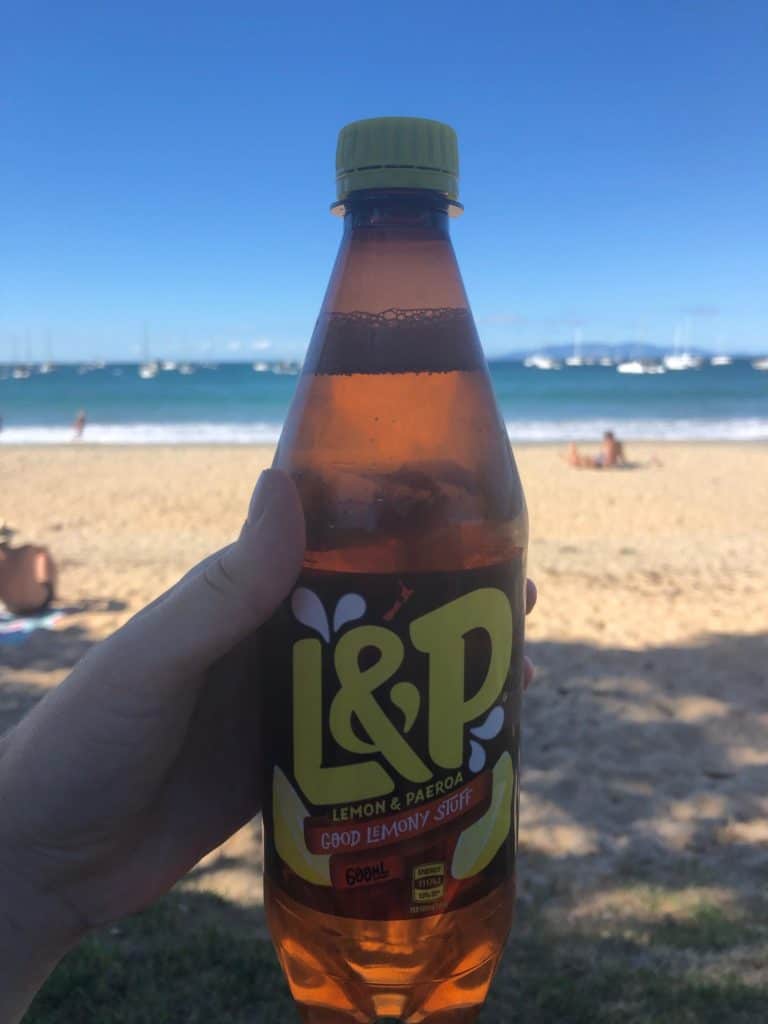
44. L&P – Special Brand of Fizzy Soda
L&P soda stands for lemon and paeroa – the two flavours of the drink. It tastes like a mix between ginger ale and lemonade.
45. Long Black – “Double shot of Espresso Poured Over Hot Water (like an Americano)”
New Zealand takes coffee very seriously! They hate it when you order like an American, so learn the New Zealand translations for your coffee. A long black is a strong americano.
46. Flat White – “Two Shots of Espresso with Microfoam (like a Latte)”
A flat white is the equivalent of a latte, but stronger and with more milk. These are delicious but they pack the punch of two lattes.
47. Cuppa – “Cup of Tea/a Hot Beverage (as in ‘cuppa tea’)”
A classic British expression; have a cuppa in the morning to get you going!
48. Boil the Jug – “Put on the Kettle”
My favourite comedian, James Acaster, does a whole bit on boiling the jug. I absolutely love the expression and need to start using it more often when I want someone to turn on the kettle to boil water.
49. Entrée – “Appetizer”
Entree means different things around the world. In Europe, it’s a main dish. Here, it’s an appetizer.
I later saw a whole Bellow Deck Med over this topic that mirrored how confused I was when I saw this in NZ.
50. Pudding – “Dessert”
New Zealand holds true it’s British roots here. Pudding means dessert.
51. Bring a Plate – “Potluck”
If you’re invited to “bring a plate”, you’re being invited to a potluck party where you have to contribute a dish to the meal.
52. Skull – “Chug a Drink”
Skulling is the same as chugging in North America. It’s not a classy move, but we’ve all done it – especially in our uni days!
53. Hungus – “Someone Who Really Loves Food”
Hungus is a unique term for someone who has eaten a lot or was overzealous while eating.
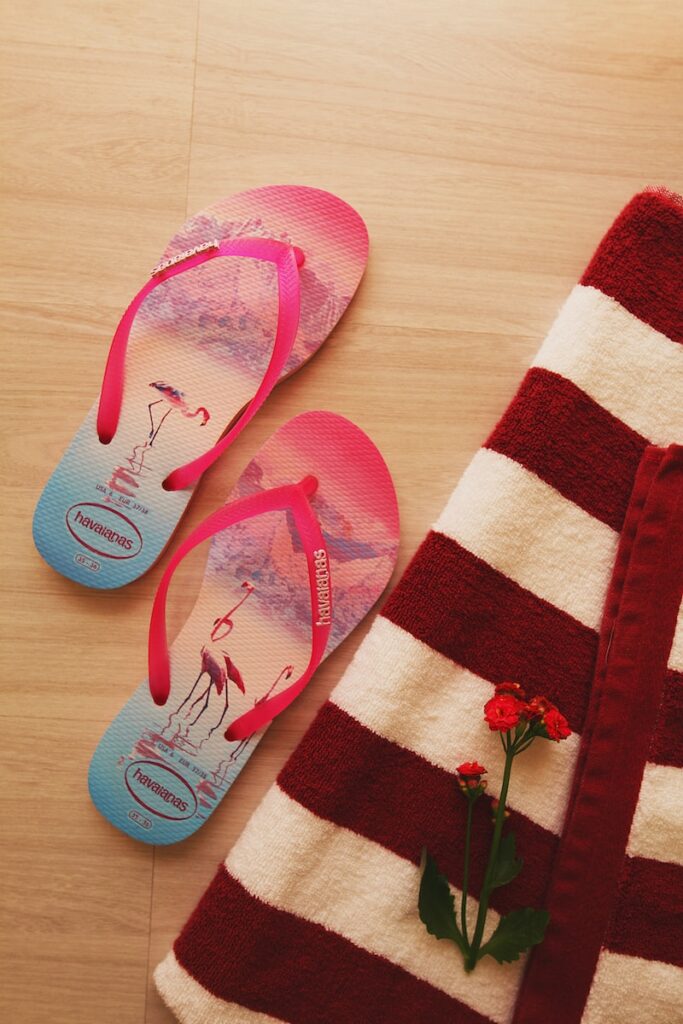
54. Jandals – “Flip Flops/Thongs”
As one of my favourite comedians, Urzila Carlson says, “We will never have world peace until we can agree on what to call these sandals!”
Every country I’ve been to has their own name for them. In New Zealand, they’re jandals.
55. Gumboots – “Wellies/Rain Boots”
Don’t forget to pack your gumboots in winter! New Zealand is incredibly rainy (although not very cold). Find out more about New Zealand’s seasons and the best time to visit New Zealand here.
56. Togs – “Swimwear”
In most countries, togs are a level of warmth in duvets. In New Zealand, they’re what you call your swimwear. Pack your togs to swim with wild dolphins in Kaikoura or hang out on a beach in Devonport!
57. Singlet – “Tank Top”
This is my favourite word for any clothing. Something about it is so fun to say, although it confused me for weeks when my roommate kept asking me for one. A singlet is usually a camisole or tank top with thin straps. It’s come to refer to anything sleeveless top.
58. Stubbies – “Short Shorts”
The name’s origin is pretty obvious: the legs of short shorts are pretty stubby. Slap on some stubbies and take advantage of the incredibly warm summer days in New Zealand.
59. Woolies – “Warm Layers (Typically Made of Wool)”
New Zealand, like the UK and Ireland, is a country full of sheep. Wool reigns supreme as a warming fabric. You’ll find all sorts of gorgeous sheepskin rugs and throws (and back support chair rests, which I highly recommend). Now, woolies refer to any warm sweater you’d wear to fight off the cold.

60. Tramping – “Let’s go tramping in Tongariro next week.”
Tramping refers to any kind of hike. It’s a great term that brings to mind going out of a city and exploring into the paths. The word always brings to mind hiking through farm fields on my way up a small mountain in Wanaka or crossing the volcanic fields when I hiked the Tongariro Crossing.
61. Dairy – “I need to pop to the Dairy for milk and cigs.”
A dairy is a corner store. They’re the little stores where you pop in for a meat pie, a carton of milk, and maybe some lollies.
62. Bach (Pronounced “Batch”)/Crib – “We’re going to fire up the Barbie at Linda’s bach next weekend.” “Can’t wait to visit your crib in Nelson!”
Baches and cribs are holiday homes, typically found in the South Island. It’s a very southern term in New Zealand.
63. Chilly Bin – “Don’t forget to pack the L&P in the chilly bin for the road trip!”
Road trips and days at the beach are hugely popular in New Zealand, but you need something to keep your food cool. That’s where a chilly bin comes in. It’s the New Zealand term for a cooler where you can keep your drinks and sandwiches fresh while you’re out and about.
64. Long Drop – “I have to use the long drop before the drive home.”
You’ll find a lot of long drops in New Zealand. These are outdoor toilets or port-a-potties. Typically long drops refer to the outdoor toilets built around backcountry hiking trails, but I’ve also heard people use them for modern port-a-potties.
I said this in Alaska recently and the hiking group I was with looked at me like I was crazy!
65. Hottie – “It’s freezing tonight! I’m going to need a hottie to warm me up.”
No, this isn’t a hot guy or gal to join you in bed. It’s a hot water bottle! New Zealand houses don’t have great insulation, so these are essential in the winter.
66. Motorway – “Turn left on the motorway to take the tiki tour to Auckland.”
You’ll drive a lot of motorways on a road trip in New Zealand! These are the local term for freeways or highways.
67. Petrol – “We need to stop for petrol. We’ve only got half a tank.”
Petrol is the British, New Zealand, and Australian term for gasoline. It’s not diesel, so you can fill up any regular car with it.
68. Scarfie – “It’s freshers week and the scarfies are skulling in the streets.”
Scarfie is a term for students of Otago University in Dunedin. It came from students wearing the university’s blue and yellow scarves for rugby matches in the 1960s. Now, it’s a general term for the university students in the area.
69. Torch – “Don’t forget your torch for late night tramping!”
Don’t grab a torch from Frankenstein! Pick up a flashlight, and you’ll have a kiwi torch in hand.

70. Arvo – “I’ve got so many meetings this arvo.”
Arvo is slang for afternoon. You’ll see it in casual office memos, when making plans with friends, or constantly in my autocorrect when I try to add “avo” to my grocery list.
71. Op Shop – “You can save so much money at the op shop.”
Op shops are thrift stores. They’re a great place to find unique outfits in New Zealand, since shopping is otherwise not amazing in the country. They have stores, but not as much variety as other nations. Most kiwis wait to shop until they’re on holiday.
72. Root – “If you want to root tonight, you just need to go clubbing in Queenstown.”
This is technically a dirty word, but as it’s not swearing we’ll keep it in this section. To root is to have sex or to f*ck. It’s a pretty common term down under.
You’d really only say it with friends, as it’s a bit crude.

73. Footie – “We’re going to play footie this arvo. Do you want to join?”
Footie in England is soccer/football. In New Zealand, it’s rugby. There’s a lot of confusion as there are tons of British expats living in NZ.
74. Shifted – “Jackie shifted last weekend from Auckland to Wellington.”
This is a local term for moving house.
75. Flat – “I just shifted to a flat in south Auckland. Do you know anyone who’s looking for a flattie?”
A flat is an apartment. A flattie is a flatmate or roommate.
76. Chundered – “Gary skulled a bottle of vodka and chundered all over the Uber.”
We’ve all chundered at one point or another in Queenstown. Chundered means you threw up or vomited. Usually it’s used to refer to someone who was drunk.
77. Chocka – “Do you want another serving?” “Nah, I’m chocka.” / “Is there room for this couch in your flat?” “Nah, it’s chocka block.”
Chocka or chocka block (used interchangeably) mean that something is full. This can be used to refer to your stomach, your home, or your car. The “block” is added because of the rhyme, a common practise in New Zealand slang.

78. Wop-Wops – “You’ll find a lot of long drops if you’re out tramping in the wop-wops.”
The wops or wop-wops mean the middle of nowhere. Usually it refers to backcountry or places off the beaten track. If you’re in New Zealand, be sure to visit the wop-wops for some of the coolest natural sights.
79. Tiki Tour – “Let’s take the tiki tour on the drive back. I have an hour to kill.”
Taking the tiki tour means to take the long way. The British would say “going round the houses”. It’s essentially a term about taking the scenic route, where you can enjoy the views and spend some extra time without worry.
80. Carked It – “My car carked it on the motorway yesterday.” / “Did you know Cathy carked it last year?”
I don’t know why this term exists but I kind of love it. Carked it means that someone or something died. Kiwi slang often works for both objects and people. This one surprised me, but it’s still interchangeable.
81. Squizz – “Can I take a squizz at your new kitchen?”
To squizz is to look at something. I think it comes from squinting, but honestly I’m not sure.
82. Piss-up – “Can you grab more ice for the piss-up at my flat this arvo?”
A piss-up is a party. It’s slightly odd because being pissed is being drunk. But being pissed off is being angry. And something can also be easy as piss.
I never realized it before, but the Kiwi have way too many slang phrases involving piss.
83. Nek Minute – “I was walking down the street, nek minute I run into my ex.”
Nek minute is a slightly hyperbolic term. It sort of means “the next thing I knew”, although it literally means “next minute”. If you’re telling a story and want to jump to the next thing that happens, you’ll use nek minute as a bridge slang term. Usually, it’s used in dramatic stories.
84. Gizza – “Can you gizza L&P, bro?”
Aussies and Kiwis love adding “z”s to their slang. I don’t know why, but I’m here for it. Gizza means give me.
85. Gold Coin – “Can you spare a gold coin?”
A gold coin is a $1 coin in New Zealand. The coin is literally gold coloured. Sometimes there’s a bit of confusion and it can mean the $2 coin as well.
86. Good On Ya – “I got a promotion at work!” “Good on ya!”
Good job!
87. Keen – “Do you want to split a pizza?” “Keen.”
To be keen is to be enthusiastic about something. It’s similar to the Canadian Slang term “keener”, who is someone that is overly enthusiastic about something.
88. Skux – “That dress is amazing. You’re looking skux.”
Skux is refers to someone that looks cool or trendy.
89. Beaut – “Your new car is beaut!”
Beaut doesn’t actually mean beautiful. It means excellent or awesome.

90. Stoked – “Are you going to Sheila’s barbie?” “Yeah, I’m stoked!”
Stoked means excited or happy.
91. Hard Case – “You’re a hard case! Hahaha”
A hard case is someone who is funny. This is a super common New Zealand term that takes a bit to wrap your head around, as it sounds a bit too similar to nut case.
92. Piece of Piss – “That test was a piece of piss!”
This means that something is really easy. Don’t say it to your boss about an assignment. But you can say it to your friends about the assignment outside of the office.
93. Cuz/Bro – “How’s it going, bro?” “Great! Ta, cuz.”
Cuz and bro (and cuzzie) are both terms for friends or mates. It’s basically the same as saying “how are things, friend?” or “Great! Thanks, mate.”
94. She’ll Be Right – “Is your leg ok?” “She’ll be right!”
She’ll be right is a short form of she’ll be alright. It means it’ll be ok or no worries. The Kiwis are all about everything being chill and no stress.
95. Yarn – “She was spinning a yarn for ages.”
A yarn is a friendly chat. Often it can get drawn out for long periods of time.
96. Hard Out – “Potato top pies are choice as!” “Hard out!”
Hard out is a way of saying that you really agree with someone.
97. Heaps – “I love you heaps”
Heaps means “lots”. I love this term so much, especially when used to thank someone or give them appreciation. It just feels cozy and warm and cute!
98. Straight Up – “Please be straight up with me”
This isn’t asking for a drink. Straight up means to be honest or tell the truth. Usually it’s said when you’re asking someone not to sugarcoat things.
99. Not Even Ow – “Nancy got married for the 12th time.” “Not even ow”
Not even ow is a unique Kiwi phrase. It basically means “wow, I’m speechless”. People say it when something has shocked them or thrown them for a loop.
100. Dodgy – “That car looks real dodgy”
Dodgy means bad, unreliable, or not good.
101. Whinge – “Karen whinged at the manager for an hour then got a refund”
To whinge is to moan or complain. People will often say this instead of “venting”. I’ve had “whinge” sessions with my Kiwi friends.
102. Buggered/Knackered – “After swimming with dolphins in Kaikoura, I’m knackered/buggered”
These are common British and New Zealand terms for being exhausted, tired, or completely run down.
103. Crook – “I called in sick. I’m feeling crook today”
To feel crook is to not feel well. If you’ve got a bug or need to find a doctor while travelling abroad, you’re crook.
104. Grotty – “Your boyfriend’s flat is grotty”
Grotty is the same as gross or dirty. It doesn’t mean that something is broken or dodgy, just that it needs a good scrub with some soap and water (and maybe some intense cleaning supplies if it’s an all male flat).
105. Cock Up – “I sent an email without an attachment. What a cock up!”
A cock up is a mistake. Again, not something to say to your boss, but a very common saying. It can be used for any type of mistake, regardless of scale. My biggest cock up in New Zealand was the time I accidentally spent $400 on taxis in Dunedin.
106. Mare – “I’m having a mare with the kids lately”
Having a mare is to have a difficult time. It’s related to “nightmare”.
107. Pack a Sad – “That kid is packing a sad”
Packing a sad is having a tantrum. It’s mostly used to refer to kids, but I can think of some times in my teenage years and college move ins when my mom definitely would have said this about me.
108. Maaaate – “I called my ex again.” “Maaaate”
There’s a big difference between “mate” and “maaaate” with a drawn out “a” sound. Mate is a friend. Maaaate is sign of disappointment. It’s essentially the same as saying “come onnnn” or “not again”.
109. Sus – “That kiwifruit looks sus. I wouldn’t eat it.”
We’re all pretty familiar with “sus” since Among Us came out, but the Kiwis were saying it first. Sus has long been a New Zealand phrase for suspicious.

110. Rark Up – “She gave him a good rark up for taking the last pie”
A rark up is a way of telling someone off. It’s kind of the same as giving someone an earful or biting their head off.
111. Gutted – “They’re sold out.” “Aw, I’m gutted!”
Gutted is a way of saying upset. If the concert tickets sold out before you could buy them, you’re gutted.
112. Skint – “I can’t afford one, bro. I’m skint!”
Skint means being broke or having no money. It’s usually used to refer to a momentary lack of cash, although some people will use it to describe their financial situation overall.
113. The Punters Are Out in Full Force – “There’s a big crowd”
This phrase is usually used to refer to crowded venues, like a concert or a park during summer. I’ve used it to refer to wineries and beaches in Waiheke, Auckland’s wine island.
114. Yes, But Can You Handle a Jandal – “Can you deal with the situation?”
I don’t know why flip-flops are brought into this one, but for some reason they are. This slang phrase is sort of the same as “can you handle it?” I’ve heard it used to dare people to prove themselves on a night out as well.
115. Had a Big One on the Turps – “Had a Big Night of Drinking”
In Canada, you’d have tied one on last night. In New Zealand, you’d have had a big one on the turps. Typically these are followed by a wicked hangover and potentially chundering.
116. She’s Such a Dag – “She’s so funny”
It’s so close to “he/she is such a drag” that it seems odd to go from boring to funny. But in New Zealand, that’s what this common slang means.
117. Rattle Your Dags – “Hurry up!”
What are dags?? No one really knows. It’s just a lasting expression that’s made its way into common New Zealand dialect. You’d yell this at your mate when they’re taking too long getting ready for a night out.
118. He’s Just Taking the Piss – “He’s just joking”
You can really sense the British influence in New Zealand slang. This phrase is meant to assure someone that they’re joking.
119. I’m Flat Out at Work Today – “I’m very busy at work today”
Flat out means someone is super busy. I think it relates to being flat out when you drive, when your foot is all the way down on the gas pedal so you’re literally doing as much as possible. But I’m not sure.

120. We’re Driving From North Cape to the Bluff This Summer – “We’re driving from one of New Zealand to the other this summer”
North Cape is the top of New Zealand, where you’ll find Cape Reinga. The Southernmost tip is called the Bluff. This term is a road trippers dream in New Zealand and something the locals regularly do.
121. You Right? – “Are you okay?”
This phrase is clearly shortened from “Are you alright?” But in a crisis, who has time to say all those extra syllables?
122. I can’t do the shopping this week. I’m snowed under. – “I’m too busy or have too much work to do.”
I find this term hilarious, because snow is such a rarity in New Zealand. Essentially being snowed under is being way too busy.
123. Hailey’s Up the Duff – “Hailey’s pregnant”
Up the duff means that someone is pregnant.
124. Feel free to bowl round any time! – “Come around to visit any time”
This is such a charming phrase. “Bowl round” has such a lovely home-y sound to it. It means that someone can pop by whenever.
125. I got up early to see the sparrow fart over Roy’s Peak – “I got up early to see the morning sunrise over Roy’s Peak”
Sparrow fart is the weirdest slang I’ve ever heard for an early morning sunrise, especially in a country with the most beautiful sunrises I’ve ever seen.
New Zealand Swear Words and Insults
I know this is what most of you are really here for, isn’t it? Well, we’ve reached the swear words and insults section of this slang guide. I did promise we’d go from sweet as to swear words.
I’ll preface this section with this: do not say these unless you mean them. Many of these are Kiwi fighting words.
This is PG13, so kids turn back now!
126. Jafa – “He’s a jafa”
Most of New Zealand really hates Auckland. It’s like how most of Canada hates Toronto. So they made up an insult just for Aucklanders. Jafa is both a type of candy and stands for “Just Another F***ing Aucklander”.
127. Bugger – “He cancelled our date. Bugger!”
Bugger is kind of a beginner swear word. It’s kind of the same as “damn”. You usually use it when you’re disappointed or something has gone wrong.
128. Muppet – “You muppet!”
A muppet is a fool or an incompitent idiot. It may sound cute, but it’s meant to have some bite behind it.
129. Egg – “You’re Such an Egg”
I was horrified when I discovered this one, because I say “you’re a good egg” all the time! In fact, I’m pretty sure I said it at work before I learned better.
Calling someone an egg is the same as saying they’re a clown. Like muppet, it sounds more lighthearted than it is. It’s usually meant with the same intensity as “idiot”.
130. Wanna Hiding? – “Hey, bro! Wanna hiding? Let’s go outside”
A hiding is a term for a beating. So to want a hiding is to want to fight, with the expectation that you’ll lose. This is a literal New Zealand fighting phrase. Do not use it unless you’re looking to make some horrible decisions.
131. Butter – “Wow nice body, butter”
We have “butter faces” in North America as well. It essentially means: hot body but her face. When you mash it together it sounds kind of like “butter”.
132. Bung – “That chair you made me us is bung”
Bung means something is really messed up, bad, or broken. This craftsman would have been very insulted with this.
133. Maori Job – “The table broke a day after I bought it. What a Maori job”
A bit of casual racism here unfortunately. A Maori job refers to something that is shoddy craftsmanship. It’s used regardless of the ethnicity of the item’s creator.
134. Scodey – “Ew, man, that’s scodey”
Something scodey is rotten, disgusting, or horrible.
135. Emu Shagger / Snake Sucker/ Petro Sniffer – “Those Aussies are a bunch of [insert on of the three here]”
These are 3 specific terms that are Kiwi slang for Austalians. They have a lovely rivalry with their down under-brethren, which has led to some colourful terms. I can’t guarantee that you’ll get an Aussie to punch you by saying this, but the odds are pretty high.

Conclusion
New Zealand is one of my favourite places in the world. After living there for a year, I found that my dialect has been forever changed. I have to stop myself from starting all emails with “kia ora!” or asking if I can borrow my sister’s jandals in the summer. I still say “no worries” with reckless abandon, so much so that it almost rivals my use of “sorry” as a Canadian.
People often think to brush up on local languages when the country doesn’t speak their native tongue. In New Zealand, any English-speaker should brush up on the local slang and phrases before they arrive. Or they’ll be incredibly confused. “Sweet as what?? Could someone please finish their sentence!”
You’ll definitely need to learn these terms before you consider moving to New Zealand.
Have fun confusing local friends and family with your use of kiwi slang as you get yourself ready for an epic trip down under.
Read to start planning your trip to NZ? Learn the best time to visit here.
Ka kite ano! (See you later!)
Heading to New Zealand? Save more in booking your flights and accommodations by using this platform!
More on Living in New Zealand
- Cost of Living in Auckland, New Zealand
- 13 Best Places to Live in New Zealand (and Where Not To!)
- What Does it Cost to Live in New Zealand?
- 25 Pros and Cons of Living in New Zealand
- Living in Auckland vs. Wellington: Which Country Should You Move to?
- 19 Pros and Cons of Living in Auckland NZ
- What is the Best Time of Year to Visit New Zealand?
- 57 New Zealand Travel Tips (Local’s Guide)
- 19 Pros And Cons Of Living In Wellington New Zealand
- 135 New Zealand Slang: From Sweet As to Swear Words
Pin This for Later

Living Abroad Travel Planning Guide
🚑 Should I buy expat travel insurance?
100% YES! — With basic coverage averaging just $5-10 USD per day, enjoy peace of mind with a plan from Safety Wing!
🌎 What is the best country to live in as an expat?
It depends – the best country to live in as an expat will depend on your unique needs. I developed this free quiz to help you figure out where is right for you!
📍 How do I pick a country to live abroad?
It depends – picking a country to live in is hard. That’s why I developed this $7 course to share all of the steps I’ve taken when deciding to move to 20+ different countries, and how I handle homesickness when I get there.
Ultimately, making the choice of where to move is going to be hard. But the hardest thing is deciding to move abroad at all!
💼 How do I get a job as an expat?
You can find work abroad via local job boards or temp agencies. My favourite way to work is remotely, so I always look for jobs on FlexJobs.com when I live abroad. They hire for 100% remote roles only.
If you’re looking to teach English abroad, Premier TEFL has the best online course to get you great work!
💰 How do I open a bank account abroad?
Wise.com offers free global accounts, and the cheapest money transfers. Since it can be a headache to open bank accounts in different countries (it took me 2 months in the UK!), Wise.com is a great solution.
I actually use it as my primary bank now worldwide due to the multi-currency debit card. (Read more)
👯♀️ How do you make friends abroad?
Meetup.com – Meet likeminded people who share a similar hobby with Meetup! It’s free to join, but some activities may cost money, like if you go to a cafe and get a coffee.
🙀 I don’t speak the language. Can I still live abroad?
Learn languages in no time with iTalki! Moving abroad is an opportunity to learn the language. You don’t need to know it before you leave home.
💻 Do I need a VPN?
Yes! – VPNs allow you to access more of the internet. From US Netflix in the UK to social media sites banned in Asia. It’s a really helpful and cheap thing to ensure your online activities aren’t restricted.
🧳 What’s the best luggage for living abroad?
This is my favourite luggage set for long term travel. You can read more about my review of types of suitcases for travel here.
🏡 How do I tell my friends and family I want to live abroad?
Take this $7 course and learn the exact script I used to tell my family I was moving abroad … and then when I did it again. I even include tips for prepping your family, and for how to handle family who aren’t supportive.
✈️ What’s the best site to buy cheap flights?
To find cheap flights, I recommend Skyscanner. (Read more)
🏨 What’s the best site to find cheap hotels?
To find cheap hotels, I recommend Booking.com. (Read more)
Or stay for free with Trusted Housesitters!
🚗 What’s the best site to rent cars abroad?
To find cheap rental cars, I recommend Discover Cars.
🚗 What’s the best site to find tours?
To find epic tours, I recommend Viator.