Nina Out and About contains affiliate links and is a member of the Amazon Services LLC Associates Program. If you make a purchase using one of these Amazon links, I may receive compensation at no extra cost to you. See my Disclosure Policy for more information.
45 Pros and Cons of Living in Canada from a Canadian
Americans might think they know what it’s like to live in Canada, but they have 0 idea. I’ve lived in 18 countries now and I can tell you, you don’t really know what it’s like till you’ve lived there. That’s why it’s important to hear it from a local!
I was born in Toronto. I say about like “a-boat,” regularly use the term “loonie” in everyday conversation (even if it’s not the right currency), and am constantly saying sorry (heavy on the “o,” of course).
I moved back to Canada after living in a new country every year, or less, for a decade because it’s truly one of the best places to live.
But there are flaws too: like higher taxes, Americans making fun of you in every TV show, and some places getting truly polar winters.
I won’t sugarcoat anything because I want to help you find out if Canada is the best place for you to live.

1. Pro: Universal Healthcare
Living in Canada means access to some of the best health care in the world without having to break the bank. That’s a serious pro in my books!
I had no idea how amazing universal healthcare was until I moved away.
In Canada, emergency healthcare and seeing a doctor are free. Certain tests are also free.
That time I thought my appendix was about to burst but it was just gas? Yep, that was free! (And super embarrassing.)
Things like dentists, optometrists, therapists, prescriptions, and optional surgeries aren’t covered by our universal healthcare. But most workplace health plans will have some sort of benefits package to reduce those costs.
When I moved to New Zealand and asked my job about the benefits, they were so confused. They told me about the free coffee and tea in the break room.
Healthcare is completely separate from work there.
In Canada, it is expected that (most) employers provide their employees with a health care benefit plan. These vary from job to job, and province to province.
Many provinces have introduced free plans for low income people or children/students. In Ontario – where I’m from – you can get free prescriptions until you’re 25.

2. Con: Longer Wait Times for Doctors
Everyone gets free healthcare here, so more people go to the doctors. That means longer wait times and limited family doctors.
Our doctors aren’t privately paid like in the US, so they make less money (but still more than most people). Many of our doctors leave for the US to take advantage of the extra money, or they work fewer hours since they don’t have the incentive to work overtime.
So there aren’t enough doctors to meet the demand.
This is a minor irritation if you’re waiting for a physical, but it can be a real problem if you need significant surgery or need a specialist treatment.
Unfortunately, wait times for major surgeries are long. Even trying to get an MRI or CAT scan that isn’t a strict emergency can take months.
It takes 6 months to see a psychiatrist, 3+ months for a podiatrist or rheumatologist, and 3+ months for a dermatologist. I’ve been trying to see all 4 for a few years now and every time I just get frustrated and cancel because I end up moving to a new city.
That being said, once your in with one, you’re golden. It’s just that start that sucks.
If you can afford it, there are some private clinics in Canada that will take you. Or you can go to the US for treatment.
But if you’re tight on money, that isn’t an option.
Check your work benefit plans before moving to Canada to see if they will help you cover privatized medicine in the case that you need it. If not, be prepared to think ahead when it comes to your health exams. Go in early and work on preventative care.

3. Pro: The Economy is Booming
Canada is the 9th largest economy in the world. Our main industries are service, oil, and agriculture. But you wouldn’t know that in the cities, where businesses like law and banking are thriving.
There are lots of industry sectors in Canada, giving lots of options for work. I’ve worked in everything from service to law to tech to banking – and now travel! In many countries, you’d need to move cities for that but I did it all in Toronto.
We also have many location-specific industries. For example, Digby Nova Scotia is big for scallops. PEI is a big farming community, especially for potatoes. Meanwhile Alberta is going to have no fishing and their main crop is lentils (did you know we’re the leading producer of lentils in the world?).
If you plan on living in Canada, make sure to research your area of work before deciding where to settle. People looking to get into business work should stick with major cities like Toronto, Vancouver and Calgary.

4. Con: Lower Exchange Rates for the Dollar
The Canadian dollar is pretty strong worldwide, but we’ve always been worth less than USD, GBP, and EUR.
On average over the last 10 years, we have been about $0.90 CAD to $1 USD. Exchange rates for the UK (before the Brexit issues) were 2x the Canadian dollar and 1.5x for the EU. We’re usually on par with the Australian dollar and just slightly over NZD.
This isn’t to say our money has no value. In fact, you can go pretty far with it.
However, this makes some of the items we import more expensive.
Apparently, our groceries cost more than the US but having lived in California, I definitely didn’t see that. Also having lived in Britain and New Zealand, it’s really not that expensive in Canada. Shopping locally helps cut these costs.
However, our dollar’s value may benefit you when you move here: your money could be worth a lot more!
To transfer money to Canada, use Wise.com. They offer the lowest fee for transferring your money and can even help you open a virtual Canadian bank account.
Their rates are far lower than Paypal or bank wire transfers. You’ll get the best value for your money transfer.

5. Pro: Primary and Secondary Education are Free
Canadian children get free, high quality education until they’re 18 (that’s when we finish high school usually).
Public schools in Canada are pretty much the same as private, except for the uniform. Private schools are more common for students with special requirements, like Olympic hopefuls who need time off a lot.
I went to public school in Toronto from Kindergarten to Grade 12, even though I went to an Arts and AP high school. That meant my parents didn’t have to pay a bunch extra, and I got a great education.
Provinces have different school systems to some degree. For example, in Ontario, Alberta, and Saskatchewan we have public, Catholic, and private schools. Not all provinces have this. It’s a holdover from back when Canada was more Catholic in the government. Other religious schools are typically private.
6. Con: Higher Cost of Living
The cost of living in Canada is higher than many other countries I’ve lived. It’s especially high if you live in Toronto like I did growing up – there’s a reason I moved to Ottawa when I started making an income!
Now, the higher costs are mostly in cities due to the cost of housing and taxes. Smaller towns or regions outside of cities, like Wolfville in Nova Scotia or Perth in Ontario will be much cheaper.
Growing up in Toronto was like highway robbery between the costs of housing ($1 million for a small house is considered a bargain), cost of food (bread is $5 more expensive in Toronto than Ottawa), and taxes are high (especially in cities with property taxes).
Even rent is higher. A 1 bedroom in Toronto will go for $2k minimum where in Ottawa you can find it right downtown for $1k and you’ll have amenities.
You can bring these costs down in some ways by using public transport, growing your own food if you have a house, getting roommates or living further from a downtown core, or skipping some luxuries like going out to restaurants every night.
Now, I said cost of living is higher and it is, but it’s not insane. You can live comfortably in most places in Canada on your own for $45k a year before taxes.
To really thrive in a major city, you may need closer to $150k (if you want more of those luxuries), but we have plenty of jobs here that offer that.
7. Pro: Rent is Cheaper than the USA
While this depends on where you live, on average, rent in Canada is cheaper than in the USA.
Rent in Canada costs about $2,000 per month in the city. In the US (converted to Canadian dollars), one month’s rent costs $2,350 per month.
That’s for a one-bedroom apartment in a city centre. Outside of the city, US rents are still $200-500 on average higher per month.
My rent in California was 4x my rent in Toronto! And I was in a tiny town in the mountains.
That’s a clear benefit to moving to Canada.
8. Con: Sales Tax Isn’t Included in Prices
It’s one of the biggest cons that I genuinely think is the reason that I keep leaving Canada to live in places like the UK.
When you buy something from a store, it has a price on the tag. However, that’s not the true price.
You’ll have to pay sales tax on top of that price.
Unlike in Europe, the UK, and New Zealand, where the price tag includes tax, we make you guess as to how much it’ll be after tax.
Since every province in Canada has a different sales tax rate, it can be hard to remember what the amount will be.
For people on a budget, this is super frustrating. I constantly assume something is $20 because it says it is, only to find out it’s closer to $25! It also makes it more complicated to plan your budget for tipping.
If Justin Trudeau is reading this: please make sales tax a part of price tags!!

9. Pro: Low Crime Rates
Canada is a really safe place to live.
We have low instances of violent crime and theft across the country. The fact that we don’t allow guns is a huge part of this (compared to our southern neighbours).
We have city police, provincial police, and the Royal Canadian Mounted Police (“Mounties”) – they’re our CIA. They’re all looking out for Canadians at all times.
Big cities like Toronto have the most potential for crime. You’ll always find stories on the news – like anywhere else. And every once in a while there will be a trend of some sort of petty theft. Right now it’s cars when people leave their front door unlocked with their car keys beside it.
But growing up, I always felt safe here. I would often go out at night with friends or go for walks with my mom in the dark. I still walk my dog in the dark in Toronto alone and feel totally fine – and he has 0 scary dog privilege.
As long as you’re reasonably careful, you’ll be ok.
Safety Tips:
It’s easy to stay safe in Toronto as long as you use common sense.
Don’t walk around alone at night draped in diamonds.
Watch your bags, especially in the Downtown core by tourist attractions.
Ask police for help when you’re lost or concerned. Or duck into a hotel or cafe. They’ll help you out.
Don’t drink to excess then stumble around at night.

10. Con: Hard to Access Services Outside of Cities
It is hard to get access to services outside of major cities because Canada is huge – it’s the 3rd largest country in the world.
The majority of Canada is uninhabited, and the 1/3rd of people who don’t live by the US border have to pay a premium for food imports.
In many small towns in the Prairies, the price of lettuce is in the double digits.
Skilled workers’ salaries usually reflect this inflation. But don’t be fooled by the higher income – you’ll be spending almost all of it on necessities.
My aunt did some nursing in the Prairies to make extra money since they paid more, but most of that just went to groceries.
So plan ahead before you decide on living in Canada. Figure out the costs of food and housing before you get sucked in by the large salary for working somewhere remote.
Also be prepared to need to make trips into the cities for essentials, medical treatment, and clothing. I just moved to Victoria and it’s nearly impossible to get medical treatments here, so I have to ferry over to the mainland which I didn’t expect.

11. Pro: Political Stability
Canada has a lot more political stability than most countries globally. We’ve had a constitutional monarchy for over 150 years, with the King just acting as a figurehead.
Our political system has 4 major parties. Now, they don’t all get along, but they aren’t nearly as divided as the US government.
We have 3 tiers of government: municipal, provincial, and federal. That means you get to vote for the person at every level from managing your city to managing the country.
I love being able to have an effect on the government that runs my country. Even when my candidate doesn’t win, the opposing side is still civil even if their policies aren’t something my party agrees with.
Considering Moving Abroad? Find Out Which Country is Right for You!

12. Con: You May Need to Speak French
It’s a common myth that all Canadians speak French.
We don’t!
You’ll really need to know French if you live in Quebec or Ottawa, where being bilingual is more common. Or in New Brunswick – our only officially bilingual province.
Certain jobs in these areas will require you to get a certification in both languages.
This is especially true for government work or if you’re trying to get a job in a business in Quebec.
But remember, this is Quebecois French. It’s different from France French or Acadian French (all of which also exist in Canada).
Jobs don’t usually discriminate between them, but you may have to adapt to fit the company’s type of French. My Quebecois brother in law described Acadian French as being like Shakespearean English, while Quebec French is like 1800s English, and France French is more modern.
Obviously all are modern now, but that’s where their roots came from .
Make sure you know what language requirements you need for your career of choice before you decide to live in Canada.
Need help learning a new language? I recommend iTalki! I’ve tried ALL the apps, but iTalki is the only way I’ve managed to learn as much as living in the local country.

13. Pro: Canada Has 4 Distinct Seasons
Living in Canada means living with 4 distinct seasons: Summer, Fall/Autumn, Winter, and Spring.
Each of those come with their own pros and cons.
Summer can get outrageously hot, but it’s generally sunny and beautiful – especially in Victoria BC.
Fall brings the changing leaves that brighten every Canadian forest, but it brings cold winds. (Personally, I think this is the best time to visit Canada.)
Winter is freezing. But I guess the snow is pretty, and people who like winter sports will enjoy this time of year. You’ll have to learn how to pack for Canadian winter to enjoy it properly!
Spring is rainy, but it really does spawn May flowers that brighten the country with blooms and the opening of epic hiking trails.
The seasons are one of the things I miss most about my homeland when I’ve lived abroad. Nowhere else in the world does them quite as well as Canada – especially fall. We rock those changing leaves!

14. Cons: 1 of Those Seasons is Winter
Winter in Canada is COLD!
When I lived in Ottawa, my eyelashes and dry hair would often freeze while walking my dog in the mornings. It was insane!
The best place to be during winter in Canada is Vancouver, where it rarely snows and averages around 0-5C.
Montreal and the Prairies are the worst places in terms of snowfall. Montreal regularly has snow higher than cars. Calgary often gets snow in August!
When I lived in Nova Scotia, every year we’d get a weekly blizzard. The entire city would shut down.
I was lucky to be on the hospital’s power grid so I never had to worry about losing power, but some people often had blackouts (called “whiteouts” in Canada if it’s from the cold).
I will say, once the snow falls it’s incredible. The whole country becomes this winter wonderland with sparkly now – which actually makes winters quite bright during the day.
I actually find it colder in Victoria now that I’ve moved here because of the humidity and the fact that it doesn’t really go below 0C – so you never freeze to the point of just not feeling the cold like I always did in Toronto (and we don’t have underground tunnels like Toronto).
If you decide living in Canada is for you, invest in warm clothes and (potentially) a generator!
15. Pro: Canadians Are the Friendliest People in the World
Some Canadians are so polite they’ll deny it. But I’ve been outside of Canada for long enough now that I’m brash enough to say it: Canadians are the friendliest!
It’s not just that we apologize for everything (seriously, “sorry” is probably my most said word every year), it’s that we take the time to be polite and to help other people.
We smile at people on the street. We offer a helping hand with the door. We give up our seats to people in need – or even groups that want to sit together. We say “please” and “thank you” for every request, no matter how small. We chat with everyone – even if we don’t want to (I would have at least 200 hours of extra time if I took back all the unwanted chats I’ve had – often with strangers).
Sure, there are some grumpier people.
Toronto is more known for its brashness cause people are busy. But as a Torontonian I can tell you, when we’re not in a rush to get to work, we’re still kinder than most nice Americans.
But, unlike the INSANELY friendly Maritimers, we don’t hand over money to (literally) every homeless person we see. We don’t say “good morning” to everyone we pass. And we’ve learned how to ignore some people – if only to save us time because Toronto is ginormous and we’d never get anywhere.
I drove across the US for 6 months in 2023 and I was constantly surprised that even in the Midwest where everyone said people are so kind, I found them very cold and honestly quite rude.
Living in Canada will mean adjusting to our friendliness and falling in love with how kind our citizens are.
👉 Want to make friends around the world? Join Meetups today for free!

16. Con: We Have Fewer Brands and Stores
Somehow, every shop seems to skip Canada. UK and US brands will cross the pond, but jump over Canada.
Some even head to New Zealand before they come here! (I’m looking at you Pret a Manger!)
As I teenager, I was pissed. It meant all the cool stores were vacation visits. Or would cost an additional $40 CAD for shipping – and I don’t like online shopping. (Shipping is still a major con of living in Canada.)
Nowadays, more stores have crossed over. Things are slowly becoming more similar – even their stocks are largely the same.
But a number of unique brands still haven’t moved over here.
So, if you’re a shopaholic or a devotee of specific stores, check if they even exist here. Or else your life may get a lot more expensive.

17. Pro: Canada is Stunning
Canada is one of the most gorgeous countries in the world. Our natural landscapes are breathtaking.
From national parks to the Rocky Mountains to expansive lakes to the rugged Canadian shield, Canada is an Instagram dream!
We have impressive cities, like Toronto, with iconic cityscapes. We have small towns that still carry the spirit of the first British settlers.
The majority of our land is unencumbered natural space, with rolling plains and towering mountains.
Whether you’re a city or country or middle-of-nowhere kind of person, you’ll love living in Canada.
Canada is also teaming with wildlife. Growing up, we regularly got raccoons in our backyard, squirrels running amok, and saw foxes on our drives north. Deer, coyotes, and moose are less common spots in the city. Outside of the city, you’ll even see black bears in Ontario.
In BC, they get wolves and grizzlies, as well.
In the territories and northern prairies, you’ll find polar bears, seals, walrus, and arctic foxes.
I know nothing about birds, but I’ve seen a lot of different ones around Canada. Hawks and eagles are a magnificent sight, soaring above the forests.
We also have lots of fish – making it a cheap dinner option. Salmon jump backward up waterfalls once a year. Dolphins and whales frequent our shores.
It’s amazing to grow up with that kind of wildlife at your doorstep.
If you’re considering moving to Canada, be sure to check out the local wildlife when you arrive.
18. Con: Flights Are Expensive
This is only a problem if you like to travel. …but who doesn’t like to travel??
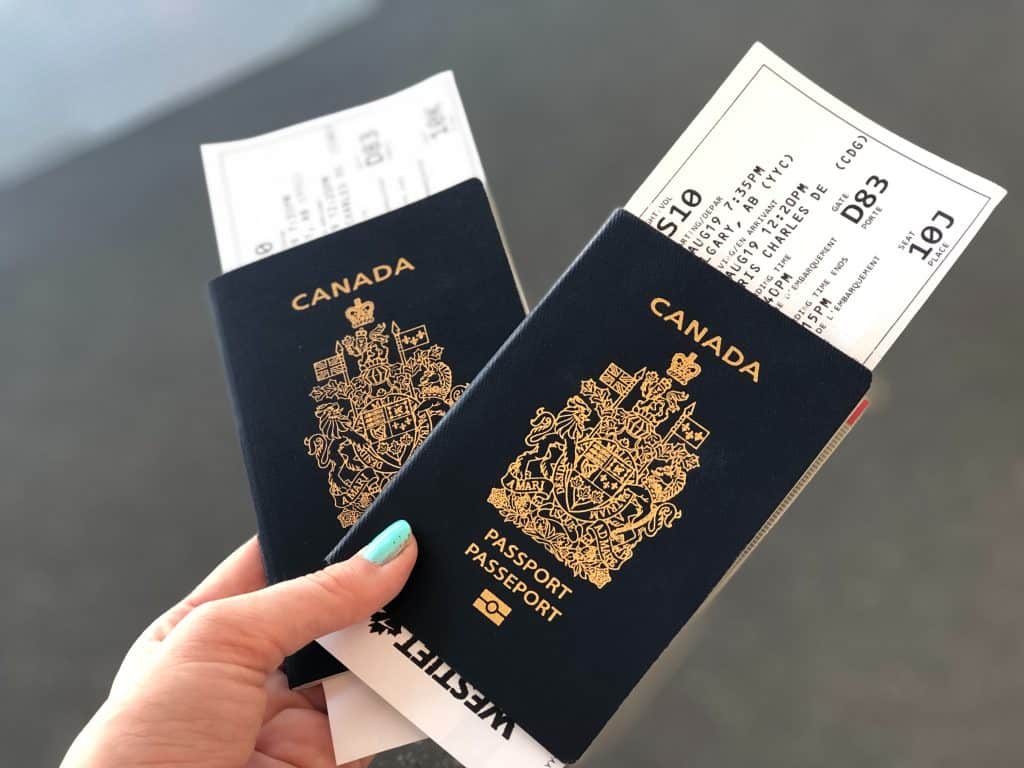
Unfortunately, flights in Canada are very expensive. The 2-hour flight from Toronto to Halifax that I regularly took for university averaged $400 CAD round trip.
If you’re from Canada, that might not seem insane. But when you go to Europe and find out you can travel 5 hours for $20 GBP on Ryanair, it’s a shock.
One of the reasons flights are so expensive is because we don’t have discount airlines.
We’ve tried, but they never seem to stick.
Our “cheaper” (not always) airline is Porter, which flies from Toronto Island rather than Pearson airport. It’s a great option for short-haul flights to the US or certain places in Canada.
If you’re going to Europe or Asia, be prepared for a hefty price.
Living in Canada will mean saving a bit longer for your dream trips.
19. Pro: Gun Restrictions
Canada has very strict gun-control laws.
It’s much harder to obtain a firearm than it is in the USA. You need a license and must pass an exam, which you will also have to take if you want to be a security guard or cop. In fact, many cops don’t even carry guns in Canada.
Our vetting process is much stricter.
My dad and sister tried to get their licenses because they thought they might want to hunt. The process took weeks and they kind of lost interest (which is definitely for the best. Neither of them has any coordination). It involved them doing a full day training, writing a test, and going through numerous waiting periods.
Most Canadians will go their whole lives without seeing a real gun. And the majority of guns sold in Canada are for hunting or protection from wild animals.
This makes Canada much safer to live in than the US. We also don’t have school shootings because of it.
20. Con: No Road Trip Culture
You’ll often hear jokes that in 6 hours you can drive through 7 countries in Europe.But in Canada, 6 hours will barely get you across Ontario!
In fact, driving from Ottawa to Toronto alone takes about 5 hours.
So if you’re planning to drive around the country, you’re in for a long trip. It’s the reason we don’t have a road tripping culture like the US – we’re too spread out.
I drove from Ottawa to Victoria in 2023 and it took months. Largely, because I stopped to enjoy the different places I was visiting and to do more research for this blog. But also because you’d drive 5-8 hours in a day just to get to the next city. You wouldn’t even be out of a province in that time!
That being said, the road trips really are phenomenal. We don’t have a huge culture of road tripping, but I’m looking to change that.
Our parks are so beautiful and the areas between cities are often full of hidden gems that make you fall more in love with Canada.
That being said, it’ll be expensive because of the gas to travel these distances. My gas budget was slightly insane when I did my road trip.

21. Pro: Canada is Very Multicultural
This is one of the most positive things about living in Canada. I grew up in such a multicultural country, with people of seemingly every race and creed coexisting.
Toronto is especially known for this. We have sections of the city where each community first arrived and developed.
Nowadays, there aren’t strict boundaries, but you’ll still find people of similar origins sticking together to share their culture with others.
I grew up in the Ukrainian area, even though that’s not my lineage. And it was fantastic!
Like other districts, there were annual celebrations of their culture, amazing food, and interesting people that built a vibrant community for everyone to enjoy.
Unfortunately, as is the case with most of the world now, we do have some negative pockets. But we’re working on that.
To me, the multiculturalism and the “mixing bowl” style we have (where everyone can maintain their heritage without melting into one homogenous blob, like the US) is the greatest thing about living in Canada.
Sure the trees are pretty in the fall, but I’m proudest of our multiculturalism!
One way to celebrate that is by taking food tours around the country. They’ll guide you through the history of the region and you can sample local delicacies.
22 Con: Visas Are Expensive
I don’t need a visa to live in Canada, but I’ve gotten half a dozen of them to live abroad.
The price tag can definitely be a deterrent to Canadian immigrants. Apparently, it costs up to $1,500 CAD for a Canadian work visa. But when you factor in the specialized training you need, the time to interview to get the job, and the cost of moving, it’ll becomes even more expensive.
My New Zealand Working Holiday Visa cost a scarce $500 NZD in comparison. However, my UK student visa cost over $1,200 CAD. So Canada isn’t the most expensive.
We do let in a lot of immigrants every year. The process is said to be a lot easier than in the US. And some countries or jobs don’t need a work visa.
You need to prove that you can provide something to the Canadian economy to get a work visa. If you’re a skilled worker, it’ll make the process a lot easier.

23. Pro: Well-Spaced National Holidays
Because our vacation time is nowhere near that of the UK or New Zealand, our government has thoughtfully provided a long weekend roughly every six weeks.
These are national holidays that require most businesses to close down. If you have to work on them, you are paid 1.5x as much.
Some of these holidays are global, like Christmas or Easter. Others are nation-specific, like Canada Day. A few we just made up to get a day off, like Family Day.
If you’re moving to Canada, set your calendar to Canadian holidays so you know when all the long weekends are!
24. Con: Jobs Favour Canadian Applicants
Unfortunately, Canada prefers Canadian work experience when hiring applicants.
Secondarily, we’ll accept Western work experience. But this could require additional testing, recertification, or more extensive interviews.
We do this on a lesser scale than the US, to my knowledge, but it still negatively impacts immigrants.
One of our family friends was a Serbian engineer, who had to spend years trying to get the same respect for her qualifications here. To this day she has to supplement her income.
It’s very unfortunate and can put people off moving here.
Research your profession before moving to Canada. See what they require and if your skills are seen as transferable.
If they’re not, look into what additional work you’ll have to do or research other employment options.
Most people I’ve met say living in Canada is worth the hassle, especially since it can help their children. But it’s good to know what you’re getting into ahead of time.
25. Pro: Good Global Reputation
Canada has a great international reputation.
We’re peaceful and we respect other countries’ cultures and religions.
Another benefit of living in Canada is that we don’t support war or interventionism (unless it’s for peacekeeping!) and we believe in human rights and freedoms for everyone, no matter who they are or where they come from.
So when you travel, people will be very nice to you. It’s why many Americans put Canadian flags on their bags and pretend to be from the north.
26. Con: No Marrying for Green Cards
In Canada, marriage only gets you residency. It does not get you full citizenship.
Unlike the US or the UK, where green card marriages are so common that they’re a TV trope, you can’t do that in Canada.
You will still need to apply for citizenship like everyone else.
This can be a con to people looking to move to Canada without the hassle of paperwork.
27. Pro: Peaceful Country
Canada is a peaceful country.
Unlike the US and the UK, we don’t have a history of declaring wars against others or ourselves.
This makes Canada a safe place to live – you don’t have to worry about being drafted into the military or caught up in some terrorist attack.
It also makes us less of a target for attacks.
This is a pro for any immigrant moving to Canada, especially if they are from a war-torn country.
28. Con: Limited Media and Streaming
Canadian Netflix is subpar.
Due to licensing restrictions, many of the movies and shows on UK or US Netflix cannot be played here.
So we get taunted by articles about how amazing some shows are, but never have access to them ourselves.

29. Pro: Lots of Nature to Explore
Canada is a vast country with lots of nature to explore.
It has some of the largest forests in the world, which are home to many endangered species of animals – especially large mammals like moose and bears.
It also has the oldest mountains in the world (like the Rockies), which are very beautiful.
Wherever you live in Canada, you’ll only be an hour away from unique hikes or beautiful lakes. This proximity to nature is very soothing and also allows for cleaner air in Canada.
Are you a Canuck or a Hoser? Test your Canadian knowledge now!

30. Con: A Lot of Construction
Because of our harsh winters, our construction work takes a beating.
Roadways are constantly under repair for cracks and potholes formed by the expanding ice in winters. Buildings are slowed down due to inclement weather, which means it takes far longer for them to be built. Bridges begin to crumble sooner due to the freeze/thaw cycle.
As Canada has grown, we have also struggled to keep up with the demand for housing.
So that leads to even more construction to get new buildings, especially condos, build to house all the people.
The construction is one of the worst parts of living in Canada for me.
31. Pro: More Canadians Speak English
Most immigrants find it easy to move to Canada because we predominantly speak English, a common language around the world.
Some Canadians are multi-lingual, but not all. You’ll be able to find ethnic communities where you can speak in your native tongue, but overall you’ll be able to get by well with English.
32. Con: High Taxes
Canada is known for its high taxes. They’re high because we have to pay for our social services, including free healthcare.
The exact rates vary by province since we pay federal and provincial tax. But on average if you make $100k a year, you’ll have to pay $25k in taxes in 2023.
But they’d also get healthcare for free and likely more coverage via their work, education, social security programs like unemployment insurance, public safety services, and subsidized public transit.
Considering a friend of mine had to pay $4k for 3 stitches in the US (which would be about $5k Canadian), I’d say it’s a fair amount. Especially if you’re chronically ill like I am and spend at least 2 days a year in the ER.
Want to read more on Canadian taxes? Check out the full guide from the government here.
33. Pro: High Quality of Life
Canada has a high quality of life on all fronts. We have a high employment rate, 92% of adults have finished high school, our life expectancy is higher than average at 82 years old, and on average households have $34k USD of disposable income each year.
The US is lower than us on all fronts, and by over $4k in disposable income.
On top of that, Canadians are very happy people. Most of us have large friend groups and activities we participate in year round. We also have access to healthcare to help us if we aren’t happy or have something wrong
Plus, we have the most doughnut shops per capita in the world, so what’s not to be happy about!

34. Con: Houses are Very Expensive
You might not actually believe it until you look for yourself, but houses are very expensive in Canada.
Toronto and Vancouver are the worst for it, with an average house in the suburbs costing well over $2 million.
In areas like Halifax, you can find cheaper houses, but there are limited work opportunities, so you’re less likely to move there.
If you’re planning to move to Canada and don’t want to rent your whole life, the housing prices are a big disadvantage. And unlike the US, we don’t allow you to put like 5% down for a house. Typically, you’ll need 20% for a down payment.
This might be a cool way to afford one though:
35. Pro: University Isn’t as Expensive as the USA
I paid $14,000 CAD per year for my undergraduate degree. However, scholarships often knock this down (it did for me). And I went to quite a well known school (Dalhousie).
We have fewer scholarships and bursaries for students than the US, largely because our tuition is already about 1/4 of theirs. We also have fewer sports based scholarships.
While you have to apply to some scholarships, others – like mine – are based on your grades. Mine covered almost half of my tuition – and I kept it all four years.
College and trade programs can cost even less.
However, our fees are higher for international students. So study abroad kids do end up paying more than locals, sometimes by double (which still makes it 1/2 the price of local US tuition).
The UK and the US definitely charge tuition this way as well, so it’s not unusual. But it does add to the costs of living in Canada if you’re studying here.
It is worth the cost though, as student visas are one of the easiest pathways to Canadian citizenship. So it’s almost an investment in your Canadian residency or citizenship – and in an amazing education recognized around the world.
36. Con: Most Beaches Are Too Cold to Swim
I’ve lived across this country and I’ve rarely found a beach that’s warm enough to swim in.
The Atlantic Ocean is icy even on the hottest day in July. And the Pacific isn’t much better! Even lakes that are landlocked aren’t safe, as many of them are glacial lakes like the ones in Banff.
Canada definitely isn’t a tropical destination, even if some of our beaches might look like we are.
So bundle up in a wetsuit if you want to surf in Tofino or snorkel with belugas in Churchill!
Or time your summer vacation just right to catch the 6 week period where Lake Muskoka is warm enough to swim in.
37. Pro: Excellent Public Transportation in Cities
Our higher taxes go toward subsidizing our public transportation.
Most cities in Canada have excellent public transit. I used to bus to school in Halifax, I’d take the train to my mom’s office in Toronto, and I’d take streetcars to the gym after school in Toronto.
I’ve taken buses in almost every province in the country at this point, and they’ve always been super helpful and efficient. Plus they’re better for the environment!
38. Con: Alcohol and Tobacco are Expensive
I don’t drink or smoke, so this never bothered me, but I know people often complain about the costs.
On average, wine in Canada costs $10.51 USD per bottle, while it costs $9.99 USD in the US.
Since we have a lower drinking age, you’ll be spending more money in your lifetime if you drink in Canada!
Cigarettes also cost more in Canada, with packs averaging $15 across the country. In the US, they’re $9 on average.
39. Pro: Tap Water is Usually Safe to Drink
Canadian tap water is usually safe to drink. We have filters in most city water systems, and our water gets heavily treated before coming through your tap.
There are some rural locations where you will need to boil your water or get a well.
Our Indigenous communities suffer the most from non-potable water and often have boil advisories for their communities, even if they’re right next to a major city.
The government says they’re going to fix this, but it was a platform Justin Trudeau first ran on and nothing has been done yet.
40. Con: Gets Dark Very Early in Winter
Seasonal Affective Disorder is rampant in Canada during the winter.
We’re more northern than most of the US (apart from Toronto), so it gets darker much earlier in the day.
The further north you go, the earlier in the day it’ll get dark. In fact, much of the Territories are plunged into 24 hour nights throughout the winter months!
41. Pro: LGBTQ+ Friendly
I’m a queer woman and I have always felt safe and accepted in Canada.
Everywhere I’ve lived, I’ve found communities of queer people who feel safe living as their authentic selves.
The two places where I sometimes felt uncomfortable were in Quebec and Alberta, but it was largely due to me overthinking it and worrying that the conservative areas wouldn’t be as accepting. In the end, I had no issue.
Gay marriage is legal in Canada, we protect trans rights, and a lot is being done to protect queer youth.
42. Con: Limited Data for Cell Phone Plans
My biggest pet peeve about Canada is the cell phone plans.
Canadian phone plans typically cost $70 CAD for about 3 GB of data.
I actually use an AT&T plan from the US that’s $50 USD and has unlimited talk, text, and data in the US, Canada and Mexico.
It’s easy for travel and much cheaper for me! Considering I moved and had to hotspot for work for 20 days, I’d be bankrupt with the Canadian plan I’d need!
The prices are because we don’t have a lot of competition in Canada. We have 3 major mobile carriers in Canada – just like we only have 5 banks. So that means they don’t need to keep prices down a ton for users.
43. Pro: Cannabis is Legal
As someone with chronic health issues, having legal CBD and THC access at my fingertips is incredibly helpful. It’s also benefiting the government with an influx of tax dollars from both medical and recreational uses.
Cannabis shops are full of the nicest people, they’re usually dog friendly, and they’re very well informed about the health benefits. I’ve gotten way more information out of a 25 year old dispensary worker than out of a specialist doctor about whether I should use CBD or CBN for my joint issues.
44. Con: Culture Shock for Immigrants
Moving anywhere will have some level of culture shock, and that’s true of Canada too.
Canadians are very friendly, we say sorry constantly, and we have weird slang they’ll need to adjust to.
They’ll need to adapt to -30C being an acceptable temperature for ice hockey on a frozen lake for hours or your neighbours dropping by to introduce themselves at random.
We value punctuality, hard work, and empathy as a community here.
45. Pro: Amazing Cultural Festivals and Activities
Canada has some amazing festivals celebrating the diversity of the country – and the artistic abilities!
These are my favourite from Toronto:
- Pride in Toronto
- Caribana
- Ukie Fest
- Toronto International Film Festival
- Beaches Jazz Festival
- Toronto Fringe Festival (I performed in it when I was 17!)
- Nuit Blanche
There are so many more, but we’d be here for days if I listed them all.
How to Transfer Money to Canada
Moving to Canada requires a lot of steps. One of the biggest ones is sending over money so you can start your life here.
I used to use outdated bank transfers and Paypal, which meant paying HUGE fees and inflated exchange rates. I’d often lose thousands just trying to move my own money.
Then I found Wise.com.
I use them exclusively now to send my money around the world. Whether I’m moving to a new country, taking a gap year, or studying abroad, I’ve relied on Wise.com to transfer my money for the lowest rates.
If you’re skeptical, they even have a tool that will compare their service fees and exchange rates with other providers to prove that they are saving you the most money.
Sign up today to start moving your money to Canada securely and without ridiculous added fees.
FAQs About Living in Canada
Pros and Cons of Living in Canada vs UK
Canada has universal healthcare, a better global reputation, is more multicultural, and has more natural wonders. But it’s also very cold and travel is expensive.
The UK has a poorer healthcare system, a poor global reputation, and is very xenophobic, but they have an excellent education system and it’s easy to travel throughout Europe.
Read the pros and cons of living in England.
Pros and Cons of Living in Canada vs Austalia
Canada has a poorer work-life balance, lots of snow, and a high cost of living.
Australia has more cheap areas to live, is much warmer, and has more diverse wildlife – although some of it may try to kill you.
Pros and Cons of Living in Canada vs New Zealand
Canada has more job opportunities, a stronger dollar, snow throughout the country, and is easier to immigrate to.
New Zealand has warmer weather, amazing landscapes, very friendly people, and a better work-life balance – but it’s far to travel.
Read the pros and cons of living in New Zealand.
Benefits of Living in Canada Over the US
Canada is superior to the US because of our universal healthcare, gun restrictions, better social supports and time off work, and multiculturalism.
While our rent may be more expensive, the social structures and the national benefits that we get in return for that and our high taxes make it worth the exchange.
As our people are friendlier and more accepting of immigrants, any new expat is much more likely to enjoy life in Canada than life in the USA.
Bad Things About Canada
One of the biggest challenges for Canadians is the rising cost of living. It makes housing more expensive to the point where the price of housing the lack of affordable options are forcing people to rent longer. Food, utilities, and gas are also more expensive.

Wrap Up: Is Canada good place to live?
Even though I don’t plan to live in Canada for (at least) the next 5 years, I do love it. It’s a really wonderful country and Toronto was a great place to grow up.
There are a lot of unique pros to living in Canada that I’ve never found anywhere else. Even the friendliest kiwis didn’t have the same charm as a Maritimer in the morning. And the leaves in the UK never crunch beneath your feet from all the rain.
The disadvantages or bad things about living in Canada pale in comparison.
It’s not any one thing that makes Canada great: it’s all of them.
You have to experience it to understand. And it’s worth experiencing.
Read More About Living in Canada:
- 15 Reasons Not to Move to Canada
- Top 10 Reasons to Move to Canada: From a Canadian Expat
- Cost of Living in Canada by Province
- 15 Best Cities to Live in Canada (Local Tips!)
- 13 Canada Capital Cities & The Best Things to Do
- Living in Vancouver vs. Toronto: Where Should You Move?
- Moving to Toronto from Montreal: Is it Worth it?
- Moving to Quebec from Ontario: Benefits, Costs & More!
- Moving to Ontario from Quebec: Costs, Benefits & More!
- What is the Cost of Living in Toronto? (Local’s Guide)
- Living in Toronto vs. Chicago: Which is the Better City?
- What is the Cost of Living In Montreal?
- What is the Cost of Living in Ottawa? (Local’s Guide)
- Canada in Summer: Best Places to Visit and Things to Do [Local Guide]
- Canada in the Fall: Best Places to Visit and Things to Do [Local Guide]
- Canada in Winter: Best Places to Visit and Things to Do [Local Guide]
- Canada Winter Months and Temperatures
- 65 Best Things to Do in Canada in Winter
- Spring in Canada: Best Places to Visit and Things to Do [Local Guide]
- Living in Ottawa vs. Toronto: Which City is Right for You?
- Living in Toronto vs. Montreal: Which City is Right for You?
- 25 Pros and Cons of Living in Ottawa, Ontario
- 30 Pros and Cons of Living in Toronto: Beyond the CN Tower
- 20 Pros And Cons Of Living In Vancouver, BC Canada
- 22 Pros and Cons of Living in Halifax: Should You Move to Nova Scotia
- Canada Express Entry Step by Step Process
- 32 Pros and Cons of Living in Canada
- Canada Name Generator: Creative Name Ideas from a Canadian!
- Pros and Cons of Living in Calgary
- Canada Doubles Cost of Living Requirement for International Students
Pin This for Later

Canada Travel Planning Guide
🚑 Should I buy Canada travel insurance?
100% YES! — Canada has “free” healthcare but it’s only for citizens! Foreigners visiting need travel insurance in case anything happens on their visit. I recommend World Nomads – starting at just $5 a day!
💧Can you drink the water in Canada?
Yes — In all major cities in Canada, you can drink the tap water. There are very few, rural areas that you can’t. However, you should never drink river or lake water anywhere in the country! I recommend a Brita Water Bottle for long hikes and backcountry camping to stay safe and hydrated.
🚙💨 Is it safe to rent a car in Canada?
Yes — Renting a car is a necessity in most of Canada! If you want to go on road trips or adventures outside of the major cities, you’ll need to rent a car. (Read more)
📲 Will my phone work in Canada?
Maybe — Some American companies work in Canada, but many will not. If your phone doesn’t work in Canada, I recommend getting a Canadian SIM card so you can get around and stay in contact with loved ones. We don’t have a lot of free WIFI in Canada, so you’ll need your phone for maps.
🏩 What’s the best way to book my Canada accommodations?
My go-to for Canadian hotels is Booking.com. For hostels, I use Hostel World. If you want a home-y feeling, check out VRBO (which is cheaper and safer than Airbnb).
Or get free accommodations with Trusted Housesitters!
✈️ What’s the best site to buy Canada flights?
For finding cheap Canadian flights, I recommend Skyscanner.
🎫 Do I need a visa for Canada?
Likely Not — US, UK, and EU passport holders don’t need Canadian visas. However, some other countries do (check here!). And if you plan to stay for more than 4 weeks (an average tourist visa length), you will need to look into visas to live in Canada.