
Nina Out and About contains affiliate links and is a member of the Amazon Services LLC Associates Program. If you make a purchase using one of these Amazon links, I may receive compensation at no extra cost to you. See my Disclosure Policy for more information.
20 Common Misconceptions About Canada: Myths & Stereotypes
Welcome to the Great White North, where we go “oot and aboot” from our igloos, speak French, and drink maple syrup for breakfast.
Oh wait, no we don’t!
After living abroad for 3 years as a digital nomad, I’ve discovered that most people don’t know a lot about Canada. What they know, they’ve often learned from American TV or movies that show ridiculous caricatures of us. It’s all Canadian stereotypes and myths.
While I love telling people that while we don’t live in igloos, we do eat beaver tails (the look on their faces is priceless!), it does get tiring. It’s ok if it’s once in a while, but when you’re constantly travelling and dealing with questions, you get over it quickly.
So, I’m taking it upon myself to teach y’all about common Canadian misconceptions and myths, then telling you the truth. I’ve become something of a Canadian spokesperson in recent years, so it feels like it’s my duty to teach you the truth.
Are you ready to learn the truths behind common Canadian misconceptions? Then read on!
Save on flights with Skyscanner!

20 Common Canadian Misconceptions, Stereotypes and Myths
1. We All Say “Oot” and “Aboot” or “Eh”
The most common Canadian misconception/stereotype is about our accent (thanks, American TV). People think we have extremely heavy “o”s, which make everything have an “oo” sound.
For the most part, we don’t. That accent actually comes from American Minesota, not Canada.
Canadians sound just like Americans.
You’ll find different accents as you travel around Canada. Some in the East Coast, around Nova Scotia, resemble the American stereotype of a Canadian accent.
Living out in Halifax for 4 years is the reason my “sorry” has quite a heavy “o” sound rather than the “a” sound Americans say. I can switch between them now (I taught myself after years of hazing by Americans abroad), but I actually prefer the remnants of a Nova Scotian accent.
We do say “out and about” and “eh” though. You can find out more about the most popular Canadian slang and how we use them in my Complete Guide to 100+ Canadian Slang.
2. Toronto is the Capital of Canada
It’s actually astonishing how many people think Toronto is the capital of Canada. It’s one of the most common misconceptions about Canada that I get from people around the world, not just Americans.
Sorry, y’all, but it’s not!
Toronto is the capital of Ontario, but Ottawa is the capital of Canada.
To help show you the differences I’ve created a Toronto Winter Weekend Itinerary and a list of epic things to do in Ottawa in Winter.
Ottawa is a city about 5 hours East of Toronto that borders Quebec. It’s home to our parliament and way more affordable housing than Toronto.
People forget about Ottawa because it’s smaller than Toronto and has less people. Unlike Toronto, it isn’t an airport hub, nor has it had any world-famous landmarks.
Surprise your Canadian friends by knowing this trivia fact. It means a lot to us when people actually know things about our country, especially if you’re from Ottawa.
3. It’s Always Cold and Snowy
If you visit Toronto or Montreal in January, you’ll think this myth is true. You may find yourself up to your knees in snow, with -25C temperatures sending you back indoors. In fact, you’ll even need to pack to handle Canadian winter with special gear.
But that’s not always the case.
In fact, some places in Canada don’t see snow.
Vancouver is famous for its mild weather. Even in the depths of winter, it rarely snows drops below 0C. Go beyond the city centre, and you’ll find yourself in the snowy Rocky Mountains. But in the city, you’ll be able to avoid the extreme temperatures of the rest of the country.
In the summer, Canada rockets up to temperatures over 30C. We get extreme heat warnings almost every summer.
It’s one of the reasons we have such a strong Cottage Country culture in Canada (and why Muskoka has become so popular).
Temperatures vary by region, of course. Our Northern Territories stay colder than the rest of the country, but even they see thaws in summer.
So, no, it isn’t always cold and snowy in Canada.
It’s why the cold is only a mild con of living in Canada.
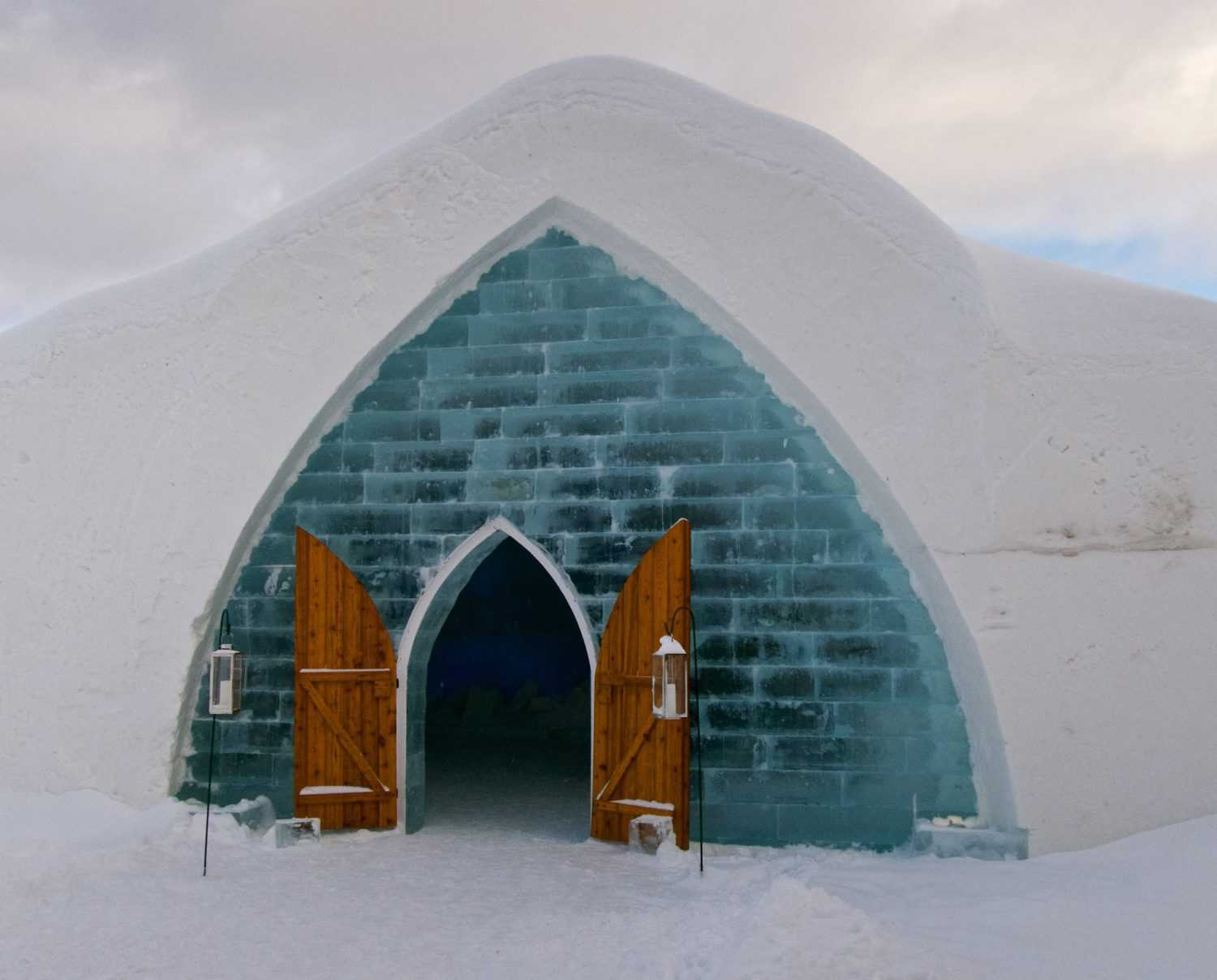
4. Canadians Live in Igloos
I don’t know who started this rumor, but I’ve had grown adults ask me this – like people with university degrees and jobs.
It’s so crazy to me that people actually believe this stereotype. Like how has this become a common Canadian misconception and myth over the years??
No, we don’t live in igloos. I don’t think I’ve ever even seen an igloo in Canada before.
This misconception can be traced back to Americans equating all of us with our Inuit populations in Northern Canada. These Indigenous peoples live around the article circle and need to build shelters that protect them from the cold. They learned how to construct bricks out of ice and snow in order to create igloos that they could live in.
However, igloos were never common practise below the article circle. Other Indigenous communities lived in a variety of other structures made up of wood, pelts, and stone.
Modern-day Canadians haven’t adopted igloos as our common homes, especially because they’d be nothing but a puddle in the nearly 40C heat we get each summer in Toronto.
I think this myth about Canada stems partially from a lack of understanding of geography. Parts of Canada are actually further south than the mainland American States. Toronto is further south than Minnesota, for example.
Get a homestay with Vrbo!
5. All Canadians Speak English and French
Honestly, I wish this Canadian myth were true. I think we’d all be better off knowing two languages.
But unfortunately, although we learn French from grades 2 – 9, most of us can’t speak a word of it.
Children who attend French immersion schools fare better, as they’re taught French at a more advanced level.
English and French are the national languages of Canada. In Quebec, French is the official language.
You might not know this, but we actually have 3 versions of French in Canada. We have France French, which is what gets taught in most schools; Quebecois French, which is used in Quebec; and Acadian French, which is a dialect of French from the original settlers of Canada that can be found in the East Coast.
Even with all this French, only 17.5% of the country is bilingual.
On top of French and English, Canada is home to at least 60 unique Indigenous languages. These are not officially recognized as languages of Canada (which I see as a huge failing on our part).
Need help learning a new language? I recommend iTalki! I’ve tried ALL the apps, but iTalki is the only way I’ve managed to learn as much as living in the local country.
6. We’re the Nicest Country in the World
This isn’t a fact that you’ll see on any official statistics, but you will found thousands of articles about how Canadians are nice and polite.
I’m sorry to break it to you, but we’re actually not.
This is a common Canadian stereotype that I feel kind of bad about disproving.
Canadians developed our habits from our British settlers. When I moved to the UK (both times), I noticed that my “please”, “thank you”, and “sorry”s weren’t unusual. They were considered commonplace.
Our reputation as uber polite is one of the few nice parts of our American TV stereotyped persona.
While most of us are polite, you’ll find your usual bad apples. The smaller towns on the coasts are even more polite and overtly friendly. In Halifax, I never stopped smiling and waving – and I didn’t even know that many people!
I think Americans think we’re so nice because they don’t use their manners as well as we do. This isn’t to say that all Americans are rude, just that they use these terms less often than we do.
Be sure to say please when you order your double double from Timmies, or everyone will know you’re not a Canuk! (Yes, those are all real things, I promise!)
Check out my guide to Canadian food to find out what you’re getting when you order a double double.
7. Our Money Smells Like Maple Syrup
This came up with a friend the other day.
Back when we got our new $50 bill in 2011, people started this rumor as a prank. All over the internet, people were convincing other people to scratch and sniff the maple leaf on the corner of their $50 bill.
These new bills are made of plastic, which led to a lot of experiments. People started burning them, trying to melt them in the dryer, and looking for fun ways to play with these new “toys”. The maple leaf – and unsuspecting victims – were part of that trend.
People will still adamantly say that our money smells like maple syrup to this day. I say those people are just trying to save face, as the Royal Mint has never said this was a feature, nor do most people smell maple when they scratch the leaf.
It may be a new mass hysteria or the placebo effect at work. But one thing’s for sure: our money doesn’t smell like maple syrup. It’s just another Canadian myth.
8. Canadians Are Obsessed with Maple Syrup
For the most part, no we aren’t.
You may think we are from the insanely large booths selling maple syrup, maple sugar, and maple cookies at the airport, but real life in Canada isn’t like that.
If it was, I definitely would have included it in my 10 Pros and Cons of Living in Canada post (although I’m still not sure whether it’d be a pro or a con).
In reality, we like sweets as much as everyone else. We may put maple syrup in a few extra things, like baked goods or on salmon, but we would just as easily use brown sugar.
We also don’t have whole aisles dedicated to maple syrup. We have multiple brands, usually about 6, in grocery stores. They may fill up a shelf when a few are put together, especially if they’re paired with the corn syrup and other spreads, but they don’t take up a full aisle.
That’d make our stores way too big.
Unfortunately, because we produce a lot of maple syrup and have some of the best in the world, this Canadian myth has stuck.
However, our education system does seem a bit obsessed with maple syrup. We used to go to a maple farm in elementary school where we’d learn how to tap trees, wander through the woods looking at leaves, and inevitably eat too much sugar before the bus ride home.
I’m still not sure how that actually prepared us for life, but I do know how much sap it takes to make a litre of maple syrup (45L!).
9. All Canadians Play Hockey
Nope!
I never learned how to play hockey and had no desire to try.
Hockey is one of Canada’s National Sports, but we actually have a second: Lacrosse.
Hockey is considered a favourite sport in Canada, even though many of us don’t watch or play it. Most Americans care more about it than we do, to be honest.
Many of us can’t afford the expensive equipment, don’t want to spend that time in the snow, and have no desire to lose teeth slamming into each other.
Personally, I never saw the appeal of doing more than slowly skating along an outdoor rink like the Rideau Canal. Having to body slam, hit pucks, and try to see through mesh cages just sounds awful.
I don’t even know the rules of hockey, to be honest. And yet I’m not being forced to turn in my Canadian card.
So we can put this in the list of common Canadian myths that are spurred on by American representations of us.

10. Canadian Beer is Stronger than American Beer
This common Canadian misconception has spread into country music!
There’s literally a song about how Canadian beer is stronger than American beer: “Stronger Beer” by Tim Hicks.
To be honest, I believed this myth for a long time – in part because of the country song. I mean, it can’t be a lie if it’s in a country song, right??
Apparently, that was very wrong. Don’t rely on country music for your facts y’all!
In reality, Canadian and American beer have similar alcohol contents. It just looks like Canadian beer is stronger because we measure our alcohol differently.
In America, they used to use ABW (alcohol by weight). In Canada, we always used ABV (alcohol by volume). Since alcohol weighs less than water, it looked like there was less alcohol in American beer. But in fact, they were about the same as Canadian beer.
Now, American beer uses ABV, so you can see that their beer ranges from 4.0 to 6.1 ABV, just like ours.
You can always find extra strong beer in either country, particularly from craft brewers. And some Canadians will eternally insist that we have stronger beer.
I guess we’re too proud to let this Canadian myth go.
11. All of Our Milk Comes in Bags
Bagged milk went viral a few years ago when Americans seemingly re-learned that it exists.
I always love when Americans forget they’ve already freaked out over something and then freak out over it again. We’ve been dealing with the US questioning our milk consumption my entire life, so this definitely wasn’t anything new.
Yes, some of our milk does come in bags. A lot of Canadians own reusable jugs that they put the plastic bags in to pour their milk.
But, no, not all of our milk comes in bags.
Oddly, plastic bags are considered easier to produce and use less plastic than the original plastic milk jug. Some like it because you can freeze the milk (which I’ve never tried so I can’t attest to).
Now, it’s something about half the population uses. While the other half (me included), uses cartons – especially if you drink any kind of nut or soy milk.
12. Canadians Use the Metric System
This is another tricky common Canadian misconception.
On the one hand, yes, we are taught to use the metric system. We use centimetres and metres for measurement. We weigh food in grams.
But we have a number of instances where we use the Imperial measurements. Mostly, this is because we get a lot of our items from America.
Ovens (and all recipes) are in Fahrenheit. We measure our weight in pounds. We measure our height in feet and inches.
But basically everything else is done in metric – the way it should be, in my opinion.
It’s super confusing to travel and have to admit I have no idea how to use an oven in Celcius (or having to convert everything), then explain that we do use metric in Canada – just not for this one thing.
I’d love it if we could convert 100% but alas we’re stuck in this limbo.
13. Poutine is the National Food of Canada
Honestly, I don’t think we have a National food. If we did, it’d probably be maple syrup (partially to fit the Canadian stereotype).
Poutine is known worldwide for being a Canadian classic, but it isn’t massively popular in Canada. Like maple syrup, it’s more overhyped.
Many Canadians have never even tried poutine – like my dad and my sister.
Others hate that it’s heavy or cheesy or messy.
I’m on the pro side, as I love a good poutine with real cheese curds, especially on a cold night. It’s the best drunk food, hangover food, and get warm while waiting at a bus stop food.
But don’t come to Canada and expect to find it everywhere. Most places don’t serve it or have just recently started serving it (like fast food places).
If you’re looking for classic Canadian food to try, check out my guide on What to Eat in Canada, and find out how you can eat beaver tails, butter tarts, and flapper pie in Canada.
Do try a poutine, but learn about the other awesome food we have.

14. Canada Doesn’t Have a Culture
I get really annoyed at this common Canadian misconception.
People often assume that just because we don’t flout our National pride and culture like Americans, that we don’t have one.
I won’t go into my usual tirade about the Americanized Canadian persona and their overt pride.
Instead, I urge you to re-read this post. You’ll notice that we have our own food, our own slang, and a myriad of unique things that are unique to our culture. I can’t even include all of the amazing Bucket List Things to Do in Canada or everything that makes me proud of my Canadian identity in this post.
But you’ll get a sense of our spirit through this post about what we’re really like. If you want to learn more about Canadian culture, come visit us and find out what we’re really like!
Discover the best time to visit Toronto (from a Canadian) to start planning your visit.

15. Our Police are all Mounties
The Mounties are a symbol of Canada. They’re known for wearing their red uniform and tan hat, riding horses to control our crime.
But they aren’t our only police force.
In fact, the Mounties aren’t technically police. They’re more akin to the FBI. They work around the country at a federal level to solve large-scale cases.
While the formal uniform includes the red coat and, historically, they used horses to get around, most Mounties don’t look like you’d expect. They have a uniform that looks more like police, with black slacks, a grey-blue button-up, and a bullet-proof vest.
Their uniform will say “police”, but think of them as the super police, as they have a larger jurisdiction.
On top of the Mounties, Canada has provincial and municipal police forces. Some smaller areas can’t afford municipal police, so the provincial police will patrol in those areas.
No matter which type of police you need, you can call 911 in an emergency and they’ll send the appropriate type of police for your situation.
Before you visit Canada, make sure you have travel insurance to keep you protected.
16. There’s Wildlife Everywhere
I think people assume that we live in igloos, surrounded by polar bears, with moose tied up out front.
This common Canadian myth is so not the case.
Yes, we have a lot of wildlife in Canada. However, wildlife avoids heavily populated areas, like Toronto. In the cities, you’ll find pigeons, seagulls, and raccoons. But you’re unlikely to ever see a deer, moose, or polar bear.
If a polar bear were to wander into Toronto, we’d know the end of the world was coming, because it is way too far from their hunting grounds and way too warm.
It’s only on the rare occasion that a moose wanders onto a city highway or something can be seen within an hour of Toronto. Those always make the news, which is probably why people think we’re so overrun with wildlife.
You can see our wildlife if you go outside of cities, but they tend to keep to themselves. I’ve seen black bears, moose, deer, fox, and wild turkeys when I’ve gone north to Muskoka or hiking on the Cabot Trail.
If you’re looking to see some wildlife, head out to BC and take a wilderness tour to spot some animals. Or go camping in Algonquin Park or the Rockies for some undisturbed space where animals feel safer.
Remember to be safe, leave nothing but footprints, and respect the land.

17. There Are No People in Canada or Canada’s Small
Technically, Canada has a small population when you consider the size of the country. We’re the second-largest country in the world (which, again, many people don’t realize). However, most of our northern areas aren’t inhabited.
This is due to weather, lack of infrastructure, environmental protection, Indigenous protections, and that historically Canada was settled from the bottom across to the West. People sort of forgot to settle north, leaving the Indigenous more of their ancestral lands up there.
This Canadian myth seems to stem from a lack of awareness of population density across the country.
When you think of 37.5 million people in terms of the size of our country (our population density is 4 people per square kilometre), you can see why people would expect us to be small. (For reference, the US has 36 people per square kilometre and they’re smaller than we are.)
However, those of us that are here are very much present. We have large cities, like Toronto, with over 2.8 million people. For the most part, the southern half of the country is as populated as the States. It’s the northern half of the country that had gained us our extremely small population density.
So no, Canada isn’t small. And we do have people here.
18. You Can Marry a Canadian For a Green Card
This was news to me. I was certain that, much like the US, we offered green cards to spouses.
Well, it turns out we don’t even have “green cards”! Ours are called something completely different.
This common Canadian misconception is important for people to know so they don’t get confused later in life when they need this info. That gorgeous man you met in Greece is going to need to know the hoops he’ll have to jump through for citizenship, because marrying you isn’t going to cut it.
In Canada, your spouse can sponsor you for permanent residency if you don’t already have it. But to become a citizen, you have to go through the same steps as every other immigrant.
So don’t start flirting with that Canadian backpacker just to get a Canadian passport!
You CAN move to Canada with an express entry visa.
19. The Queen is in Charge of Canada
Canada is a constitutional democracy. That means that we have our own democracy with a Prime Minister and Parliament on our own. But we also have a queen. In our case, she’s the Queen of England.
Since the Queen can’t be in Canada all the time, we have a Governor-General who is elected to represent the Queen.
However, this person – and the Queen – aren’t actually in charge of our democracy. They might seem like they’re above the Prime Minister or at the top of our hierarchy (maybe because of the term “queen), but in reality, the Prime Minister and Parliament are in charge of Canada.
The Queen acts as a figurehead and poses nicely for our money so she can be on the backside of whatever animal is featured on a coin or bill. And a few of the royal family members come to visit once in a while to ensure we haven’t burned the place down yet.
We are still tied to England in this way, but the myth that we’re fully under their dominion is just that: another Canadian myth.
20. Canada is a Socialist Country
I think this another common Canadian misconception that comes from our neighbours to the south.
Yes, healthcare is “free” in Canada. But that’s only because we pay for it out of our taxes.
That “free” coverage only pertains to doctor’s visits and hospitals. We still have to pay for medicine, dental, chiropractors, therapy, and more.
Businesses offer healthcare for their employees that help with these costs, but don’t cover it all. Additionally, they offer some better leave for parents than in the US (typically a few months rather than weeks), but that varies depending on your employer.
We also aren’t a socialist country. We can barely get the NDP, our “socialist” party, more than 5 seats each year in Parliament.
People tend to prefer the Liberals (Trudeau’s party), as they offer lower taxes than the NDP.
So, while we are more progressive than the US, we aren’t actually a socialist country.

Canadian Misconceptions and myths Oot
I love going through all of the common Canadian misconceptions, stereotypes and myths that people ask me about and realizing how crazy they sound.
But I’m sure to those people they make sense. Or they think our country is crazy enough that they’d be real.
I’m sure I have some misconceptions of other places that would seem equally ridiculous, and maybe even a bit insulting, to locals.
So before you visit Canada or chat with that Canadian friend of yours, try to remember the important lessons you’ve learned from this guide. Don’t be one of those people that confuses Canada with Minessota or begs your friend to let you sniff their money (because that’s how you lose friends fast).
Instead, surprise them with your knowledge of their homeland. Maybe you’ll teach them why they have bagged milk and why they believe their beer is stronger than America’s.
Have fun testing your non-Canadian friends on their Canadian knowledge with the help of this guide!
Save on flights with Skyscanner!
Pin this for Later!

Get More Canadian Content
- 30 Best Souvenirs from Canada to Take Home
- 55 Fun & Interesting Facts About Toronto, Canada
- 10 Delicious Canada Cocktail Recipes to Make This Canada Day
- Canada Day Quiz: Are You a Real Canuck or Posing as a Hoser?
- Muskoka: Canada’s Cottage Country Capital
- Everything You Need to Know Before Skating the Rideau Canal in Ottawa
- What You Need to Pack For Canadian Winter
Canada Travel Planning Guide
🚑 Should I buy Canada travel insurance?
100% YES! — Canada has “free” healthcare but it’s only for citizens! Foreigners visiting need travel insurance in case anything happens on their visit. I recommend World Nomads – starting at just $5 a day!
💧Can you drink the water in Canada?
Yes — In all major cities in Canada, you can drink the tap water. There are very few, rural areas that you can’t. However, you should never drink river or lake water anywhere in the country! I recommend a Brita Water Bottle for long hikes and backcountry camping to stay safe and hydrated.
🚙💨 Is it safe to rent a car in Canada?
Yes — Renting a car is a necessity in most of Canada! If you want to go on road trips or adventures outside of the major cities, you’ll need to rent a car. (Read more)
📲 Will my phone work in Canada?
Maybe — Some American companies work in Canada, but many will not. If your phone doesn’t work in Canada, I recommend getting a Canadian SIM card so you can get around and stay in contact with loved ones. We don’t have a lot of free WIFI in Canada, so you’ll need your phone for maps.
🏩 What’s the best way to book my Canada accommodations?
My go-to for Canadian hotels is Booking.com. For hostels, I use Hostel World. If you want a home-y feeling, check out VRBO (which is cheaper and safer than Airbnb).
Or get free accommodations with Trusted Housesitters!
✈️ What’s the best site to buy Canada flights?
For finding cheap Canadian flights, I recommend Skyscanner.
🎫 Do I need a visa for Canada?
Likely Not — US, UK, and EU passport holders don’t need Canadian visas. However, some other countries do (check here!). And if you plan to stay for more than 4 weeks (an average tourist visa length), you will need to look into visas to live in Canada.