Nina Out and About contains affiliate links and is a member of the Amazon Services LLC Associates Program. If you make a purchase using one of these Amazon links, I may receive compensation at no extra cost to you. See my Disclosure Policy for more information.
19 Pros And Cons Of Living In Wellington New Zealand
Are you wondering about the pros and cons of living in Wellington New Zealand?
I’ve got you covered!
The vibrant capital of New Zealand attracts thousands of expats each year and consistently ranks as one of the most livable cities in the world, with some worthwhile advantages.
I lived in New Zealand in 2018-2019 and often spent time in Wellington for work, so I know there are also some disadvantages to living in Wellington as well.
Before moving abroad, it’s important to consider all of the pros and cons so that you can rest assured that you are making a well-informed decision!
So, what is it like living in Wellington, New Zealand? Let’s find out!

19 Pros and Cons of Living in Wellington, New Zealand
Deciding where to move abroad is hard, as every place has advantages and disadvantages.
Here’s what you should consider before moving to Wellington!
1. Pro: A vibrant, compact capital
Wellington is often described as the coolest little capital for expats.
A common disadvantage of living in the capital city is that they are usually crowded, loud, and hectic. But you don’t have to worry about that in Wellington!
The capital of New Zealand has a population of 202,737 (2018), which is relatively low for a capital city.
Despite being the capital, Wellington is not the largest city in the country. The largest city is Auckland, with a population of 1,571,718 (2018).
When deciding whether to move to Wellington or Auckland, the size of the city is an important factor to consider.
2. Con: Windy!
When it comes to the weather in Wellington, one word describes it the best – windy.
Due to its location right next to the Cook Strait (the gap between the mountains on the North and South Islands), Wellington is the windiest city in New Zealand.
In fact, Wellington is actually the windiest city in the world!
If you plan on living in Wellington, expect it to be windy almost daily.

3. Pro: Friendly locals and lots of diversity
Since Wellington is a smaller city, you’ll find that people are more friendly and accepting than in larger cities.
Expats living in Wellington often praise the friendliness of their neighbors and colleagues.
It is easy to create a close-knit community, and people will often go out of their way to help you settle in your new home.
Wellington is also a culturally diverse city, with many of its inhabitants born overseas!
As a cultural melting pot, Wellington is very welcoming. With English as the official language, you’ll have no problem blending in as soon as you learn some Kiwi slang!
4. Con: Hard to find housing and high rent prices
Wellington is a popular place to move to, but its geographical position doesn’t allow it to grow much. That means housing is limited, and rent is high!
The cost of living in New Zealand is already high, and a limited number of homes available for rent only increases already high prices.
You might have to temporarily start your life in Wellington in a hostel for a few weeks until you find a more permanent option.
However, it is always good to visit your potential accommodation before renting it, as you might be unpleasantly surprised when you arrive at the new home you booked online.
5. Pro: Lots of job opportunities and a growing market
Wellington has plenty of job opportunities, especially if you have a sought-after skill set.
As the country’s capital, Wellington is the place to be if you plan to work for the government.
Even if you move to New Zealand with a Working Holiday Visa, you won’t have issues finding fixed-term jobs you can apply for.
Since Wellington is one of the tourist hot spots in the country, it is easy to get jobs in tourism to get you started.
If you want to know whether jobs in your background are in demand, you can learn more about the job market, applying, and working in New Zealand on New Zealand Immigration, the official

6. Con: Fresh produce is expensive and hard to come by
The inability to find affordable fruits and veggies is a common issue across the country.
Due to its remote location, importing produce into New Zealand is costly.
At the same time, the islands’ climate is not suitable for producing many commonly consumed goods, and a small market with low competition means goods cost more to produce.
Unfortunately, a small market and, consequently, high prices are unlikely to change any time soon, making costly fresh produce one of the cons of living in New Zealand.
7. Pro: Great opportunities to explore the outdoors
One of the advantages of living in Wellington is the proximity to nature.
Mount Victoria is a popular place to enjoy outdoor activities. It’s full of walking and cycling trails, and you get a stunning view over Wellington from the top!
With its picturesque waterfalls, Belmont Regional Park is another spot to explore nature and escape the crowds.
8. Con: Cars are expensive to buy, and public transport is not reliable
The Wellington area is great for road trips! That is if you can afford a car.
Public transportation in Wellington isn’t ideal. While trains and buses are available, they usually only connect larger cities, and it is complicated to reach most nature spots by public transport.
On the other hand, cars are rather expensive in New Zealand, and even the prices of used cars have risen significantly in recent years.
If you add the cost of petrol and other expenses related to owning a car, you may as well just rent a car in New Zealand when you need it.

9. Pro: Lots of green areas in the city
You don’t need to go far to enjoy calming green areas in Wellington. Unlike many concrete jungle capitals, Wellington is surrounded by lush green forests and has plenty of parks to enjoy.
Mount Victoria and Te Ahumairangi Hillis are located right in the city. Lush green Central Park and Wellington Botanic Garden are also easily accessible urban green oases.
10. Con: Winters are cold
Despite New Zealand technically being a Pacific island, don’t expect tropical island winters in Wellington.
As New Zealand is located in the southern hemisphere, winter in Wellington is from June to August.
Average winter temperatures in Wellington range from 6°C to 12°C (42.8°F to 53.6°F).
It rarely ever snows, but it rains a lot. However, the biggest problem with winter in Wellington is the wind. The strong winds make the cool temperature feel even colder.
Winter in Wellington is the season to spend more time indoors. It is a good time to enjoy all the delicious restaurants, galleries, and unique coffee shops.

11. Pro: Waterfront city with beaches
One of the best things about living in Wellington is that the city is situated on the waterfront, close to many beautiful beaches.
Wellington area has over 20 swimmable beaches, so you’ll be spoilt for choice!
One thing to remember is the sea around Wellington is rather cold, and swimming is not equally pleasant at all beaches.
The beaches with the warmest water in Wellington are Dolly Varden Beach, Petone Beach, and Paraparaumu Beach.
🚗 I love this tour that takes you to explore the best of Wellington’s beaches!
12. Con: Summer is not actually hot
If you think living in a beach town like Wellington must be lovely in the summer, you might be disappointed to know that Wellington is not a tropical island beach kind of town.
Summer temperature in Wellington rarely ever rises above 25°C (77°F).
While there are many beaches around Wellington, the water temperature is far from inviting, even in the peak of summer. It is cold!
The water is the warmest in February, with average temperatures of 17.9°C (63.2°F).
If you go to the beach to swim and not just sunbathe, the water temperature is an essential factor to consider.

13. Pro: Lots of quirky cafes and restaurants
You’ll find plenty of quirky cafes and restaurants throughout Wellington. It is the perfect opportunity to try all the delicious New Zealand Food!
Foodies will love the variety of cuisines available in Wellington, as there is nearly everything from Asian to South American food available.
Wellington is famous for its coffee culture, and it is considered the coffee capital of New Zealand.
You can have this delicious drink in one of the numerous specialty coffee shops in the city, with new coffee shops and roasters popping up around the city all the time.
14. Con: Bad traffic and roads
Since public transport is not reliable in Wellington, most people own cars. Many cars in a small town lead to bad traffic jams, especially during rush hour.
If you need to get somewhere quickly during rush hour, forget about it. The average speed on Wellington’s main highway during peak hours is 15-20km/h (9.32-12.43 mph).
Another disadvantage of driving in Wellington is the bad roads. The roads are often damaged by earthquakes, making them lumpy and hard to navigate.
In residential neighborhoods, the roads are narrow, steep, and shared with buses, which can be stressful if you’re not a confident driver.
15. Pro: Lots of activities year-round
Despite being a smaller city, you won’t get bored in Wellington as there are seemingly endless activities to enjoy.
Some of the best things to do in Wellington include visiting Te Papa Museum, Zealandia Ecosanctuary, Wellington Zoo, and Botanic Garden.
Wellington has a strong art appreciation culture, and you can visit many galleries throughout the city as well.
While the cost of living in Wellington, NZ is high, you can easily stay on top of your budget with free activities such as relaxing in Botanic Garden, hiking, and going to the beach.
🌱 Explore Wellington’s famous attractions including Zealandia Ecosanctuary with this tour!
16. Con: Earthquakes
There’s no easy way around this. Earthquakes are quite a regular occurrence in Wellington and New Zealand in general.
The city is situated in a very geologically active region, as it rests on the point where two tectonic plates meet, resulting in earthquakes.
It is certainly not a pleasant feeling if you’re scared of earthquakes. However, don’t let the fear discourage you from moving to Wellington, as most earthquakes in Wellington are too small even to notice.
However, you’ll want to familiarize yourself with steps to take in case of an emergency.

17. Pro: Eco-friendly city with a strong accent on the natural way of doing things
What makes Wellington one of the best places to live in New Zealand is how eco-friendly and connected to nature the city is.
Wellington City aims to be carbon neutral by 2050, and they encourage sustainable modes of transport to reach that goal.
The city is building a connected cycle network covering the whole of Wellington and improving the public transport network to encourage citizens to avoid using cars. Wellington Harbor is also home to the southern hemisphere’s first electric ferry!
Citizens are advised to recycle and choose sustainable alternatives, and businesses take great pride in being environmentally friendly.
18. Con: Far from other large cities
Situated at the bottom of the North Island and surrounded by mountains, Wellington is rather far from other large cities.
For example, it is more than an 8-hour drive from Wellington to Auckland, and it takes about the same time to reach Christchurch on the South Island.
Due to long distances to other major cities, many people opt for short national flights when traveling throughout the country.
Some people might find the distance hard if they’re used to going on regular day trips on the weekends.
✈️ Looking for local cheap flights within New Zealand? I recommend using this website, it has the best flight deals!
19. Pro: Hub for nightlife and socializing
You won’t be disappointed with Wellington if you are looking for a city with good nightlife.
While Wellington is not known as the party center of New Zealand like Queensland, you’ll find plenty of pubs and nightclubs playing various music genres throughout the city.
The main party district is along Courtenay Place, with some options along Cuba Street as well.
Whether you’re looking for a nightclub to dance the night away or just want to grab a pint with your friends, Wellington nightlife has something for everyone.
FAQs About Living in Wellington New Zealand
Is Wellington New Zealand a good place to live?
Yes, Wellington, New Zealand, is a good place to live, and it consistently ranks as one of the top cities to offer a high quality of life.
Wellington has excellent education and healthcare while also being one of the safest cities. It is a smaller city near nature, perfect for those looking to enjoy a slower lifestyle.
Is Wellington expensive to rent?
Yes, Wellington is one of the most expensive cities to rent in New Zealand. On average, the monthly rent for a one-bedroom apartment is $1,600 USD, and it gets even higher in more popular areas.
To save on rent costs, consider moving in with roommates and splitting a 2-bedroom apartment.
Does it run a lot in Wellington New Zealand?
Yes, water in Wellington is drinkable. Wellington Water ensures that tap water meets the requirements of the drinking water standards, making it safe to drink.
The water in Wellington is classified as soft water in hard to soft water classification.
Why do people move to Wellington?
People move to Wellington because it offers high quality of life. Wellington is a seaside city close to nature, perfect for day trips in the region. It is a safe city with a low crime rate and also has excellent healthcare.
How expensive is it to live in Wellington?
Wellington is one of the most expensive cities to live in New Zealand. Accommodation prices are among the highest in the country, but activities and groceries are slightly cheaper than in Auckland. On average, one person will need about $2,400 USD monthly to live in Wellington.
Final Thoughts: Pros and cons of living in Wellington, New Zealand
Now that you’ve weighed the pros and cons of living in Wellington, New Zealand, do you think it is the right place for you?
Moving abroad can be scary, especially to a remote destination like New Zealand. Hopefully, looking at the advantages and disadvantages has given you a clear picture of what to expect.
To stay on top of things, grab my moving abroad checklist and make sure you don’t skip any crucial steps when starting your new life abroad!
✅Looking for jobs in New Zealand can be a bit challenging. To ease your time, I recommend FlexJobs in finding remote working opportunities!
More on Living in New Zealand
- Cost of Living in Auckland, New Zealand
- 13 Best Places to Live in New Zealand (and Where Not To!)
- What Does it Cost to Live in New Zealand?
- 25 Pros and Cons of Living in New Zealand
- Living in Auckland vs. Wellington: Which Country Should You Move to?
- 19 Pros and Cons of Living in Auckland NZ
- What is the Best Time of Year to Visit New Zealand?
- 57 New Zealand Travel Tips (Local’s Guide)
- 19 Pros And Cons Of Living In Wellington New Zealand
- 135 New Zealand Slang: From Sweet As to Swear Words
Read More About Living Abroad:
- How Living Abroad Changes You: 15 Ways You’ll Grow
- Inspirational Living Abroad Quotes for Expats [Best Moving Abroad Quotes]
- Moving and Living Abroad Guide
- Pros and Cons of Living Abroad: Why You Should Move to Another Country
- Best Suitcases for Moving Abroad
- Challenges of Moving to a New Country to Overcome
- I Regret Moving to Another Country for Love
- Quiz: What Country Should I Move To?
- Best Laptops for Digital Nomads Remote Work
- 50+ Countries with Digital Nomad Visas
- 40+ Countries with Working Holiday Visas
Living Abroad Travel Planning Guide
🚑 Should I buy expat travel insurance?
100% YES! — With basic coverage averaging just $5-10 USD per day, enjoy peace of mind with a plan from Safety Wing!
🌎 What is the best country to live in as an expat?
It depends – the best country to live in as an expat will depend on your unique needs. I developed this free quiz to help you figure out where is right for you!
📍 How do I pick a country to live abroad?
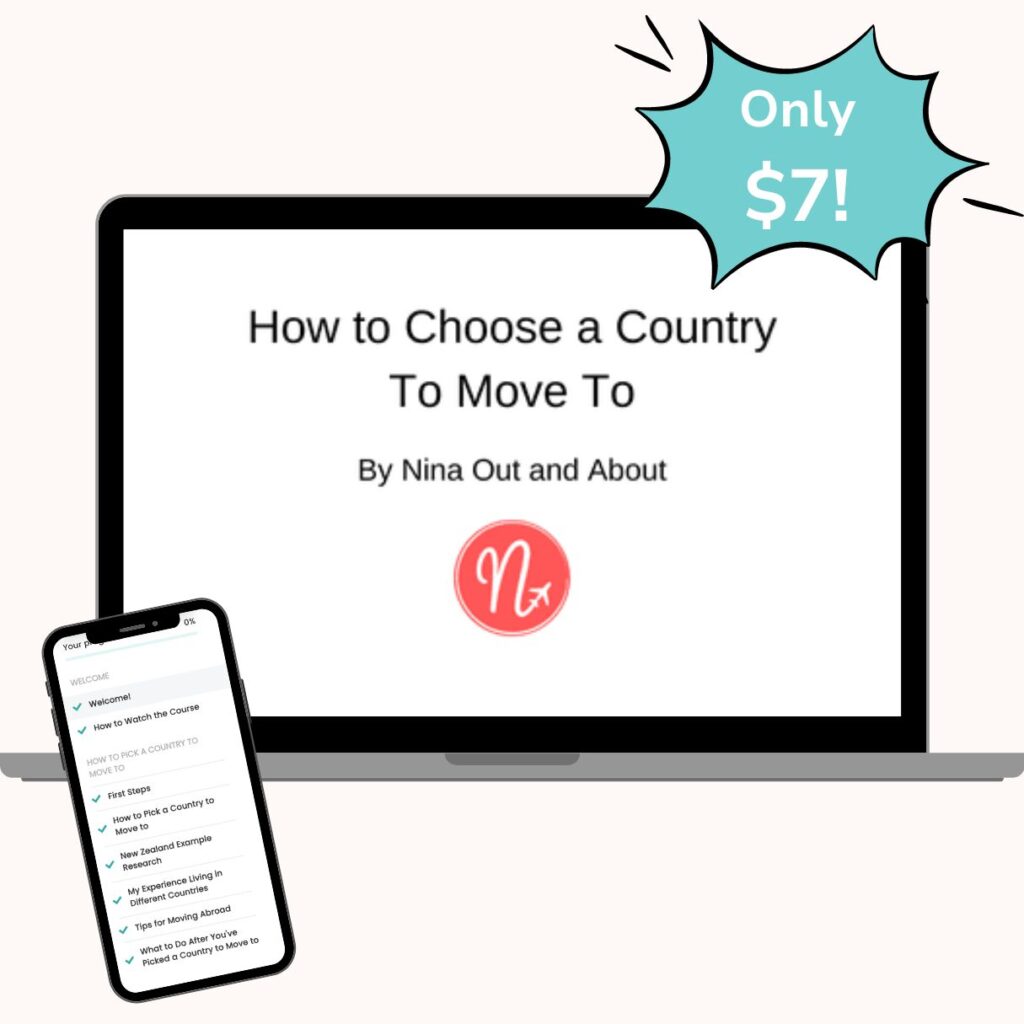
It depends – picking a country to live in is hard. That’s why I developed this $7 course to share all of the steps I’ve taken when deciding to move to 20+ different countries, and how I handle homesickness when I get there.
Ultimately, making the choice of where to move is going to be hard. But the hardest thing is deciding to move abroad at all!
💼 How do I get a job as an expat?
You can find work abroad via local job boards or temp agencies. My favourite way to work is remotely, so I always look for jobs on FlexJobs.com when I live abroad. They hire for 100% remote roles only.
If you’re looking to teach English abroad, Premier TEFL has the best online course to get you great work!
💰 How do I open a bank account abroad?
Wise.com offers free global accounts, and the cheapest money transfers. Since it can be a headache to open bank accounts in different countries (it took me 2 months in the UK!), Wise.com is a great solution.
I actually use it as my primary bank now worldwide due to the multi-currency debit card. (Read more)
👯♀️ How do you make friends abroad?
Meetup.com – Meet likeminded people who share a similar hobby with Meetup! It’s free to join, but some activities may cost money, like if you go to a cafe and get a coffee.
🙀 I don’t speak the language. Can I still live abroad?
Learn languages in no time with iTalki! Moving abroad is an opportunity to learn the language. You don’t need to know it before you leave home.
💻 Do I need a VPN?
Yes! – VPNs allow you to access more of the internet. From US Netflix in the UK to social media sites banned in Asia. It’s a really helpful and cheap thing to ensure your online activities aren’t restricted.
🧳 What’s the best luggage for living abroad?
This is my favourite luggage set for long term travel. You can read more about my review of types of suitcases for travel here.
🏡 How do I tell my friends and family I want to live abroad?
Take this $7 course and learn the exact script I used to tell my family I was moving abroad … and then when I did it again. I even include tips for prepping your family, and for how to handle family who aren’t supportive.
✈️ What’s the best site to buy cheap flights?
To find cheap flights, I recommend Skyscanner. (Read more)
🏨 What’s the best site to find cheap hotels?
To find cheap hotels, I recommend Booking.com. (Read more)
Or stay for free with Trusted Housesitters!
🚗 What’s the best site to rent cars abroad?
To find cheap rental cars, I recommend Discover Cars.
🚗 What’s the best site to find tours?
To find epic tours, I recommend Viator.