
Nina Out and About contains affiliate links and is a member of the Amazon Services LLC Associates Program. If you make a purchase using one of these Amazon links, I may receive compensation at no extra cost to you. See my Disclosure Policy for more information.
29 Pros and Cons of Living in Virginia in 2024
Weighing the pros and cons of living in Virginia feels overwhelming, but I’m here to lay them all out for you and help you decide if relocating to Virginia is the right move!
As someone who has lived in 18 different countries and moved more times than I can count, I understand all the factors that come into play when choosing a new place to call home.
Virginia boasts picturesque landscapes ranging from stunning beaches to breathtaking mountains, a temperate climate that offers all four seasons, and a strong job market, especially in the Northern Virginia region.
On the flip side, the cost of living can be high in certain areas, especially around Washington, D.C. For example, traffic congestion is a real issue for daily commuters, and the humidity in the summer and the potential for severe winter storms are other cons.
Let’s delve deeper into the benefits and disadvantages of living in Virginia to help you make an informed decision.
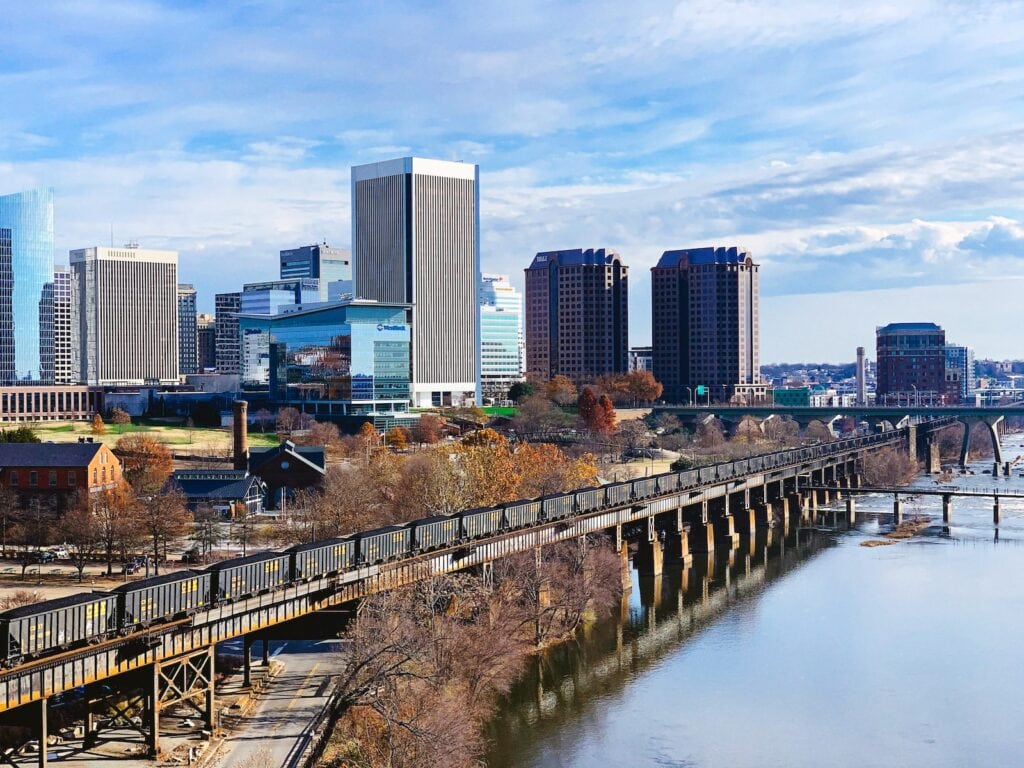
1. Pro: Prime Location
One of the standout advantages of living in Virginia is its prime location.
Living in Virginia also puts you within arm’s reach of the Atlantic Ocean and the Appalachian Mountains.
Virginia also borders Washington, D.C., offering a nice blend of suburban tranquility and vibrant urban life. Many people choose to live and raise their families in Virginia while working in D.C.’s thriving job market.
Plus, who can resist the allure of D.C.’s food scene, world-class museums, and dynamic events?

2. Con: High Cost of Living
It’s important to note that it ranks #39 in the US for affordability.
The average home value here is $372,301 and continues to climb.
However, it’s not all bad news. In terms of economic opportunity, Virginia ranks #9 in the country.
So, while you might be paying more for your living expenses (especially in the real estate market), there’s a good chance you’ll have access to jobs and opportunities that offset these costs.
And some areas in Virginia have a much lower cost of living! For example, Martinsville and Covington are extremely affordable when considering their median home prices.
3. Pro: Growing Population, Growing Economy
When considering all the pros and cons of moving to Virginia, you’ll be glad to know that the growing population and economy are major pros of living in this state.
Virginia offers plenty of economic opportunity with a per capita gross domestic product (GDP) of $74,558 in 2023 and ranked 10th in the US for fiscal stability.
It bounced back fast after the 2008 Great Recession.
The diverse economy means shipbuilding on the southern shore, farming, tobacco-growing, and technology companies near the DC area.
Plus, Amazon recently announced it’s setting up a campus here for HQ2.
4. Con: Bad Traffic In Cities
Living in Virginia is great, but the traffic is one of the biggest drawbacks.
With an ever-growing population and commuters to and from Washington, DC, roads become gridlocked quickly.
The average commute time in Virginia is 28 minutes, although it takes much longer during peak times and in popular regions like Northern Virginia and Richmond.
Furthermore, I-95 and I-495 are gridlocked more often than not.
High tourism rates at places like Virginia Beach also contribute by bringing even more vehicles onto already congested roads.
If you decide to move to Virginia, it’s a good idea to find a home close to work so you can avoid spending hours in traffic!
5. Pro: Lots of Jobs
One of the biggest advantages of living in Virginia is its booming job market.
With an unemployment rate below the national average, there are plenty of employment opportunities.
Virginia has a lot of choices, from defense companies to healthcare facilities, biomedical technology, high-tech telecommunications, advanced manufacturing, and government contractors.
21 Fortune 500 companies like Anthem Health, Capital One, and Carmax have offices in Virginia. These companies contribute significantly to its economic vibrancy and growth.
There are also 27 military bases across the state, which means a lot of veterans, active-duty military personnel, and their families.

6. Con: Lack of Infrastructure
One of the most significant downsides of living in Virginia is the lack of infrastructure.
It’s especially noticeable in the state’s public transportation system, which is confined only to more populated areas, like Metrorail and DASH bus services in Arlington and Alexandria counties.
A car is basically essential when living here unless you’re in the Washington D.C. Metro.
What’s worse is that Virginia ranks at number 38 for infrastructure nationwide while having above-average commute times and 13.2 percent of roads in poor condition.
Renewable energy usage is also below average compared to other states across America.
All these factors combined make it difficult for Virginians to get around efficiently without their own vehicles.
7. Pro: Access to Top Hospitals
Virginia is a great place to live for those looking for reliable healthcare.
With 15 of the best hospitals in the United States in Virginia and DC, it’s easy to see why this state ranks 19th overall for health care.
Four of these hospitals rank among the top 100 nationwide, including the University of Virginia Medical Center (ranked #42), VCU Medical Center (ranked #66), and Inova Fairfax Hospital (ranked #72).
Residents have access to some of the best medical facilities in America right on their doorstep!
Additionally, fewer Virginians lack health insurance compared to the national average – with only 9.4% uninsured as opposed to 12.2%.
👉 Find out how much it costs to protect your trip today with Safety Wing travel insurance.
8. Con: High Taxes
For those considering a move to Virginia, taxes are an essential factor.
While the state does have excellent healthcare and other amenities, the tax burden is higher than nearby states, which have no income tax (like Tennessee!)
Still, Virginia has the 16th lowest total tax rate in the US, so it could be worse.
Individual income tax rates range from 2-5.75%, property taxes are at .80% (considered low), and 5.4% is the sales tax.
Some cities in Virginia have lower property taxes than others, too, which is something to consider when house shopping.
According to Forbes, if you make $70,000 annually, your estimated tax will be $11,623.
9. Con: Healthcare Quality Needs Improvement
According to US News & World Report’s Best States rankings, Virginia ranks #14 regarding healthcare access but only #22 regarding healthcare quality and #20 in public health.
As someone who suffers from chronic illness, I care a lot about healthcare quality when choosing my next home, and Virginia needs some improvement in this area.
The US average obesity rate is 33.7%, and Virginia has a similar rate of 33.8%.
Despite having some great hospitals in the state, there could certainly be more health & wellness initiatives to help its citizens enjoy better overall levels of health!
10. Pro: Southern Hospitality
No matter where you come from, you’ll find a warm welcome in Virginia as locals always greet each other with “sir” and “ma’am.”
Virginians are well known for their friendly attitude and willingness to help out neighbors. People here take pride in their heritage and enjoy sharing it with newcomers through conversations about local culture, cuisine, and other personal interests.
Moving to Virginia means becoming part of an inviting community that will make you feel right at home.
I’ve always wanted to have neighbors who bring me fresh-baked pies – maybe Virginia is my chance!
Considering Moving Abroad? Find Out Which Country is Right for You!

11. Con: Summer Heat, Humidity, and Hurricanes
While Virginia rarely experiences natural disasters like tornadoes, wildfires, earthquakes, or flooding, the coastal cities do face a threat of hurricanes each year.
Plus, the hot and humid summers can be pretty unpleasant. You’ll also need to plan for a high electric bill because you’ll use the air conditioning often!
With an average humidity rate of 68.7% across the state (ranking #37 in the US), you’ll sweat from June through September. The humidity also leads to an increased risk of mold and bugs.
So, if you’re looking for a place with more temperate weather year-round, you might want to move to California instead!
12. Pro: Quality Education Opportunites
Virginia is a great place to live for those who value quality education. The state has a highly-rated public school system that provides some students access to good schools.
Virginia also has some excellent higher education institutions such as Virginia Tech, University of Virginia, George Mason University, and James Madison University.
In fact, the “Old Dominion State” is one of the most educated states in America, with 49.5% of its population being college-educated. A big reason for this is that all public universities offer discounted rates for residents!
Virginia’s highly-rated public school system provides some students access to good schools.

13. Con: Rural Virginia is Left Behind
Living in Virginia is a smart choice for those seeking quality education opportunities. However, inequality does exist in the state’s educational resources.
Rural areas of the state often lack adequate internet access and the necessary funding for teachers to provide students with equal educational opportunities.
For example, only 17% of students in McDowell County score proficient on state math tests compared to 30% statewide. Furthermore, 40% of homes in Dickenson County still lack high-speed internet.
Many bright kids are left behind simply because they don’t have access to the same resources as those living in wealthier communities.
Be prepared to pay more to live in the neighborhoods with the best public schools.
14. Pro: Low Crime Rate
According to U.S. News, the state ranks 8th in the nation when it comes to the lowest crime rate, beating out Connecticut and Wyoming.
With a violent crime rate of 209 per 100,000 residents and a property crime rate of 1,456 per 100,000 residents, Virginia has one of the lowest crime rates in the country. Virginia’s strong military presence might have something to do with this!
Some of the safest cities in Virginia are Bridgewater, Purcellville, Lexington, and Vienna – all boasting impressive safety records that make them desirable places to live.
If you’re relocating from another state, rest assured that living here will provide peace of mind, knowing your community is safe and secure. For me, this might be the most appealing benefit of living in Virginia!
15. Con: Paranoia About Crime
Despite Virginia’s impressive safety record, many Virginians still feel that there is more crime than what’s found in the reports and worry about their safety.
However, this paranoia and fear about safety and security could result from Virginia’s substantial military personnel, who could have heightened vigilance regarding potential threats.
So, while living in Virginia’s safe communities can provide peace of mind, people might not always act like it’s safe. Be prepared for some extra caution from your neighbors!
16. Pro: Military Presence
For those looking to relocate to Virginia, one of the perks of living here is its strong military presence.
The state is home to 27 military bases, and all branches of the armed forces operate in Virginia.
With over 60,000 veterans living in Virginia Beach alone, residents can enjoy plenty of job opportunities related to defense and security, plus educational resources for active-duty service members and their families.
Virginia provides a wealth of advantages for those seeking employment or educational opportunities related to national defense – making it an ideal place for anyone looking for a new start!
17. Con: Noise Pollution
One of the potential downsides to living in Virginia is noise pollution, especially if you live near a naval air station.
The constant take-offs (165 per day!) and landings can be pretty loud, making it hard for nearby residents to find long stretches of peace and quiet. My dog Theo loves barking at loud noises, so a house near a naval air station would be a deal-breaker for me.
Double-paned windows may help lessen the noise, but many still feel disturbed by the sound of military aircraft soaring overhead.
Noise pollution can also have negative health impacts such as headaches, sleep disruption, or stress – it’s essential to consider when you move into an area with high levels of military activity!

18. Pro: Beautiful Nature and Outdoor Activities
One of the best things about life in Virginia is its nature and outdoor activities.
The Chesapeake Bay, Potomac River, Lake Anna, Smith Mountain Lake, and Lake Drummond provide plenty of swimming, boating, and fishing opportunities.
Virginia Beach is a popular tourist destination for visitors and locals alike.
For those seeking a more adventurous experience, skiing on the 27 km slopes of the Blue Ridge Mountains or exploring underground caverns like Luray Caverns (the largest cave system in the eastern US) are great options!
And if you’re looking for pristine beauty with fewer crowds, check out Virginia’s Natural Bridge, take a trip through Shenandoah National Park, or go hiking in the Appalachian Mountains. These awesome places are within 2 hours of Washington D.C., and Richmond!
19. Con: High Pollen, Bad Allergies
One of the biggest cons of living in Virginia is the allergy season.
In 2023, Virginia Beach was ranked 11th on the list of worst cities for seasonal allergies in the US based on total pollen scores and allergy medication use. Richmond also made an appearance in 23rd place.
With such high rankings for both cities, it is clear that those who suffer from allergies should take precautions when considering moving to Virginia, as they may find their symptoms worsen due to increased exposure to allergens like pollen!
My dog Theo and I love going for long walks outside, so if you have bad allergies, this might be one of the reasons not to move to Virginia.

20. Pro: Good Food & Wine
Virginia is a paradise for food and wine lovers!
From fresh-caught seafood to classic southern fare, Virginia has plenty of delicious options. The state is famous for its oysters, crab, apples, peanuts, fried chicken, and barbecue.
My mouth is watering just thinking about it.
And Virginia’s wine country makes it even more special, with over 300 wineries producing wines (some of them award-winning!). I bet you didn’t know Virginia was one of the first wine-growing regions in the country!
One of the most famous vineyards is Ankida Ridge in Barboursville.
21. Con: 4 Nuclear Power Plants
One potential risk that some may overlook is the presence of four nuclear power plants.
While it is unlikely for a severe incident to occur at any of these sites, you should be aware of the potential danger and know how to respond if necessary.
The four nuclear power plants sit in Surry County, Louisa County, North Anna Power Station near Mineral, and North Anna Power Station near Richmond. All four facilities are inspected regularly by federal regulators and have passed rigorous safety standards.
The Nuclear Regulatory Commission requires emergency drills every two years to ensure workers and residents are both prepared for possible disaster scenarios.
Each plant has its own Emergency Response Plan, which includes information on evacuation routes and contact numbers for local authorities should an incident arise.
Although living close to a nuclear power plant can seem intimidating at first, the reality is that they are very safe and secure places with excellent protocols in place should anything ever go wrong.

22. Pro: History and Historical Sites to Visit
With many historical sites to explore, such as the first British colony in Jamestown, established in 1607, to the homes of US presidents like George Washington and Thomas Jefferson, which are now museums open for public viewing, living near Virginia has many opportunities for history buffs.
There are also Civil War National Battlefield Parks, such as Appomattox Court House and National Historical Park, to visit and learn more about this part of American history, and the Virginia Museum of History and Culture.
And don’t forget Williamsburg! This colonial city offers something for everyone – from its architecture and monuments to its vibrant shopping district.
23. Con: Antisemitic Acts Are On the Rise
The United States has seen an alarming uptick in antisemitic acts, and Virginia is no exception.
According to a report from the Anti-Defamation League (ADL), Virginia saw over 350 antisemitic acts reported in 2022 – an increase of 71% compared to 2020.
This includes harassment, vandalism, and disturbing flyers sent out to more than 100 communities across the state in recent years.
The state legislature has failed to compromise on a bill to address this issue, leaving many feeling helpless and uncertain about how to protect their families from these hateful crimes.
24. Pro: Four Seasons
On a more positive note, Virginia is a beautiful state with four distinct seasons that offer something for everyone!
In wintertime, temperatures rarely drop below freezing, and snowfall is light.
Spring brings warmer weather and blooms of vibrant colors throughout the state as flowers bloom.
Summer in Virginia can be hot, but there are plenty of beaches along the coast where you can cool off or take advantage of breezy days on the Chesapeake Bay. And it’s less intense heat than other states further south/southwest!
Finally, autumn offers stunning views of reds and oranges as leaves change color.
25. Pro: Air and Water Quality
According to the US Environmental Protection Agency, Virginia ranks third in the nation for air and water quality.
Only 45 days out of a year are considered unhealthy due to poor air quality compared to 114 days nationally. That’s great news for those who love to spend time outside like me!
However, when it comes to pollution levels, Virginia ranks lower at number 36 in the United States.
While these statistics point towards good news overall for residents living in Virginia, there is room for improvement when it comes to reducing pollution levels across the state.
26. Pro: Happiness and Well-Being
According to the US Well-Being Index, Virginia ranks 11th out of 50 states for overall well-being.
Factors that contribute to this ranking include community, economic security, access to healthcare, financial stability, positive social interaction, and purpose.
Virginia offers a high quality of life with plenty of opportunities for growth and joyful living!
27. Pro: Lots to See and Do
With 39 state parks and historical sites to explore in Virginia, the outdoor enthusiast will be pleased with the endless opportunities to get out and discover the wonders of nature.
For those looking for a more urban experience, festivals such as Harborfest in Norfolk provide a unique way to admire Navy ships and antique boats, and the Edgar Allen Poe Museum in Richmond with its many interactive displays.
Spend a weekend visiting George Washington’s Mount Vernon estate or enjoying a thrilling day at Busch Gardens – Virginia’s largest amusement park offering 422 acres of attractions.
You’ll never get bored in Virginia!
28. Pro: Legalized Marijuana
Virginia is leading the way with its progressive marijuana laws, making it the first state in the South to legalize recreational use of cannabis. That’s another one of the top reasons to move to Virginia.
Starting July 1st, 2021, possession of up to one ounce is legal for adults 21 and over.
This new law also includes provisions for automatic sealing of past misdemeanor marijuana convictions so those affected can move forward without being penalized for their past.
With retail sales set to begin as early as 2024, Virginia is setting an example for other states for forward-thinking legislation on marijuana legalization.
29. Pro: Great for Retirees
Let’s talk about the pros and cons of retiring to Virginia.
Virginia is an excellent state for retirees to consider when looking for a place to settle down with its moderate climate and wide range of leisure activities.
Not only does the state have no tax on Social Security benefits, but it also allows retirees to deduct up to $12,000 in pension and retirement income from their taxes.
Seniors can take advantage of free college classes at the College of William and Mary in Williamsburg, which makes it easy and affordable for them to stay active and engaged with learning opportunities.
The main cons of retiring in Virginia are the cost of housing and the need to get around by car – not dealbreakers, but something to keep in mind.
Best Places to Live in Virginia
Northern Virginia (NoVA) offers the convenience and amenities of being close to Washington, D.C., while Central Virginia provides affordability and easy access to beaches and mountains.
But if your priority is to be close to the beach, Eastern Virginia is where you’ll find the most beautiful coastlines and plenty of summer activities. The most popular cities on the ocean are Williamsburg and Virginia Beach.
Is Virginia a Good Place to Live?
Yes, Virginia is a great place to live, with the benefits of living in Virginia definitely outweighing the downsides! The US News and World Report ranked Virginia as the 13th overall best state in the US.
With an appealing mix of history, diversity, natural beauty, and a robust job market, it offers a high-quality lifestyle.
However, it’s important to weigh challenges like the cost of living and traffic.
Living in Virginia: FAQs
What are the downsides to living in Virginia?
The downsides to living in Virginia are that it has relatively high taxes compared to some nearby states, the cost of living is higher than average, and traffic congestion is an issue in bigger cities.
What are the pros and cons of moving to Virginia?
The pros of moving to Virginia include a moderate climate, no tax on Social Security benefits, and easy access to nearby beaches and mountains. The cons of living in Virginia include traffic congestion and the high cost of living near Washington, D.C.
Is Virginia a good place to live in?
Yes, Virginia is a great place to live. It offers a moderate climate, a low crime rate, and easy access to nearby beaches and mountains.
What is the best part of Virginia to live in?
- Northern Virginia (NoVA) – offers the convenience of being close to large cities like Washington, D.C.
- Central Virginia – provides affordability and easy access to beaches and mountains.
- Eastern Virginia – beautiful coastlines and plenty of summer activities
Why retire in Virginia?
Virginia is an excellent state for retirees to consider when looking for a place to settle down. Not only does the state have a moderate climate and no tax on Social Security benefits, but it also allows retirees to deduct up to $12,000 in taxes from their pension and retirement.
Conclusion: Should You Move Here?
Moving to Virginia has many pros and cons to consider, but overall, it’s a great place to live!
Some of the best advantages of living in this state include a mild climate, historical attractions, and low taxes for retirees.
But there are a couple of downsides, like a higher cost of living and lack of infrastructure.
Ultimately, if you’re looking for somewhere with a warm culture and various activities/landscapes at your fingertips, Virginia may be perfect for you!
Before you settle on a new place to live, check out the Pros and Cons of Living in North Carolina next door!
Living in the USA Guides
- Pros and Cons of Living in North Carolina
- Pros and Cons of Living in South Carolina
- Pros and Cons of Living in California
- Pros and Cons of Living in Washington State
- Pros and Cons of Living in Montana
- Pros and Cons of Living in Chicago
- Pros and Cons of Living in Dallas
- Pros and Cons of Living in New Orleans
- Pros and Cons of Living in Los Angeles
- Pros and Cons of Living in Las Vegas
- Pros and Cons of Living in Iowa
- Pros and Cons of Living in Vermont
- Pros and Cons of Living in Seattle
- Pros and Cons of Living in Maine
- Pros and Cons of Living in Phoenix, Arizona
- Pros and Cons of Living in the USA
- Pros and Cons of Living in Colorado
- Pros and Cons of Living in Texas
- Pros and Cons of Living in Alaska
- Best Pros and Cons of Living in Oregon
- Pros and Cons of Living in San Antonio
- Pros and Cons of Living in Colorado Springs
- Pros and Cons of Living in Nashville
- Pros and Cons of Living in Florida
- Living in Toronto vs. Chicago: Which is the Better City?
- Living in Puerto Rico Pros and Cons: Should You Move to PR?
- Pros and Cons of Living in Georgia, USA: Is Georgia a Good Place to Live?
- Pros and Cons of Living in Hawaii
- Pros And Cons Of Living In New York City
- Pros and Cons of Living in Arizona
Living Abroad Travel Planning Guide
🚑 Should I buy expat travel insurance?
100% YES! — With basic coverage averaging just $5-10 USD per day, enjoy peace of mind with a plan from Safety Wing!
🌎 What is the best country to live in as an expat?
It depends – the best country to live in as an expat will depend on your unique needs. I developed this free quiz to help you figure out where is right for you!
📍 How do I pick a country to live abroad?
It depends – picking a country to live in is hard. That’s why I developed this $7 course to share all of the steps I’ve taken when deciding to move to 20+ different countries, and how I handle homesickness when I get there.
Ultimately, making the choice of where to move is going to be hard. But the hardest thing is deciding to move abroad at all!
💼 How do I get a job as an expat?
You can find work abroad via local job boards or temp agencies. My favourite way to work is remotely, so I always look for jobs on FlexJobs.com when I live abroad. They hire for 100% remote roles only.
If you’re looking to teach English abroad, Premier TEFL has the best online course to get you great work!
💰 How do I open a bank account abroad?
Wise.com offers free global accounts, and the cheapest money transfers. Since it can be a headache to open bank accounts in different countries (it took me 2 months in the UK!), Wise.com is a great solution.
I actually use it as my primary bank now worldwide due to the multi-currency debit card. (Read more)
👯♀️ How do you make friends abroad?
Meetup.com – Meet likeminded people who share a similar hobby with Meetup! It’s free to join, but some activities may cost money, like if you go to a cafe and get a coffee.
🙀 I don’t speak the language. Can I still live abroad?
Learn languages in no time with iTalki! Moving abroad is an opportunity to learn the language. You don’t need to know it before you leave home.
💻 Do I need a VPN?
Yes! – VPNs allow you to access more of the internet. From US Netflix in the UK to social media sites banned in Asia. It’s a really helpful and cheap thing to ensure your online activities aren’t restricted.
🧳 What’s the best luggage for living abroad?
This is my favourite luggage set for long term travel. You can read more about my review of types of suitcases for travel here.
🏡 How do I tell my friends and family I want to live abroad?
Take this $7 course and learn the exact script I used to tell my family I was moving abroad … and then when I did it again. I even include tips for prepping your family, and for how to handle family who aren’t supportive.
✈️ What’s the best site to buy cheap flights?
To find cheap flights, I recommend Skyscanner. (Read more)
🏨 What’s the best site to find cheap hotels?
To find cheap hotels, I recommend Booking.com. (Read more)
Or stay for free with Trusted Housesitters!
🚗 What’s the best site to rent cars abroad?
To find cheap rental cars, I recommend Discover Cars.
🚗 What’s the best site to find tours?
To find epic tours, I recommend Viator.