Nina Out and About contains affiliate links and is a member of the Amazon Services LLC Associates Program. If you make a purchase using one of these Amazon links, I may receive compensation at no extra cost to you. See my Disclosure Policy for more information.
23 Pros and Cons of Living in Vietnam in 2024
Have you wondered about the pros and cons of living in Vietnam? I can’t blame you!
When you see photos of Vietnam, it’s not hard to picture yourself lying out in the sun on a pristine white sand beach or biking along stunning mountain regions of North Vietnam.
I lived in over 18 countries in the last 10 years while working as a digital nomad, so I know it’s not all rainbows and butterflies. Pollution, visas and the language barrier are also important aspects of expat life in Vietnam.
Before packing up and moving to Vietnam, it is essential to consider all the pros and cons of living in Vietnam as an expat.
If you’re ready to learn if is Vietnam a good place to live, let’s get started!
🛫 Planning on moving to Vietnam? Check this search engine for cheap flights!
1. Pro: Stunning Landscapes
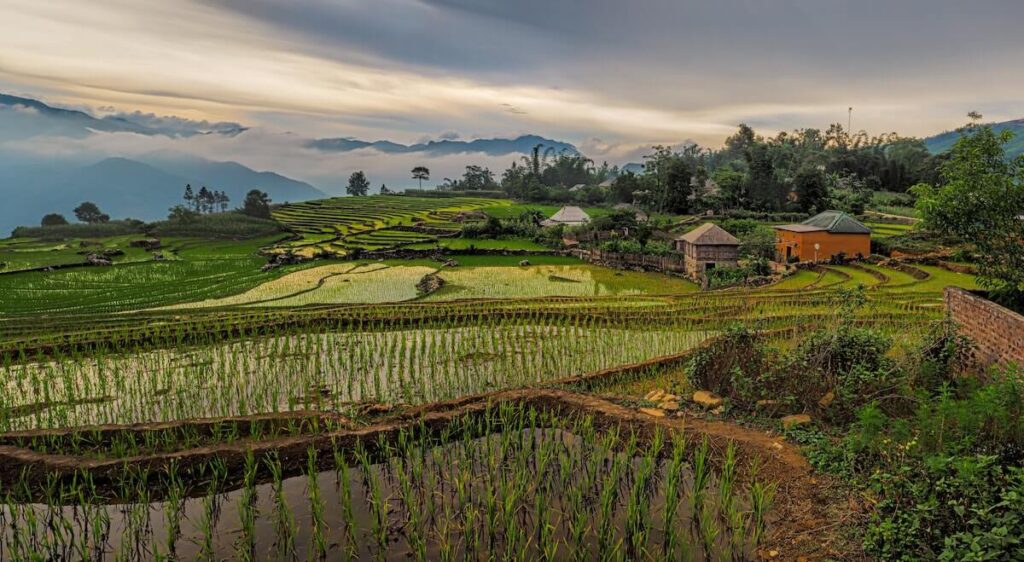
This diverse country will win you over with its untouched nature, incredible views and vibrant culture.
Vietnam is a country of diverse landscapes, with mountains in the north and beaches in the south.
You’ll find stunning waterfalls all over the country. Ha Long Bay looks like it came straight out of a fairytale. And the traditional fishing villages will transport you back in time.
2. Con: Pollution and littering
While Vietnam is undoubtedly stunning, the truth about living in Vietnam is littering and pollution often take away from its beauty.
One of the biggest disadvantages of living in Vietnam expats complain about is the pollution in large cities.
The air quality in Vietnam is poor, and even before 2020, it wasn’t unusual to see people walk around Hanoi with masks.
Littering is another one of the bad things about Vietnam. Many natural sites are used as unofficial dumping grounds, and waves washing up plastic waste on Vietnam’s beaches do not help the cause.
3. Pro: Low cost of living
The cost of living in Vietnam is relatively low compared to Western Europe, the USA and Canada.
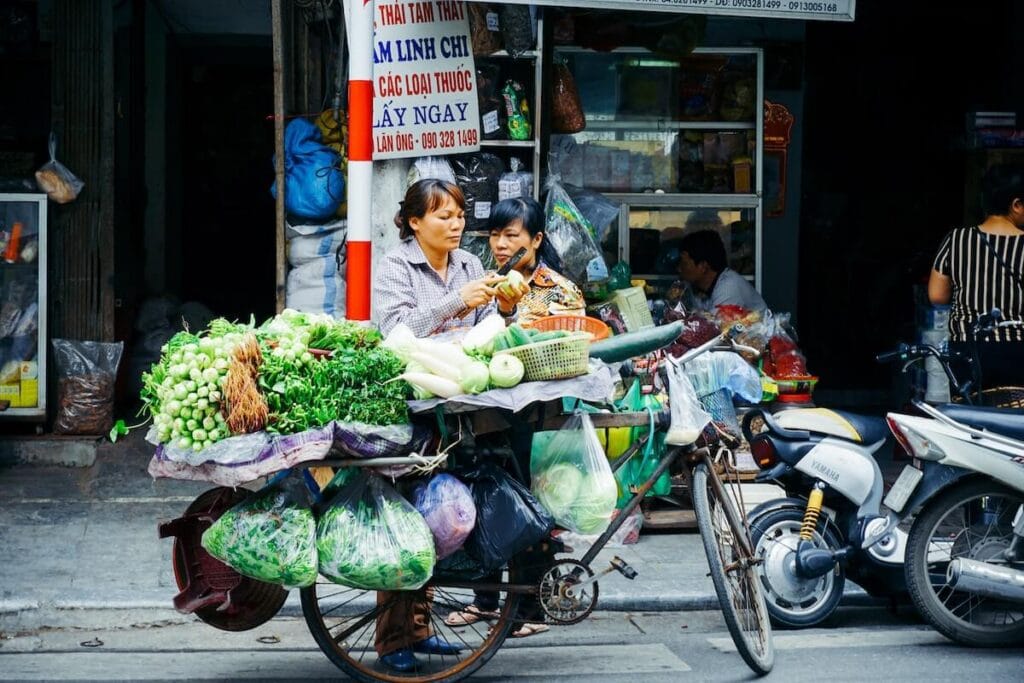
Basic goods such as food, transportation and clothing are quite affordable. Eating out is also cheap. On average, a street food dish and a drink will cost you less than 3$ USD.
Outside of big cities, these expenses are even lower.
It is possible to find cheap accommodation in Vietnam, with 1-bedroom apartments starting at less than 350$ USD in Ho Chi Minh City and less than 250$ USD in more rural areas.
4. Con: Low wages
While the cost of living might be low, this goes hand in hand with low salaries. The average take-home monthly wage in Vietnam is around 450$ USD.
Entry-level and low-skill jobs are underpaid, and many Vietnamese have a work-life balance problem trying to keep up with the rising cost of living.
Expats are lucky if they score an English teaching job, as your teacher’s salary will be more than enough to cover their living expenses in the country.
5. Pro: Plenty of English teaching jobs
If you come from an English-speaking country, you will be glad to know there are plenty of English teaching jobs in Vietnam.
Regardless of what you might read online, it is not enough to be a native English speaker to get a teaching job in Vietnam. You need a valid degree in any subject and evidence of a completed TEFL course, among other things, to get a work permit.
If you have no prior teaching experience, you will likely start by teaching young children with a lower salary instead of a well-paid job in international schools.
👩🏻💻 Planning to work as a teacher in Vietnam? Check out this site!
6. Con: Complicated visa system
It is difficult to get any other Vietnam visa except a non-extendible 30-day tourist visa.
The notion of a “digital nomad” in Vietnam is not yet formalised, making it very hard to get a long-term visa for remote workers.
Most digital nomads in Vietnam are doing regular monthly visa runs.
The costs add up as you have to travel to the closest border, pay for an entry visa to Laos or Cambodia, and then another Vietnam visa.
Altogether, a trip like this can cost up to 100$ USD if you book it with an agency; 30-40 $ USD for Laos or Cambodia entry visa, 25$ USD for a Vietnam visa and travel costs.
Oh, and let’s not forget a “tip” for the immigration officer.
Getting an official English teacher job in a school will save you from having to do visa runs, as the school can apply to sponsor your visa.
7. Pro: Friendly locals
Vietnamese people are one of the friendliest nations in the world. Moreover, they are eager to learn and practice speaking English, so don’t be surprised if they start chatting you up in a cafe or while you wait in line.
You will experience the true extent of Vietnamese hospitality if you stay in a Vietnamese guest house or a homestay. The hosts will make sure you’re taken care of and have the best time discovering their home country.
📱 Wanna make some Vietnamese friends? Join Meetups today!
8. Con: You will always stand out as a foreigner
Unless you have Vietnamese origins, a big issue foreigners living in Vietnam face is standing out as a foreigner simply based on your looks.
Even after years of living in Vietnam and learning the language, you will be charged tourist prices for visiting tourist attractions, going on tours and taking taxis.
It will be difficult to integrate into Vietnamese society and not get overcharged for everything as if you’re a tourist.
9. Pro: Cheap scooter rentals
You don’t need a car in Vietnam. In fact, if you live in a large city like Ho Chi Minh City, you won’t want to deal with the traffic in a car.
Most people in Vietnam get around on motorbikes, and it is affordable to buy one yourself or rent it for days when you want to explore.
However, once you see the traffic, you might want to save this for when you’re outside of Hanoi and Ho Chi Minh City
🛵 Rather a car than a scooter? Check out this site for cheap car rentals in Vietnam!
10. Con: Bad roads and chaotic traffic
While it is cheap to rent a motorbike, you might want to think twice if you want to get yourself into that mess.
Traffic in Vietnam’s largest cities is chaotic. Driving rules are rarely respected, and motorbike accidents are more common than people think.
To top it off, the roads are not the best, some turning into a muddy mess after rain.
You’re better off sticking to public transportation to get around big cities. Alternatively, you can take Grab or a taxi. Definitely cheaper than grabbing an Uber in NYC.
11. Pro: Delicious and cheap street food
Most people will agree that Vietnamese cuisine is one of the best in the world. It is a unique combination of typical Asian flavors and French cuisine, a relic of Vietnam’s colonial past.
One of the perks of living in Vietnam is affordable and delicious Vietnamese food everywhere!
Some Vietnamese favourites are Pho noodle soup, Vietnamese spring rolls and Banh mi sandwiches. Vietnamese coffee culture is thriving, with coffee shops popping up all around the cities.
Vietnamese food is easily adaptable for vegans, as it is possible to replace meat with tofu.
12. Con: Animal cruelty and dog meat trade
If you’re sensitive to animal cruelty, Vietnam might not be the best place for you. You’ll definitely want to avoid the markets where they sell animals for food.
It is fairly common to sell alive animals in small cages who are then butchered in front of the buyer.
Unfortunately, this does not stop at the animals’ westerners are used to consuming for food. In Vietnam, even cats and dogs are sold for meat.
13. Pro: Safe country to live in
If you’re worried about safety in Vietnam, you’ll be glad to know that Vietnam is generally a safe country to live in. Violent crimes are rare, and guns are outlawed.
Your biggest concern will be pickpocketing and motorbike snatching, which can happen in most touristic areas. The same rules apply regardless of where you live: keep your valuables safely stored in a closed bag and your phone out of your back pocket.
Acquaint yourself with the most common scams, such as gambling and karaoke scams, and avoid unnecessarily dangerous situations.
👉 Find out how much it costs to protect your trip today with Safety Wing travel insurance.
14. Con: Corruption
Long-term expats in Vietnam often complain about the corruption in the country. It is fairly common in most developing countries.
You might not notice it if you stay for a couple of weeks and keep to yourself. However, the more interaction with the official bodies, the more prominent this will be.
Expats reported being asked for a “tip” when crossing the border for Visa extensions or stopped and fined for made-up reasons when driving a scooter.
15. Pro: Vietnam’s climate
Climate can be considered both a pro and con of living in Vietnam, as the country has two different climates.
Most of the country has a tropical climate, but the north of Vietnam has a temperate climate and experiences all 4 seasons.
If you want to stay in a place where it is warm year-round, you’ll want to base yourself towards the south of the country.
16. Con: Mosquito-borne diseases
Tropical climate implies mosquitos. While mosquito bites are undoubtedly annoying, they are also dangerous in Vietnam.
The biggest problem is Dengue fever, a mosquito-borne viral infection causing a severe flu-like illness. There is no vaccine or specific treatment for Dengue, so your best bet is to avoid getting bitten by mosquitos – kind of hard in a tropical country like Vietnam.
17. Pro: Fun nightlife
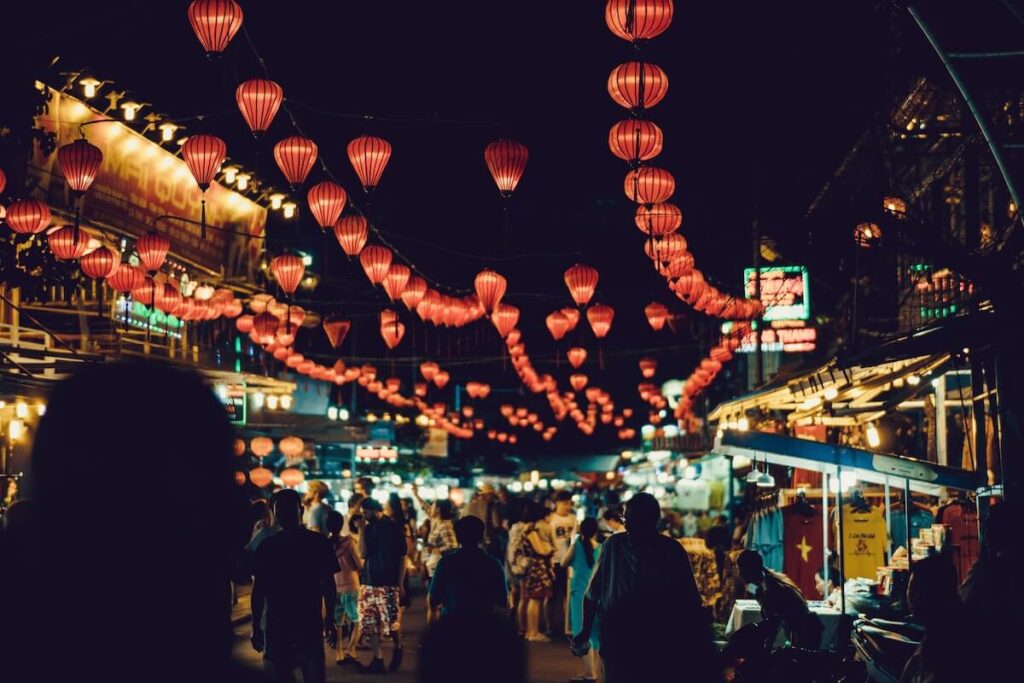
You can expect vibrant nightlife in Vietnam.
As a popular backpacker destination, Vietnam offers seemingly endless entertainment opportunities. Alcohol is cheap, clubs either don’t have entry fees, or they are a fraction of the price you’d pay in the USA.
When was the last time you went to karaoke? In Vietnam, you can do it every day!
18. Con: Overcrowded cities
One of the problems you’ll face when living in Vietnam is the crowds. Big cities in Vietnam are incredibly busy.
Once you know that Hanoi’s population is more than 7 million people, you’ll understand that crowds are only natural.
In rush hour, traffic jams are common, streets are always busy and the cities never sleep.
You’ll have to base yourself in rural areas if you’re looking for untouched nature and slow living. However, living in remote locations comes with other cons, such as limited public transportation and fewer English speakers.
19. Pro: Large expat community
Vietnam has a large expat community. According to the Ministry of Labour, more than 93,000 foreigners with work permits live in Vietnam.
And that is not taking into account all the backpackers and digital nomads who take regular tourist visa runs every month!
With such a large expat community, it is easy to find your people in Facebook groups to socialize, help each other out and discuss the pros and cons of living in Vietnam as you get together over a drink.
20. Con: Language barrier
Living in Vietnam long-term will require you to learn some basic Vietnamese.
If you stay in big cities and tourist hot spots, you can get by with English. However, to truly integrate the society and explore the rural areas of the country, some basic Vietnamese will be required.
At a first glance, Vietnamese might seem easier than other Asian languages, as they use the Latin alphabet. Vietnam’s grammar is pretty straightforward, with no plural forms, no declination or conjugation.
The problem with Vietnamese is that it is a tonal language; six different tones indicate a different meaning of a word. Good luck with that!
🗣 Wanna learn basic Vietnamese? This app actually works!

21. Pro: Plenty of activities
Vietnam is a diverse country with many regions to discover and activities to try out. You can learn to surf on Vietnam’s beaches in the south, hike in the mountains of Sapa or discover the underwater world of scuba diving along the coast.
Tours and cultural activities are affordable, and you can learn something new every weekend.
22. Con: You’ll have to use cash
If you’re used to paying for everything by card, you will have to change your habits.
Vietnam is still a largely cash-based country. And with Vietnam’s weak currency, you’ll regularly pay in thousands.
While you can pay by card for larger expenses, you will need cash for your everyday spending.
Street food stalls and bars almost exclusively only accept cash.
23. Pro: Regional travel
SE Asia is an incredible region to visit. While places like the Philippines, Thailand and Bali might seem like faraway dream destinations, they are just a short flight or a bus ride away from Vietnam!
Spending your vacation days in Bali or a weekend on one of the Philippines’ tropical islands is possible when you live in Vietnam.
Wrap-Up: Pros and Cons of Living in Vietnam
It is easy to see why this diverse, fast-developing country attracts expats from all over the world.
From exploring the vibrant city life in the economic capital of Ho Chi Minh City to adopting a simple lifestyle in remote mountain villages and quaint fishing towns, there is something for everybody in Vietnam.
However, it is necessary to remember that Vietnam is still a developing country, you might face some problems living in Vietnam and must be patient when navigating visas and language barriers.
Despite potential challenges, Vietnam will win you over with its unique landscapes, vibrant culture, delicious food and low cost of living.
🛫 Planning to move to Vietnam? Check this site for cheap flight tickets!
Read More About Living in Asia
- Living Taiwan Pros and Cons
- Pros and Cons of Living in Singapore
- Pros and Cons of Living in Vietnam
- Pros and Cons of Living in the Philippines
- Pros and Cons of Living in Turkey as a Foreign Woman
- Pros and Cons of Living in Japan
Living Abroad Travel Planning Guide
🚑 Should I buy expat travel insurance?
100% YES! — With basic coverage averaging just $5-10 USD per day, enjoy peace of mind with a plan from Safety Wing!
🌎 What is the best country to live in as an expat?
It depends – the best country to live in as an expat will depend on your unique needs. I developed this free quiz to help you figure out where is right for you!
📍 How do I pick a country to live abroad?
It depends – picking a country to live in is hard. That’s why I developed this $7 course to share all of the steps I’ve taken when deciding to move to 20+ different countries, and how I handle homesickness when I get there.
Ultimately, making the choice of where to move is going to be hard. But the hardest thing is deciding to move abroad at all!
💼 How do I get a job as an expat?
You can find work abroad via local job boards or temp agencies. My favourite way to work is remotely, so I always look for jobs on FlexJobs.com when I live abroad. They hire for 100% remote roles only.
If you’re looking to teach English abroad, Premier TEFL has the best online course to get you great work!
💰 How do I open a bank account abroad?
Wise.com offers free global accounts, and the cheapest money transfers. Since it can be a headache to open bank accounts in different countries (it took me 2 months in the UK!), Wise.com is a great solution.
I actually use it as my primary bank now worldwide due to the multi-currency debit card. (Read more)
👯♀️ How do you make friends abroad?
Meetup.com – Meet likeminded people who share a similar hobby with Meetup! It’s free to join, but some activities may cost money, like if you go to a cafe and get a coffee.
🙀 I don’t speak the language. Can I still live abroad?
Learn languages in no time with iTalki! Moving abroad is an opportunity to learn the language. You don’t need to know it before you leave home.
💻 Do I need a VPN?
Yes! – VPNs allow you to access more of the internet. From US Netflix in the UK to social media sites banned in Asia. It’s a really helpful and cheap thing to ensure your online activities aren’t restricted.
🧳 What’s the best luggage for living abroad?
This is my favourite luggage set for long term travel. You can read more about my review of types of suitcases for travel here.
🏡 How do I tell my friends and family I want to live abroad?
Take this $7 course and learn the exact script I used to tell my family I was moving abroad … and then when I did it again. I even include tips for prepping your family, and for how to handle family who aren’t supportive.
✈️ What’s the best site to buy cheap flights?
To find cheap flights, I recommend Skyscanner. (Read more)
🏨 What’s the best site to find cheap hotels?
To find cheap hotels, I recommend Booking.com. (Read more)
Or stay for free with Trusted Housesitters!
🚗 What’s the best site to rent cars abroad?
To find cheap rental cars, I recommend Discover Cars.
🚗 What’s the best site to find tours?
To find epic tours, I recommend Viator.