Nina Out and About contains affiliate links and is a member of the Amazon Services LLC Associates Program. If you make a purchase using one of these Amazon links, I may receive compensation at no extra cost to you. See my Disclosure Policy for more information.
27 Pros and Cons of Living in Spain in 2024
Are you wondering about the Pros and Cons of Living in Spain?
The decision to leave home and move abroad to a new country with new foods, customs, cultures, and lifestyles can be challenging.
Before I moved to Benisivá, a small town in Spain, I researched all the advantages and disadvantages of living in Spain before dealing with them head-on.
With beautiful beaches, warm weather, tapas, and a thriving art scene, it can take a lot of work to keep track of all the benefits of living in Spain. But knowing and acknowledging the cons is also essential before making a big move.
There are many pros and cons of moving to Spain. So, to help you decide whether it’s the country for you, I have compiled a detailed list of the pros and cons of living in Spain as an expat!
1. Pro: There is Always Something to Do
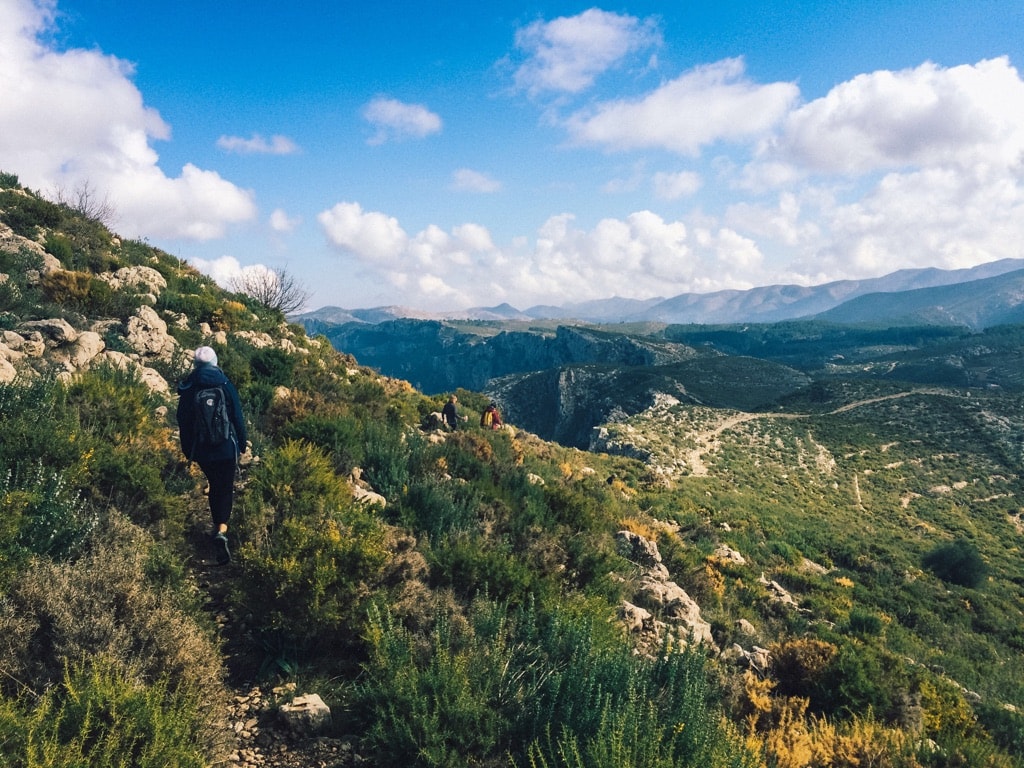
My favorite thing about living in Spain as a foreigner is that there is always something to do. No matter what interests you, you will find various activities that pique your interest.
Seeing a Flamenco show, walking the Santiago de Compostela, tasting world-class tapas, or hiking in the Sierra Nevada National Park is a must-do experience in Spain.
Some of the best activities in Spain are:
- Taste Spanish wines
- Take in a Flamenco show in Seville
- Taste Paella in Valencia
- Go on a tapas crawl in Madrid
- Walk the ancient Pilgrimage to Santiago de Compostela
- Eat a meal at the oldest restaurant in the world
- Sunbathe on one of Spain’s most beautiful beaches
2. Con: Long Work Days
Spain is often said to be a great place to live but a terrible place to work, making this a vast Spain con. Work days are longer in Spain that in other European countries.
A typical workday in Spain is 9AM until 7:30PM. Many workers spend much of the day conversing with coworkers or sending personal emails. Long lunches and many little breaks throughout the day are typical.
Workers in Spain must save their annual leave for the summer because most of the country closes in August.
Despite the long working hours in Spain, the working conditions are not bad. The minimum wage in Spain is $1,185 USD per month.
3. Pro: Many Great Beaches
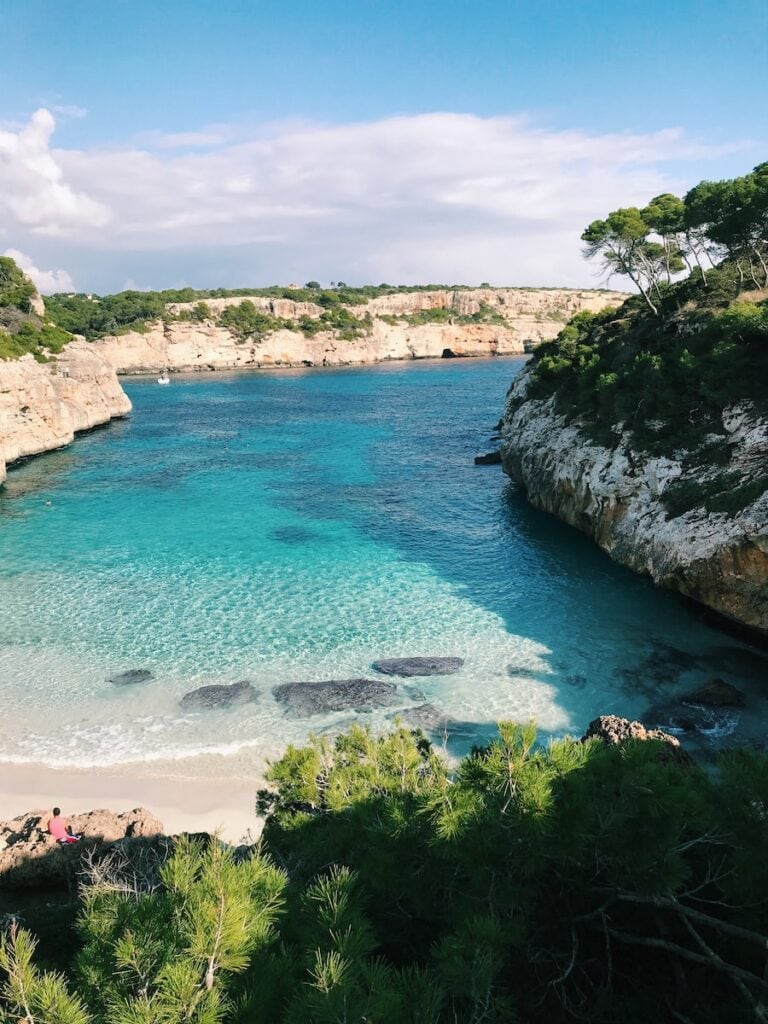
One of the biggest Spain pros is that it has 4,828km (3,000 miles) of coastline, allowing plenty of room for beautiful beaches.
The hotspots for visitors to Spain are Costa Blanca and the Costa del Sol, but they can get swamped.
One of the best beaches in Spain is La Concha Beach, San Sebastian, located on the northeast coast near the border of France. Many people consider La Concha Beach one of Europe’s most beautiful beaches.
Some of the best beaches in Spain you need to visit are:
- Playa de Las Catedrales
- Playa del Silencio
- Ses Illetes, Formentera
- Beaches of Sitges, Catalonia
- Nerja, Costa del Sol

4. Con: Pickpockets and Petty Theft in Tourist Areas
One of the most common crimes in Spain is pickpocketing, and it is common knowledge that stealing goods worth less than $440 USD will land thieves in jail.
Pickpockets more highly target foreigners than locals. Pickpocketing is most in areas that are popular with tourists, such as Gran Via, Sol Paseo del Prado, and near the Palacio Real in Madrid.
In cities such as Barcelona, you must be more careful with your belongings in Las Ramblas, the Gothic Quarter, and the Sagrada Familia.
One of the best travel tips is to make yourself less of a target, keep your bag close, and be mindful of your surroundings.
5. Pro: Brilliant Art Scene
A big Spain pro is the brilliant art scene spread around the country. Throughout the country, you will find many galleries and festivals.
One of the best cities for finding epic art is Madrid. A lot of the art spaces in Spain are in Madrid.
Some of the most notable art projects in Spain are:
- Soho
- Zaragoza
- Santander
- Tudela
- Zamora
- Cuenca
- Estepona
- Calpe
- Vigo
- Bilbao
If you would prefer to visit some art galleries rather than see street art, some of the best art galleries in Spain are:
- La Fiambrera
- Alcion Art Galley
- Museo del Prado
- Reina Sofía
- Thyssen-Bornemisza Museum
6. Con: High Rates of Unemployment
One of the biggest cons of living in Spain is the high unemployment rate. Spain has the highest unemployment rate out of all the EU countries at 13.26%, which can make it hard to find a job, especially for foreigners.
It can be challenging for younger people to find work in Spain as they are often over-qualified once they finish university.
For foreigners looking for work, it may be beneficial to try and secure a job before deciding to move to Spain.
However, foreigners can also get remote jobs, such as teaching English online.
7. Pro: Spanish Food is Outstanding
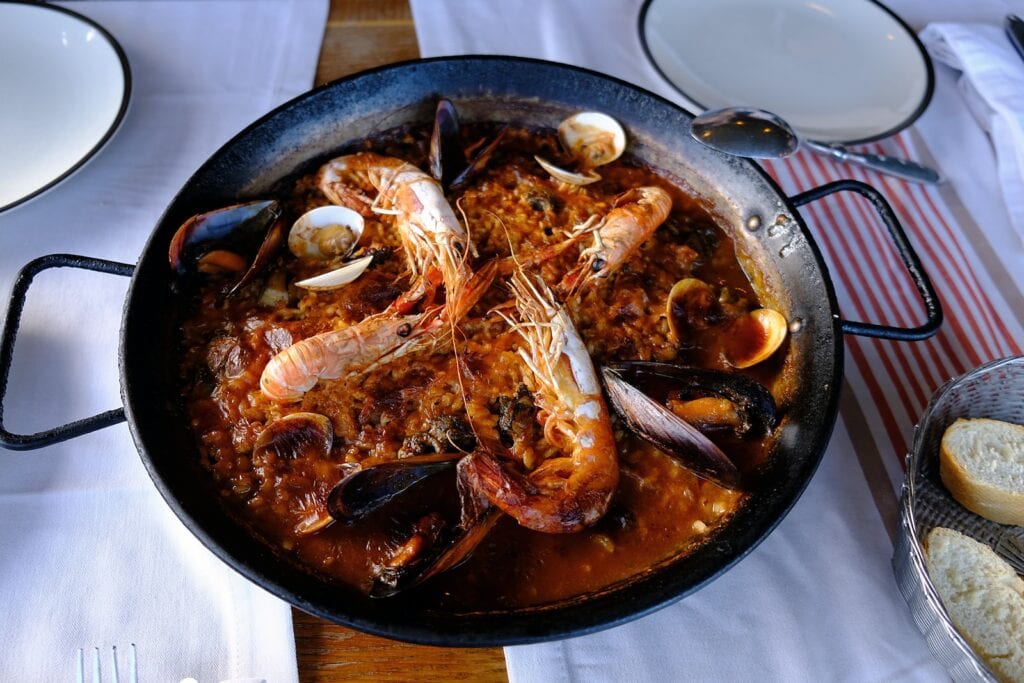
Spanish food is one of the biggest advantages of living in Spain. Spain is known for its diverse range of flavors within their food.
The Spanish are famous for small bites or snack food known as Tapas.
Tapas can be served cold with mixed olives and cheese, or you may choose something like chopitos (fried baby squid) served hot.
The most popular Spanish dishes are paella, gazpacho, tortilla espanola or churros. Street food is also quite popular and a great thing to try when moving to a new country.
8. Con: Language Barrier
While Spanish is the second most spoken language in the world, if you are not a language you are familiar with you may find one of the cons of living in Spain as a foreigner is the language barrier.
In Spain, many different accents and dialects can make it hard to grasp the language well.
It can be hard to find English speakers outside bigger cities such as Barcelona and Madrid if you do not speak Spanish.
Before moving to Spain, learning some basic phrases to help you begin communicating with locals is a good idea.
Trying to learn Spanish? Check out this app to help you!
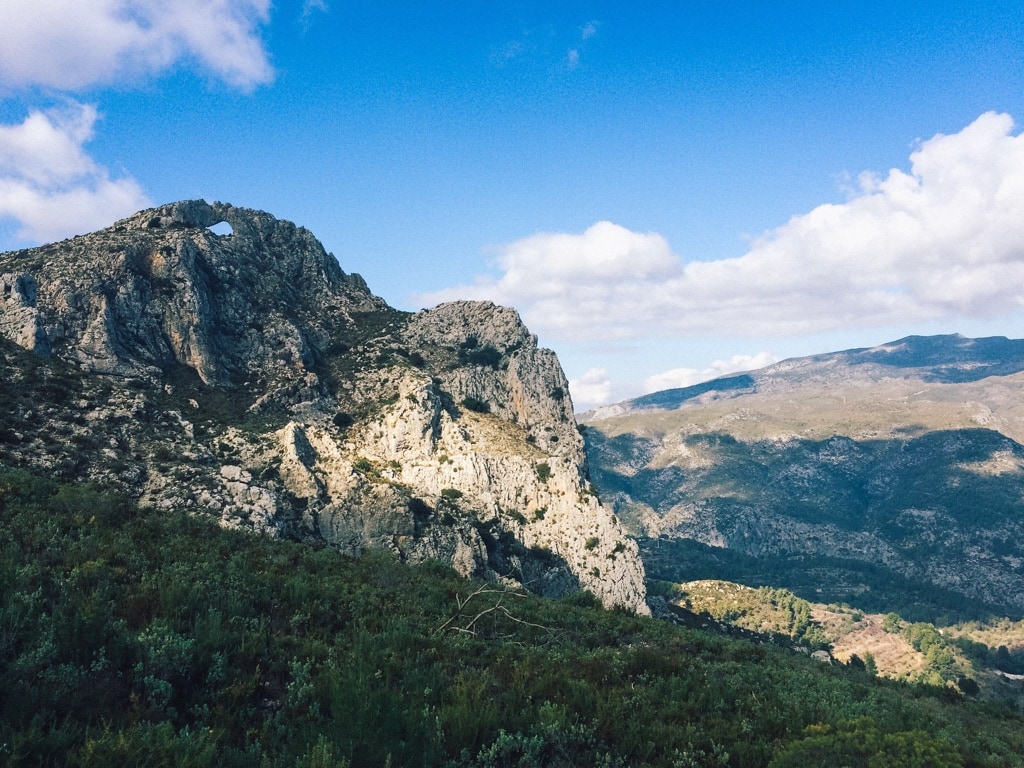
9. Pro: Beautiful Scenery and Landscapes
Spain is a beautiful country filled with beautiful landscapes and natural wonders.
In Spain, you will find something to fill your soul.
Whether you like the clear water and white sandy beaches that the coast brings or the mountains and waterfalls in the North and South, there is something for you to fall in love with.
The stunning Playa de Bolonia on the Costa de la Luz in Andalucia is perfect for adventurous windsurfers.
Still, if you would prefer to get closer to the unique landscapes, then the UNESCO world heritage site of Las Médulas is somewhere you want to check out.
You will find a diverse landscape from the North to the South of Spain. The North and South have beautiful tall mountain ranges, and you will find low but green mountain ranges in between.
The diverse landscape is what I loved about working at the yoga retreat in the mountainous town of Benisivá.
I love hiking and spending time outdoors, and Spain makes this very easy to do.
Even if you just want to escape the city for a day, you will find something nearby that gets you closer to nature.
If a day trip isn’t enough for you, there are plenty of places where you can escape for the weekend or a week and explore the stunning countryside.
10. Con: Diminishing Natural Areas
As the population expands, the more uninhibited areas of Spain are building built upon to make room for the people.
It is becoming increasingly rare for natural areas except those near the beach.
Due to drought and heat waves, the Donana wetland is shrinking, putting pressure on wildlife and crops.
However, there are still plenty of natural areas that do exist in Spain for everyone to enjoy.
11. Pro: Friendly Locals
Locals in Spain are super friendly and accepting of foreigners and other cultures. Spanish people are extroverted, carefree, and super laid back.
If you are looking for a place to feel welcomed and accepted, Spain is the place for you. It is common to see smiles and friendly faces wherever you go, as the Spanish are warm, polite, and pleased to meet you.
Most locals talk a lot, so be prepared to enter into many conversations if you ask the most straightforward questions.
For some people, getting used to how friendly the locals are can be an adjustment, but before too long, you will find yourself smiling, saying hello, and conversing with strangers in the street.
As a Canadian, I found this comforting, reminding me of being home. I might be biased, but Canadians are among the friendliest and politest people in the world, so it was lovely living in a place where the locals are friendly and happy to welcome you.
👉 Want to make friends around the world? Join Meetups today for free!
12. Con: A Lot of Red Tape
Like in Italy, Bureaucracy has been a long-standing issue in Spain, especially in Catalonia, making it a challenge for expats looking to settle.
Obtaining official documents can be much more of a headache than in your own country, which often dissuades people from relocating to Spain.
One of the other issues when dealing with officials is that many documents and or government workers don’t speak English, making the simplest of takes a hundred times harder.
The bureaucracy is due to an apparent corrupt administration filled with workers who made processes that only they could understand to ensure their workplace couldn’t operate without them.
If you do not speak fluent Spanish, expats are encouraged to hire a gestor or gestoria, an administrative advisor. They are reasonably priced and help make the processes much easier to understand.
Seeking help with the red tape is a reason (but not the only reason!) to befriend some locals or at least some Spanish-speaking expats. You might have a helping hand regarding the official documents you need to apply for.
13. Pro: Fantastic Weather
The weather in Spain is beautiful, especially in the summer. It reminded me of living in Australia.
Spain is well known for its warm subtropical climate as part of the Mediterranean. In the central part of the country, there are more continental climates in the highlands.
Spain is famous for its warm subtropical climate, with the Mediterranean prevailing on the North Eastern coast and continental in the highlands in the Central part of the state.
Spain has mild weather all year round, but there are still seasonal differences. For instance, in winter and fall, you will notice that the temperature drops slightly, but it is still warm enough for you to enjoy outdoor activities. Just watch out for the rain!
In the summer, the temperature is dry and hot throughout the country. It is not unusual to see temperatures higher than 35℃ (95℉) in the summer.
Many agree that Spring (April – June) is the best time to visit Spain as this is when the weather is best, not too hot but still perfect for enjoying a meal on the terrace or for nature getaways, but pack a light umbrella for the April showers.
Spain sees 3,000 hours of sunshine annually. No matter the season, you can expect beautiful sunny days.

14. Con: Some Cultural Differences
Moving to Spain can bring culture shock as the lifestyle is entirely different. One of the most significant differences in Spain is welcoming or greeting each other with little kisses. For expats moving abroad, this can feel uncomfortable.
Spain is also a very laid-back and relaxed country, and this can take some getting used to. Don’t be shocked if people are late and take their time getting everywhere. Most people in Canada, America, and New Zealand consider this rude, but it is a way of life in Spain.
Although the “siesta” is well known, it can take some time. During “siesta,” most shops and businesses will be closed, and respecting other people during siesta times is essential.
15. Pro: Low Cost of Living
Another one of the pros of living in Spain is that the cost of living is relatively low, and the cost of living is a huge thing to consider before moving abroad. When living in the Czech Republic, I loved that I could get a month’s worth of groceries for $200 USD.
A single person living in Spain can expect to pay $925 – $1,150 USD monthly for a one-bedroom, fully furnished apartment in the middle of Madrid. Out of the city center, apartments are more likely to cost around $550-$680 USD per month.
Groceries are also reasonably priced:
- 12 eggs – $1.85 – $2.26 USD
- 1lbs chicken – $2.56 – $3.12 USD
- Rice and potatoes – $0.48 – $0.59 USD
- Beer – $0.81 – $0.99 USD

16. Con: High Housing Costs in Major Cities
Despite the low cost of living, house prices in major cities are much higher than in places like Zaragoza, Murcia, or Alicante.
In larger cities like Barcelona, Madrid, Bilbao, and Palma de Mallorca are very expensive, and rental prices are usually around $1,000 USD per month for a one-bedroom house in the middle of the city.
The apartments and houses are usually fully furnished, so this does help to justify the cost of the rent.
17. Pro: Outstanding Healthcare System
A huge benefit of living in Spain is the healthcare system.
Spain has one of the best healthcare systems in Europe and the world. Locals and foreigners can enjoy outstanding healthcare at a much lower cost than other nations worldwide.
Many locals and foreigners choose to get private health insurance as it lowers the wait times. You can see specialist doctors and often find a doctor who speaks English.
Although the healthcare system dental care covers, many medical-related issues are not covered except for children 15 years and under.
👉 Find out how much it costs to protect your trip today with Safety Wing travel insurance.
18. Con: Small Living Spaces
Living in cities such as Barcelona and Madrid, your apartment will cost much more, and the living spaces will be much smaller.
In smaller cities or rural areas of Spain, you will get more value for your money in terms of living spaces.
The average rental apartment in Barcelona is 969 square feet compared to 866 square feet in New York City.

19. Pro: Laid-back lifestyle
Life in Spain is all about being enjoyed and living in the moment. This ideal means the Spanish are much more laid-back than Canada or America.
Many locals have the mindset that they work to live. They don’t live to work, which allows for more leisure activities and time with friends and family.
Generally speaking, the Spanish workday splits into two halves, the morning begins around 9AM and goes until 2PM, and the second half of the day is from 5PM until 8PM. In between these two halves is the famous Spanish siesta.
Never worry about running late in Spain. It is simply part of the lifestyle.
20. Con: Long and Slow Lines Everywhere
One of the downsides to the laid-back lifestyle is that you can expect things to never run on time, and you can spend a lot of time waiting in lines.
Things tend to move very slowly, and workers (in particular government agents) are not worried about how long things take and that many people are waiting in line.
Long and slow lines were a huge contrast to when I lived in Germany since Germans are typically punctual and reliable. It was nice knowing you count on things being efficient.
21. Pro: Extensive Public Transport Options
Despite having long lines and a relaxed lifestyle, Spain has outstanding public transport options.
Most cities have an underground train system called the metro. The metro is safe, cheap, and effective. It is busy during rush hour, but the metro is comfortable outside of rush hour.
For cities that do not have a metro system, the best way to get around is on the bus. Buses get you around the towns and cities and are also one of the most popular ways to travel from one region to another in Spain.
It is worth noting that some coastal towns and rural areas are only accessible by bus.
Spain also has an extensive high-speed train network that connects most of the country. If you want to travel between major cities in Spain, the easiest way is via train.
22. Con: Siestas Can Be Disruptive
Although Siestas are part of Spanish culture, they can be disruptive to your business day, primarily if you are not used to big cities coming to a crashing halt in the middle of the day.
You will find that most things are closed around lunchtime, including businesses, shops, restaurants, cafes, and bars.
If you have something important you need to do, you allow time for siestas. It is rude to disrupt somebody else’s siesta, and some business owners may nap in their place of business.
23. Pro: Proximity to the Rest of Europe
One of the best things about being in Europe is how easy it is to travel from one country to another; Spain is no exception.
Spain shares borders with Portugal and Andorra and is very easy to explore from Spain, but France is also easy to reach from Spain.
The Spanish bus and train networks are fantastic ways to reach other countries.
When you’re ready to visit France, find the cheapest flights with this tool.
24. Con: Slow Customer Service
People can be very slow in Spain, as with customer service. When being served in a cafe, expect to wait a while for someone to seat you or take your order.
Looking for help in a dress shop? You can be waiting many, many minutes before someone asks if you need help or before you can request to try on something.
Are you waiting to pay at a restaurant or buy tickets at a museum? You may be waiting a long time for someone to come and serve you.
25. Pro: Easy for Expats to Buy Property
Along with getting a bank account, it is also easy for expats to purchase property in Spain. You will be required to obtain an NIE financial number which you can get from a local police station.
The NIE may take a few weeks to receive, so apply for this well before purchasing your property.
Like in many other countries, buying property involves viewing a property you like, making an offer, and then negotiating the price with the seller.
While it is not a legal requirement, you may hire a solicitor or notary to help you complete the sale.
26. Con: Businesses Close in August
Nothing can be more frustrating than a country taking an entire month off, especially if you are still looking for life to continue as usual.
One of the main reasons for the closures is that Universities are closed during August, so many students return home or go on holiday.
In most university cities and towns, many businesses rely on students to keep their business running, so companies also take holidays during this time.
This societal pause does not mean that you can’t do anything during August – many restaurants, cafes, shops, and attractions are still open – but it can make it hard to get official documents processed during this time.

27. Pro: Spain is Very Pet Friendly
As someone who travels with my dog everywhere I go, I need to find pet friendly places, and luckily Spain is a very pet friendly country.
Your pets are allowed in many hotels and restaurants, especially on the terraces. Generally, you cannot bring your dog to the beach in the summer, but during winter, the restrictions are much more lenient.
Gijón is the most pet friendly city in Spain, as it has many options for hotels, restaurants, and beaches where your dog is welcome.
When traveling into or around Spain with your pets, it is essential to make sure they have the correct documentation before arriving in Spain.
Dogs must have a pet passport, a chip, and a rabies vaccination before entering Spain.
Plenty of veterinarian clinics in Spain offer general services, check-ups, and some vets offer specialized surgeries.
FAQs: Benefits of living in Spain
Is Spain a good place to live and work?
Spain is one of the best places to live due to the climate, the laid-back lifestyle, and the food. But work is one of Spain’s biggest cons is the work culture, with long work days.
What is it like to live in Spain?
In Spain, you can expect to spend a lot of time waiting in lines and long hours working, but you can also expect to see plenty of hours of sunshine, enjoy a laid-back life, spend plenty of time enjoying beautiful beaches, and eat a lot of fantastic food and drink plenty of good wine.
What are the pros and cons of living in Spain?
Some of the biggest pros of living in Spain are the friendly locals, low cost of living, pleasant weather, beautiful beaches, outstanding food, and the proximity to the rest of Europe. Cons of living in Spain include slow service, high cost of housing, and lots of red tape.
Is Spain friendly to foreigners?
Yes, Spain is friendly to foreigners and very accepting of other cultures and ways of life. It is not uncommon to see locals smiling at you and willing to offer help if you are lost or need help finding something.
Is it hard for Americans to move to Spain?
Depending on your Visa type, it can be easy for Americans to move to Spain. However, due to cultural differences and the language barrier, navigating your move and getting approved for the appropriate documents and visa can take time.
How long can a US citizen live in Spain?
US citizens can live in Spain for five years before applying for permanent residency. Some Visas will require renewal after a year or two. This requirement depends on your type of visa.
How much money do you need to live comfortably in Spain?
In a big city like Madrid or Barcelona, you will need between $930 – $1,010 USD per person to live comfortably. Outside of the big cities or in more rural areas, you will need between $685 – $875 USD per person per month to live comfortably.
Where do most Americans live in Spain?
Most American expats live in more significant and famous cities like Barcelona and Madrid. More job opportunities, housing options, leisure activities, and places to eat and drink exist.
What are some reasons to move to Spain?
Many people move to Spain for the laid-back lifestyle, low cost of living, healthcare system, beautiful landscapes to explore, public transport, beautiful climate, and unique Spanish culture.
What are some reasons not to move to Spain?
Some reasons not to move to Spain are the distance from home, unrealistic lifestyle expectations, poor job market, culture shock, and long working hours with low pay.

Final Thoughts: Moving to Spain Pros and Cons
Living in Spain as an expat offers many benefits, such as beautiful beaches, a warm climate, and exceptional Spanish cuisine.
The locals are friendly and welcoming, and the healthcare system is one of the best in the world.
What could be wrong with eating Tapas and drinking fantastic wine after work on a warm summer night or beach hopping for the weekend to some of the best beaches in the world?
As a foreigner, getting used to the laid-back lifestyle, the siestas, and how long it takes to get things done can take some practice. There may be many challenges, but the benefits of living in Spain outweigh the disadvantages.
If you want to step outside your comfort zone and experience a new culture, then Spain is the place for you.
Still deciding which country you would like to move to? Take my quiz to find out which country is perfect for you.
Read more about living in Europe:
- Pros and Cons of Living in Italy as an Expat
- Living in Portugal Pros and Cons
- Pros and Cons of Living in France
- What It’s Like Living in Ireland
- Pros and Cons of Living in Germany
- Pros and Cons of Living in Berlin as an Expat
- Best Places to Live in Europe for Expats
- Pros and Cons of Living in the Czech Republic for Expats
- Pros and Cons of Living in Amsterdam
- Living in Prague: The Complete Expat Guide
- Pros and Cons of Living in Turkey
- Pros and Cons of Living in Austria
- Pros and Cons of Living in Sweden
- Pros and Cons of Living in Switzerland
- Pros and Cons of Living in Denmark
- Living in Serbia Pros and Cons
- Living in Portugal Pros and Cons
- Pros and Cons of Living in the UK: Should You Move to England?
- Pros and Cons of Living in Scotland as a Foreigner
- Pros and Cons of Living in Oxford, England from an Expat
- Pros and Cons of Living in Spain
Living Abroad Travel Planning Guide
🚑 Should I buy expat travel insurance?
100% YES! — With basic coverage averaging just $5-10 USD per day, enjoy peace of mind with a plan from Safety Wing!
🌎 What is the best country to live in as an expat?
It depends – the best country to live in as an expat will depend on your unique needs. I developed this free quiz to help you figure out where is right for you!
📍 How do I pick a country to live abroad?
It depends – picking a country to live in is hard. That’s why I developed this $7 course to share all of the steps I’ve taken when deciding to move to 20+ different countries, and how I handle homesickness when I get there.
Ultimately, making the choice of where to move is going to be hard. But the hardest thing is deciding to move abroad at all!
💼 How do I get a job as an expat?
You can find work abroad via local job boards or temp agencies. My favourite way to work is remotely, so I always look for jobs on FlexJobs.com when I live abroad. They hire for 100% remote roles only.
If you’re looking to teach English abroad, Premier TEFL has the best online course to get you great work!
💰 How do I open a bank account abroad?
Wise.com offers free global accounts, and the cheapest money transfers. Since it can be a headache to open bank accounts in different countries (it took me 2 months in the UK!), Wise.com is a great solution.
I actually use it as my primary bank now worldwide due to the multi-currency debit card. (Read more)
👯♀️ How do you make friends abroad?
Meetup.com – Meet likeminded people who share a similar hobby with Meetup! It’s free to join, but some activities may cost money, like if you go to a cafe and get a coffee.
🙀 I don’t speak the language. Can I still live abroad?
Learn languages in no time with iTalki! Moving abroad is an opportunity to learn the language. You don’t need to know it before you leave home.
💻 Do I need a VPN?
Yes! – VPNs allow you to access more of the internet. From US Netflix in the UK to social media sites banned in Asia. It’s a really helpful and cheap thing to ensure your online activities aren’t restricted.
🧳 What’s the best luggage for living abroad?
This is my favourite luggage set for long term travel. You can read more about my review of types of suitcases for travel here.
🏡 How do I tell my friends and family I want to live abroad?
Take this $7 course and learn the exact script I used to tell my family I was moving abroad … and then when I did it again. I even include tips for prepping your family, and for how to handle family who aren’t supportive.
✈️ What’s the best site to buy cheap flights?
To find cheap flights, I recommend Skyscanner. (Read more)
🏨 What’s the best site to find cheap hotels?
To find cheap hotels, I recommend Booking.com. (Read more)
Or stay for free with Trusted Housesitters!
🚗 What’s the best site to rent cars abroad?
To find cheap rental cars, I recommend Discover Cars.
🚗 What’s the best site to find tours?
To find epic tours, I recommend Viator.