Nina Out and About contains affiliate links and is a member of the Amazon Services LLC Associates Program. If you make a purchase using one of these Amazon links, I may receive compensation at no extra cost to you. See my Disclosure Policy for more information.
21 Pros and Cons of Living in the Philippines in 2024
Have you wondered about the pros and cons of living in the Philippines as a foreigner?
Expats looking for a laid-back lifestyle love this Southeast Asian destination, thanks to its balmy weather and beautiful beaches (it’s home to almost 300,000 US citizens).
I’ve lived in more than 20 cities in the past 10 years and I’m passionate about empowering women to live abroad.
I’ll walk you through the advantages and disadvantages of living in the Philippines, including the cost of living, infrastructure, local culture, and how you can stay safe as a female traveler.
Is the Philippines a good place to live in? Read on to find out!
🛫 Planning on moving to the Philippines? Check this search engine for the most affordable flight tickets.
1. Pro: Affordable Cost of Living
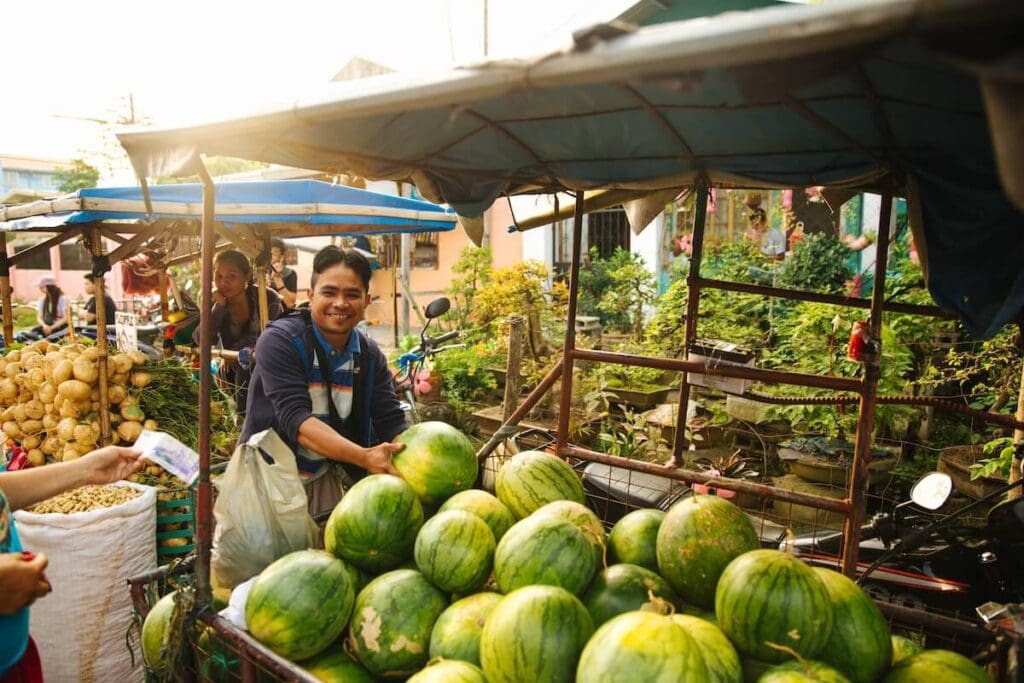
Affordability is a big perk of living in the Philippines as an American. The cost of living here is on par with Mumbai, Athens, and Phnom Penh.
For accommodation, you can easily find a 1-bedroom apartment in Manila for around $500 USD a month.
You’ll find that basic groceries here are cheaper than in the US. Here are the average prices of staple foods:
- 1 loaf of bread: $1.50 USD
- 1 dozen eggs: $2.20 USD
- 1 liter of milk: $2 USD
- 1kg of chicken breast: $4.40 USD
If you’re planning on eating out regularly, these are the average dining costs you can expect:
- Street food meal: $3-$5 USD
- 3-course meal in a mid-range restaurant: $20-$30 USD
Keep in mind that Manila is considered to be the most expensive area in The Philippines, with Cebu clocking in a close second.
Living in more rural areas will decrease the cost of living.
2. Con: Crowded Cities
The Philippines is home to some of the most densely-populated cities like Mandaluyong, Pasay City, and Makati. Manila tops the list with 73,920 people per square kilometer.
The dense population means things get chaotic here. Traffic congestions are a normal part of life, noise is almost always at an all-time high, and public transportation is often uncomfortably packed beyond its intended capacity.
3. Pro: Accessible Healthcare
Expats working in The Philippines can utilize the public healthcare administered by the government-owned PhilHealth. The employer usually handles the registration.
Self-employed workers can receive coverage by registering as a member of the informal economy.
If you prefer to seek treatment at a private hospital, healthcare costs here tend to be cheaper than in the US.
Consultation with a doctor generally costs $20-30 USD while the average room rate for an overnight hospital stay is $50 USD.
🏨 Make sure you have access to great healthcare in the Philippines. Get a quote from Safety Wing today!
4. Con: Expensive Electricity
When considering the pros and cons living in The Philippines, you’ll find that many things here are relatively cheap.
Electricity is not.
You will need to set aside $80-100 USD a month to cover utilities for a 1-bedroom apartment.
Expect to see a surge in your electricity bill in April and May. During these hottest months of the year, temperatures can climb up to 35°C (95°F).
Air conditioner use is a must at this time to stay comfortable.
5. Pro: Diverse & Cheap Public Transportation
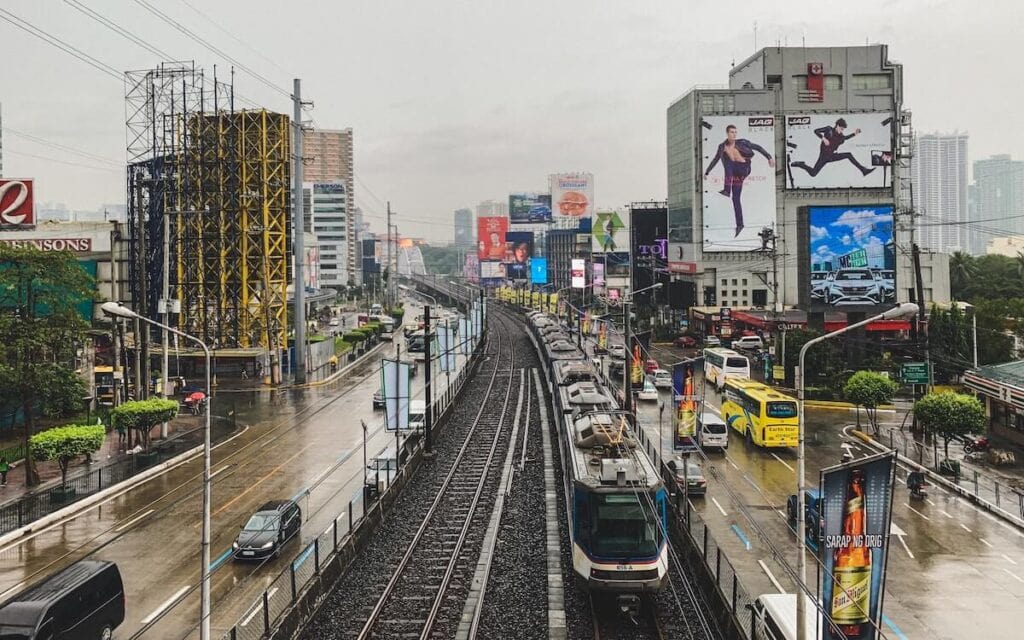
Options for getting around in The Philippines include buses, trains, and the local jeepneys (you won’t miss these fluorescent Filipino minibusses!). The networks are extensive and simple to navigate.
A jeepney ride will cost you $0.15 USD for most basic routes. Riding it is an experience in itself!
Do it like the locals do: check the routes, hop aboard, and shout your destination to the driver to reconfirm.
Keep in mind the experience of taking public transport can get uncomfortable. Queuing is unheard of and the buses and trains are usually jam-packed.
More importantly, these conditions create high risks for groping and frotteurism. Be wary of commuters who stand closer to you than necessary. Report to the authorities if you are subject to sexual harassment.
For a more comfortable public transport option, try the Grab e-hailing app. It’s reliable and cheaper than taking a taxi.
🚗 Looking for a cheap car rental in the Philippines? Check out this platform!
6. Con: Driving Is Not for the Faint-Hearted
Driving is an extreme sport here in the Philippines.
The disadvantages of driving start from the costs of buying a car. Cars in the Philippines are subject to high import duties.
Driving is a nightmare for most with the constant traffic jams. Expect major delays especially if you’re driving any time between 7 a.m. to 9 p.m. from Mondays to Saturdays.
Filipinos are some of the most courteous people around until they get behind the wheel. Traffic rules are mostly disregarded, and reckless driving is the norm.
You’ll want to get your defensive driving mode on.
7. Pro: Wonderful Sense of Community
Filipinos are incredibly warm, generous, and kind.
Level up your expat life in the Philippines by getting to know the friendly locals.
Community living is an important part of Filipino culture. You’ll notice how they enjoy coming together, how quick they are to offer help to those in need, and how well they treat their elderly community.
📱Wanna have some Filipino friends? Join Meetups today!
8. Con: High Crime Rates
Crime rates are high in the Philippines, with gang activity, scams, and violence being especially prevalent in larger cities like Manila.
Avoid traveling with large stacks of cash or with your most treasured items around. Pickpocketing, mugging, and armed robberies on public transportation do happen.
Be vigilant when it comes to scams. Credit card fraud is rampant here. Alert your credit card company immediately if you notice any suspicious activity.
When choosing a home, stay in a gated area for added security. Invest in proper home security tools if you opt for a non-gated area.
9. Pro: English Is Widely Spoken
Chances of a communication breakdown are pretty low here. Almost everyone you’ll meet speaks English.
Daily life is convenient to navigate for English speakers. Most things from government forms to street signs to business conduct are in English.
That being said, it’s worth learning to speak Filipino. The locals will appreciate your efforts and it’s especially easier to make new friends this way.
10. Con: Terrorism Threats
Safety is a major issue in the Philippines.
Terrorist attacks can happen anywhere from the Manila city center to the Sulu Sea islands. Typically, these terrorist attacks involve explosives.
High-traffic areas like shopping malls, transport hubs, and places of worship are common targets.
Kidnapping is a big concern. It’s especially rife in Mindanao and the Sulu archipelago involving mostly foreigner abductions from private boats, marinas, and resorts.
The Armed Forces of the Philippines (AFP) continues to work with government agencies in its efforts to combat terrorism.
For relatively safer options, consider living in Taiwan or New Zealand.

11. Pro: Abundant Natural Attractions
The Philippines is home to some of the most diverse natural landscapes and wildlife!
If you love a good adventure, there is plenty to be had thanks to its breathtaking islands and lush rainforests.
These are the highest-rated nature activities you should check out when in the Philippines:
- Swim with whale sharks in Cebu
- Explore the curious Puerto Princesa Underground River in Palawan
- Go scuba diving at White Beach, one of the most beautiful locations in Boracay
- Trek through the Masungi Georeserve rainforests in Baras
- Go island hopping and explore hidden beaches, lagoons, and coves in El Nido
12. Con: Risk of Natural Disasters
If you’re considering relocating to the Philippines, be aware that typhoons are a common occurrence.
Characterized by strong winds and major floods, typhoons range in severity and tend to affect the Calabarzon, Bicol, and Central Luzon regions the hardest.
Although typhoons can happen year-round, the season generally lasts from April to November. August and September are the most active months.
The Philippines is also prone to earthquakes. More than 100 earthquakes affect the country annually.
13. Pro: It’s (Almost) Always Sunny in the Philippines
You’ll be tempted to make cute shorts and flip-flops your go-to outfit most days here, thanks to the Philippines’ pleasant warm weather!
The country enjoys mid-temperatures that aren’t too extreme. The mean annual temperature is 27°C (81°F), with the hottest months being April and May. The humidity here is on the higher end, averaging around 82% most days.
14. Con: Air Pollution
Hazardous air quality is an ongoing problem in the Philippines.
Air pollutants in urban areas exceed World Health Organization (WHO) guidelines. Manila’s lead levels are three times higher than the established safety limit.
For anyone with asthma like me, this is a significant disadvantage when considering likes and dislikes about living in the Philippines.
Use a face mask when outdoors, and invest in a good air purifier for your home.

15. Pro: Heaven for Meat Lovers
If you love your protein, the Philippines is the place to be!
Filipino cuisine is a rich mix of Southeast Asian and Spanish influences, with meat being the focal point of most meals.
While beef and chicken are regularly consumed, the Philippines has an extra fondness for pork.
Fun fact: Filipinos are the 10th largest consumers of pork in the world!
Iconic must-try dishes here include lechon, a whole spit-roasted pig, and sisig, sizzling pork.
Given that pork makes its way into a majority of dishes served in the Philippines, if you need halal, kosher, or vegan options during your stay here, it’s a good idea to seek out specialty restaurants that suit your dietary needs.
16. Con: Spotty Internet Connection
When considering the pros and cons of living in the Philippines, assess how important a stable Internet connection is for you.
Although the Internet quality here has improved in recent years, it is still periodically subject to slow speed and connectivity issues.
If your work involves large-file transfers, multiple uploads and downloads, and frequent conference calls, moving to the Philippines can be a huge dealbreaker.
For more reliable Internet providers, locals recommend trying Converge ICT and PLDT.
17. Pro: Affordable Labor Costs
While housekeepers, gardeners, babysitters, and personal drivers are a downright splurge in most Western countries, it’s common for expats to hire help in the Philippines.
Professional labor costs in the Philippines remain one of the most competitive in the region. If you’re looking to hire top-notch talent for your business, you’ll enjoy a significant advantage here.
👩🏻💻 Looking for a job in the Philippines? You can find the best suitable job for you here!
18. Con: Dirty Streets
Although the Philippines is a gorgeous country, cleanliness is something that is in need of improvement. Talk a walk down the street, and you’ll likely find garbage strewn about.
Most regions lack proper waste disposal infrastructure. Garbage cans are inadequate in most places and regular cleaning services are lacking.
This extends to some of the most beautiful natural sites around the country as well.
19. Pro: Direct Flights to the US
Connectivity is a defining factor when considering the pros and cons of living in the Philippines.
There are ample options for flights between the US and the Philippines, making it convenient to make a trip back home to see family and friends.
For direct flights, Philippine Airlines offers routes from Manila to various points in the US including New York, Los Angeles, San Francisco, and Honolulu.
Alternatively, plan a stopover in Singapore or Malaysia if you’re up for exploring nearby destinations.
🛫 Check this search engine for the most affordable flight tickets in and out of the Philippines.
20. Con: Becoming a Resident Is a Lengthy Process
The most common way for foreigners to acquire Filipino citizenship is through naturalization, which requires the applicant to have resided in the Philippines continuously for 10 years and to own real estate in the country, among other criteria.
If you’re a child of a Filipino parent, the citizenship process gets a little easier.
It’s especially common for Filipino Americans to seek citizenship so if this is something that applies to you, check on the required procedures at your nearest Philippine consulate.

21. Pro: Positive Outlook in Life
Despite being dealt with some challenging cards, Filipinos are hopeful, resilient people with a beautiful knack for seeing the brighter side of life.
Their jovial nature, abundant talents, and deep respect for their community make them great to be around. Their contentment is contagious, and it makes you think about and appreciate the truly important things in life.
Wrap-Up: Pros and Cons of Living in The Philippines
It’s important to consider how the pros and cons of living in the Philippines related to your needs.
The Philippines is popular with expats keen on laid-back living in a beautiful tropical setting.
Filipinos are warm and hospitable, and their zest for life will inspire you to see the lighter side of things.
The affordable cost of living, accessible healthcare, and abundant natural wonders definitely help!
Keep in mind that safety issues are a significant concern. Always remember to be extra vigilant and careful during your stay here.
Start preparing for your big move with my ultimate moving abroad checklist!
🛫 Planning on moving to the Philippines? Check this search engine for the most affordable flight tickets.
Living Abroad Travel Planning Guide
🚑 Should I buy expat travel insurance?
100% YES! — With basic coverage averaging just $5-10 USD per day, enjoy peace of mind with a plan from Safety Wing!
🌎 What is the best country to live in as an expat?
It depends – the best country to live in as an expat will depend on your unique needs. I developed this free quiz to help you figure out where is right for you!
📍 How do I pick a country to live abroad?
It depends – picking a country to live in is hard. That’s why I developed this $7 course to share all of the steps I’ve taken when deciding to move to 20+ different countries, and how I handle homesickness when I get there.
Ultimately, making the choice of where to move is going to be hard. But the hardest thing is deciding to move abroad at all!
💼 How do I get a job as an expat?
You can find work abroad via local job boards or temp agencies. My favourite way to work is remotely, so I always look for jobs on FlexJobs.com when I live abroad. They hire for 100% remote roles only.
If you’re looking to teach English abroad, Premier TEFL has the best online course to get you great work!
💰 How do I open a bank account abroad?
Wise.com offers free global accounts, and the cheapest money transfers. Since it can be a headache to open bank accounts in different countries (it took me 2 months in the UK!), Wise.com is a great solution.
I actually use it as my primary bank now worldwide due to the multi-currency debit card. (Read more)
👯♀️ How do you make friends abroad?
Meetup.com – Meet likeminded people who share a similar hobby with Meetup! It’s free to join, but some activities may cost money, like if you go to a cafe and get a coffee.
🙀 I don’t speak the language. Can I still live abroad?
Learn languages in no time with iTalki! Moving abroad is an opportunity to learn the language. You don’t need to know it before you leave home.
💻 Do I need a VPN?
Yes! – VPNs allow you to access more of the internet. From US Netflix in the UK to social media sites banned in Asia. It’s a really helpful and cheap thing to ensure your online activities aren’t restricted.
🧳 What’s the best luggage for living abroad?
This is my favourite luggage set for long term travel. You can read more about my review of types of suitcases for travel here.
🏡 How do I tell my friends and family I want to live abroad?
Take this $7 course and learn the exact script I used to tell my family I was moving abroad … and then when I did it again. I even include tips for prepping your family, and for how to handle family who aren’t supportive.
✈️ What’s the best site to buy cheap flights?
To find cheap flights, I recommend Skyscanner. (Read more)
🏨 What’s the best site to find cheap hotels?
To find cheap hotels, I recommend Booking.com. (Read more)
Or stay for free with Trusted Housesitters!
🚗 What’s the best site to rent cars abroad?
To find cheap rental cars, I recommend Discover Cars.
🚗 What’s the best site to find tours?
To find epic tours, I recommend Viator.